 Angel Doris
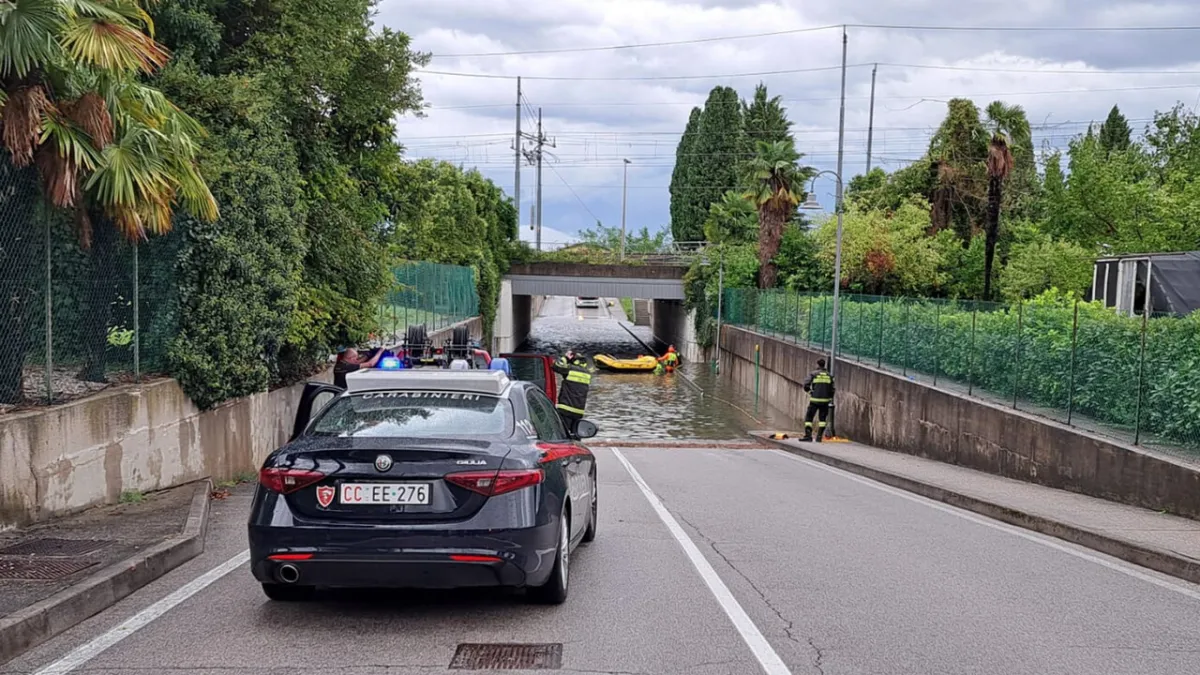
LATISANA – An extreme storm has swept across Italy, claiming the life of a woman in a flooded underpass in Latisana, Udine province, Friuli. This tragic incident occurred as northern Italy grappled with severe adverse weather. Simultaneously, a ceiling collapse was also reported in a bunker classroom in Milan, adding to the growing list of infrastructure damages caused by the persistent maltempo phenomenon afflicting the nation.
The unfortunate woman was found trapped inside her submerged vehicle. Authorities promptly launched a rescue operation, but strong currents and high water levels made evacuation efforts difficult and ultimately sorrowful. This event serves as a grim reminder of the dangers lurking amidst extreme weather conditions.
The underpass where the incident took place is known to be susceptible to flooding, especially during periods of heavy rainfall. However, the sudden and extraordinary intensity of the storm caused water to overflow rapidly, leaving little time for motorists to escape.
In Italy's fashion capital, Milan, concerns also arose following the partial collapse of a ceiling in a bunker classroom. Although no casualties were reported, the incident triggered an emergency evacuation and an investigation into building safety standards. The venue, frequently used for public events and important hearings, is now temporarily closed.
Local authorities immediately conducted a thorough inspection of the bunker classroom's structural integrity. They aim to ensure no further risks to public safety and identify the exact cause of the collapse. This incident adds to the burden on Milan, which also experienced the impact of the severe weather.
Beyond Friuli and Milan, the Bergamasca region also suffered severe repercussions. Two cars were found overturned on flooded roads, creating traffic chaos and hindering citizen mobility. Several main roads were completely closed, cutting off access and local economic activities.
The Lambro River, which flows through parts of Lombardy, briefly overflowed its banks due to a drastic increase in water volume. Fortunately, water levels gradually receded, preventing a wider flood disaster in densely populated areas. Vigilance remains heightened given the potential for further rainfall.
Meanwhile, the Grossetano region, located in Tuscany, reported dozens of trees toppled by strong winds. These fallen trees damaged homes, blocked roads, and destroyed public facilities, causing significant material losses for local residents.
This series of events highlights Italy's infrastructure vulnerability to climate change and extreme weather phenomena. Meteorologists had previously issued warnings about the increasing frequency and intensity of storms in the Mediterranean region. Climate disasters globally have shown serious impacts on various aspects of life.
The Italian government has announced emergency mitigation measures and mobilized rescue teams across all affected regions. Their primary focus is ensuring citizen safety, clearing debris, and restoring disrupted transportation access.
Italian Prime Minister Mario Rossi affirmed the government's commitment to strengthening infrastructure and early warning systems. The safety of our citizens is our utmost priority. We will review all necessary procedures and investments to face these climate challenges, Rossi stated in a press conference.
This incident also sparked broader discussions on urban planning and adaptation to environmental changes. Experts are urging local governments to re-evaluate development in flood-prone areas and strengthen urban drainage systems.
Although Milan Fashion Week 2026 successfully set a record with over 200 events, it contrasts with the city's partly disrupted condition due to extreme weather, indicating climate uncertainties that need serious anticipation.
Early warnings from the Italian Civil Protection Agency remain in effect for several regions, urging the public to stay vigilant and follow instructions from local authorities. Residents are advised against non-essential travel and to avoid high-risk areas.
Lessons from the Latisana tragedy and the Milan incident underscore the urgency of comprehensive action. This includes not only emergency response but also sustainable long-term strategies in confronting increasingly frequent extreme weather threats.
Editorial Insight: The tragic events in Friuli and the incident in Milan serve as a stark warning for Italy and Europe as a whole regarding the escalating impacts of climate change. The vulnerability of urban infrastructure to increasingly intense maltempo phenomena demands significant investment in adaptation and mitigation. Failure to anticipate can lead to immeasurable loss of life and economic damage. Governments need to formulate more proactive, rather than merely reactive, policies to protect their citizens from climate threats.