 Gabriella
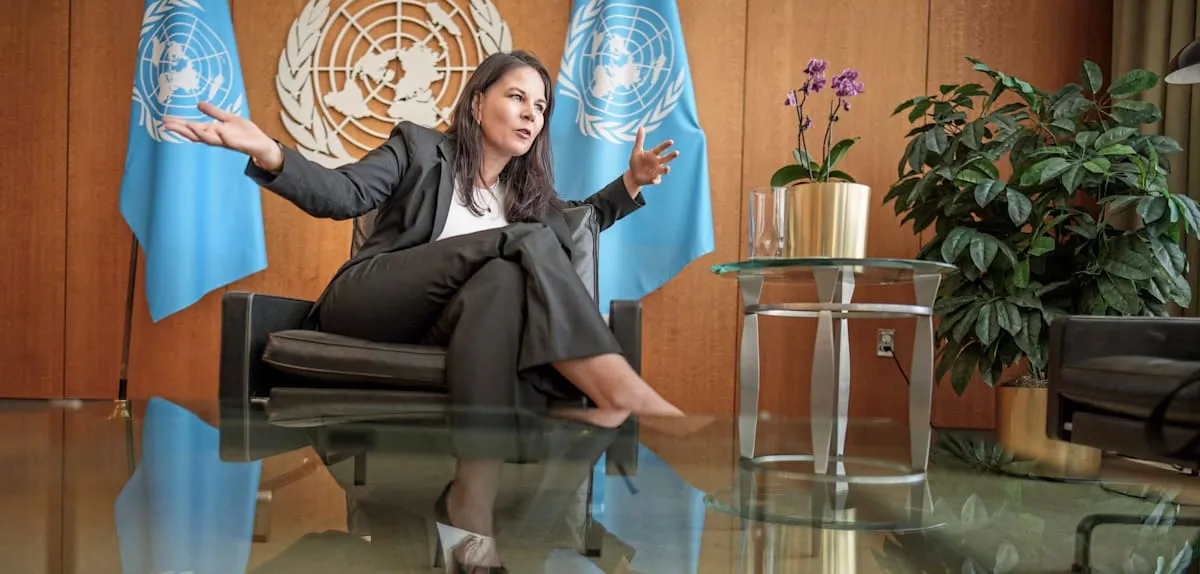
STOCKHOLM – German Foreign Minister Annalena Baerbock faced a fierce confrontation from pro-Gaza activists during a public lecture at a prestigious institution in Sweden in early 2026. This incident, occurring amidst the humanitarian crisis in Gaza, directly tested Germany's diplomatic resilience on the international stage and sparked debate over freedom of expression in academic settings.
The activists, mostly students, repeatedly interrupted Baerbock's speech with shouts and banners condemning the German government's stance on the Israeli-Palestinian conflict. They demanded an end to Berlin's support for Israel and a push for a permanent ceasefire in the Gaza Strip. A tense atmosphere permeated the lecture hall, indicating a rise in public sentiment against German foreign policy.
Despite the disruptions, Baerbock continued her speech, occasionally attempting to respond to the accusations leveled against her. She emphasized that Germany has always supported a two-state solution and has provided significant humanitarian aid to Palestinians. We understand the pain felt, but diplomatic responses must be based on facts and constructive efforts, she reportedly said, according to eyewitness accounts at the scene.
This event is not the first time a high-ranking German official has faced similar protests. However, the intensity and its location in Sweden, a country that also holds strong views on the conflict, added a complex dimension to the incident. Global tensions surrounding the Middle East conflict continue to escalate, and world leaders often become direct targets of public anger.
The background to this incident stems from the worsening escalation of the conflict in Gaza since late last year. Thousands of civilians have been killed, and the humanitarian crisis has reached a critical point, triggering a wave of global demonstrations calling for justice and protection for the Palestinian population. Germany, as a traditional ally of Israel, is under immense pressure to balance geopolitical interests with humanitarian values.
The German government under Chancellor Olaf Scholz has repeatedly affirmed Israel's right to self-defense while also calling on Israel to adhere to international law and protect civilians. However, for pro-Gaza activists, this rhetoric is considered insufficient and does not adequately reflect the suffering endured by Palestinians.
The interruption in Sweden highlights the challenges faced by diplomats in communicating policy amidst extreme polarization of public opinion. On one hand, there is a need to uphold diplomatic principles and dialogue, while on the other, there is strong pressure from civil society to demand moral accountability.
Some political observers view this incident as an indication that Germany's support for Israel is becoming increasingly difficult to maintain without facing strong backlash, both domestically and internationally. This could impact Germany's international image and its diplomatic relations with countries holding different views.
The German government is expected to evaluate this incident and consider an appropriate response. It is not unlikely that their communication approach or even their foreign policy may undergo review, especially leading up to major international forums where the Gaza issue is likely to dominate the agenda once again.
Editorial Insight:
The incident involving Foreign Minister Baerbock in Sweden reflects the increasing global pressure on Western nations regarding the Gaza conflict. This is not just about foreign policy, but also about how a nation's moral legitimacy is perceived by the international community. Failure to respond wisely to public protests can damage diplomatic credibility and potentially deepen the divide between governments and citizens, especially younger generations who are increasingly vocal on issues of global justice. Germany needs to find a better balance in supporting Israel's security and fulfilling humanitarian obligations.