 Robert Andrison
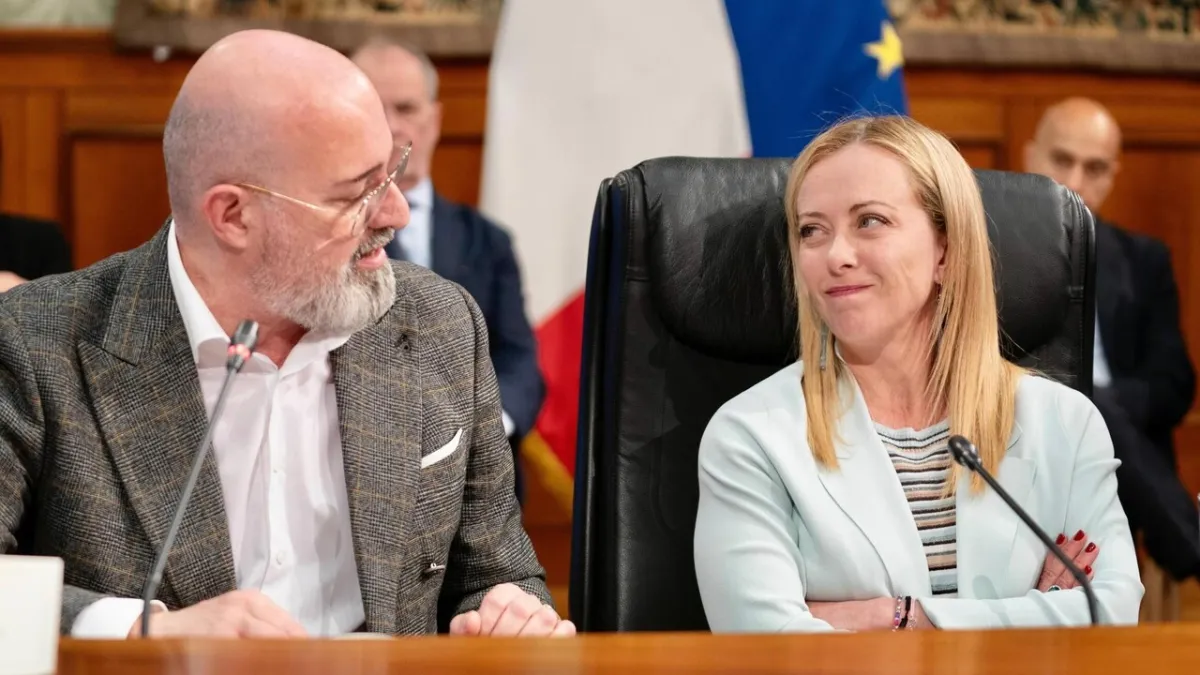
ROME – The Italian political arena is once again in turmoil after Stefano Bonaccini, a prominent politician from the Democratic Party, made a controversial statement implying that 'right-wing voters are ignorant'. The remark immediately triggered a storm of criticism, particularly from Prime Minister Giorgia Meloni, who deemed it an insult to millions of Italian citizens. This incident occurred amidst an increasingly heated national political dynamic, deepening polarization and highlighting the fragility of social cohesion.
Bonaccini's statement, seemingly directed at right-wing party voters, quickly spread and garnered strong reactions. Many interpreted the comment as a form of intellectual arrogance and condescension towards political opponents' constituents.
Prime Minister Giorgia Meloni did not remain silent. She promptly attacked Bonaccini, asserting that the statement displayed an elitist attitude and a disrespect for democracy. Meloni demanded that Bonaccini apologize to those who had been insulted.
Bonaccini attempted to defend himself, clarifying that his remark was actually a 'warning to the left' not to underestimate voters and to understand the root causes of societal problems. He claimed the context of his statement was misinterpreted. However, this clarification did not immediately quell the wave of public anger.
Elly Schlein, Secretary of the Democratic Party and Bonaccini's colleague, also spoke out. Schlein urged Prime Minister Meloni to focus more on 'people's problems' rather than engaging in personal controversies. According to Schlein, numerous pressing issues demand government attention.
This incident illustrates the sensitivity of political rhetoric in Italy. The polarization between left and right blocs is often exacerbated by statements that are easily misinterpreted or deliberately twisted for political gain. Such events risk eroding public trust in politicians.
Debates about voter intelligence or qualifications are not new in political history. However, in the digital era of 2026, such statements carry greater explosive power due to the speed of information dissemination and social media amplification.
This controversy arises while Italy also faces significant challenges such as post-pandemic economic recovery, handling of natural disasters, and migration issues. Critics argue that the focus should be on concrete solutions, not on a war of words.
Several political analysts are calling for Italian leaders to be more prudent in their choice of words. Constructive discussions about policies are more needed than divisive rhetoric.
Parts of the public expressed their disappointment with the level of political debate, which often gets bogged down in personal attacks. They expect a narrative that addresses more substantial issues.
Bonaccini's statement will likely fuel the right-wing camp to rally support, portraying the opposition as arrogant and out of touch with the people.
Editorial Insight: The 'right-wing voters are ignorant' incident, uttered by Bonaccini, is a stark example of how careless political rhetoric can escalate into a communication crisis and deepen divisions. Although he defended himself, the damage to the Democratic Party's image has already occurred, benefiting Prime Minister Meloni, who swiftly capitalized on the political opportunity. This event also highlights the need for politicians to be more meticulous in their communication, especially in the face of growing polarization across Europe, including Italy. Moving forward, this incident will likely be frequently cited in campaigns to accuse certain groups of being anti-democratic or elitist, an old tactic that remains effective.