 Gabriella
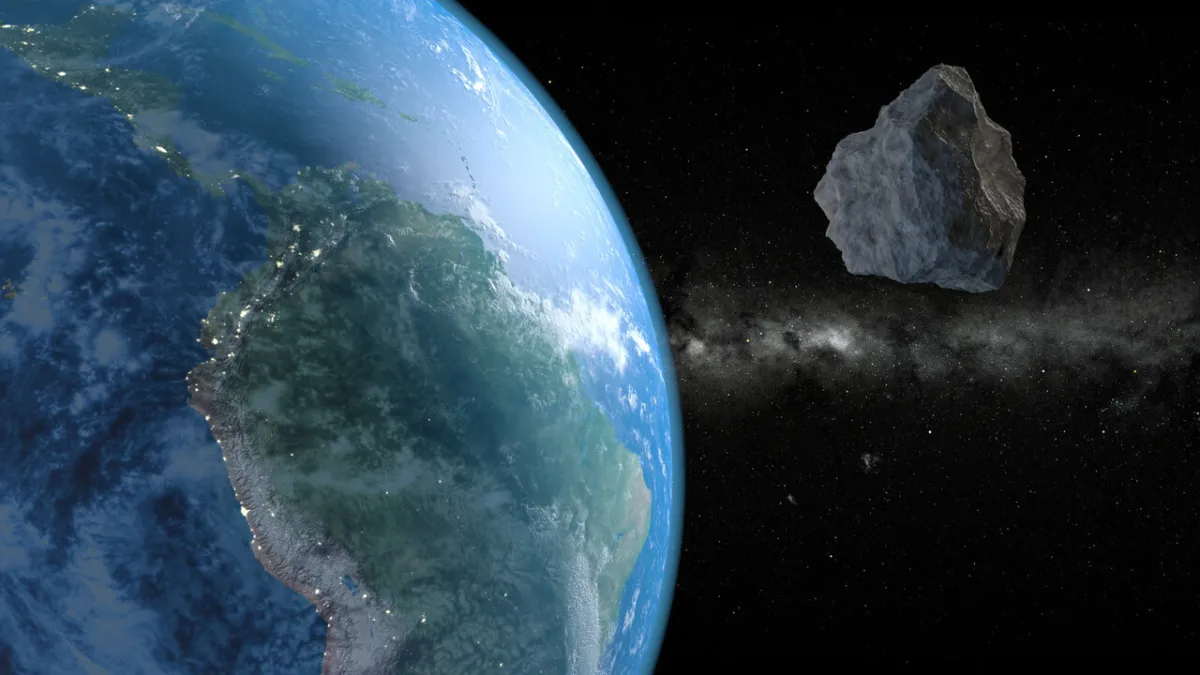
GLOBAL – Astronomers worldwide have announced the discovery of a new temporary space object dubbed a 'mini-moon.' Officially named 2026 QQ8, this object is currently orbiting Earth and is expected to remain our cosmic neighbor until December 2026. This discovery has quickly garnered attention from both the scientific community and the public following space developments.
Object 2026 QQ8 was recently discovered and possesses a very small diameter, only about two meters. Its diminutive size made it challenging to detect, but recent observations confirm its temporary capture within Earth's gravity. This phenomenon offers a rare opportunity for scientists to delve deeper into gravitational interactions around our planet.
Scientists explain that 2026 QQ8 is not a moon in the conventional sense, like our Moon. Instead, it is classified as a Temporarily Captured Object (TCO) or sometimes referred to as a quasi-satellite. This object was previously a small asteroid that passed too close to Earth and was temporarily pulled into our orbit.
The existence of this mini-moon highlights the increasingly sophisticated capabilities of near-Earth object detection systems. Despite its small size, its discovery demonstrates advancements in telescope technology and space monitoring algorithms capable of identifying faint, fast-moving bodies around us.
2026 QQ8's orbit is unstable and influenced by the gravitational forces of both the Sun and Earth. Consequently, experts predict that this object will not remain for long. After several months of orbiting Earth in a complex pattern, it will eventually escape back into its original trajectory within the inner solar system.
The brief period of 2026 QQ8's existence provides a golden opportunity for astronomers to conduct in-depth observations. Data collected from this object can help them understand the composition, origin, and dynamics of small asteroids that frequently interact with our planet's gravitational field.
The discovery of TCOs like 2026 QQ8 is not unprecedented. Previously, several other objects have also been temporarily captured into Earth's orbit, providing valuable insights into the asteroid population in the solar system's belt and how they behave when approaching large planets.
Researchers are utilizing ground-based observatories and potentially space telescopes to track 2026 QQ8's trajectory. This information is crucial for modeling future orbits and predicting similar potential interactions with other objects that might approach Earth in the future.
An object as small as 2026 QQ8 poses no threat to Earth. Its size is too small to survive atmospheric friction if it were to re-enter our planet. It would most likely burn up completely in the atmosphere, creating a brief meteoroid flash that might go unnoticed.
This mini-moon phenomenon reminds us of the constant complexity and dynamic changes within our solar system. Every new discovery, no matter how small the object, always unveils new layers of our understanding of the universe around us.
Editorial Insight: The discovery of 2026 QQ8, though brief, serves as a timely reminder of the importance of space monitoring programs. The ability to detect an object of this minute size indicates significant progress in planetary defense against potentially larger near-Earth object threats. Data from this phenomenon will enrich our understanding of asteroid behavior and validate existing gravitational models, while maintaining vigilance over our dynamic cosmic environment.