 Dodi Irawan
ROME – The Italian Cabinet, or Council of Ministers (Cdm), is currently discussing a crucial security decree, one of its controversial points being the implementation of preventive detention for minors. This decision, expected to be finalized today, immediately sparked a wave of strong reactions, particularly from the Italian General Confederation of Labor (CGIL), which plans to hold a large demonstration in Milan tomorrow to voice its rejection of widening social inequalities.
Intensive discussions at the Italian government level mark a serious effort to respond to growing public concern over security issues and the phenomenon of juvenile crime. This step is seen as a firm response but also invites fierce debate about the long-term impact on children's rights and the justice system.
The proposed decree on preventive detention for minors is a central focus. Critics argue that such a policy has the potential to violate restorative justice principles and could lead to further stigmatization of vulnerable groups. They emphasize the need for comprehensive solutions that address the root causes of problems, rather than merely repressive measures.
In parallel, the CGIL labor union, one of Italy's largest worker organizations, expressed strong opposition to the continuing trend of social inequality. They assert that the security decree must be viewed in a broader context, namely the system's failure to create fair opportunities for all segments of society.
The demonstration initiated by CGIL in Milan is scheduled to be a primary platform for voicing demands for economic and social justice. They call on the government not only to focus on enforcement but also on investment in education, employment, and social services that can prevent children from becoming involved in criminal acts.
The presence of the Mayor of Milan at the CGIL demonstration adds significant political weight. This indicates that the issue of inequality and youth security has become a serious concern at the local level, with support for efforts to find more humane and long-term solutions. The Mayor is expected to bridge the aspirations of citizens with central government policies.
Figures like Calabresi are also confirmed to participate in the protest, adding representation from various segments of society demanding clarity and government accountability. The presence of these diverse figures underscores that the wave of protests is not merely a labor issue but a national concern.
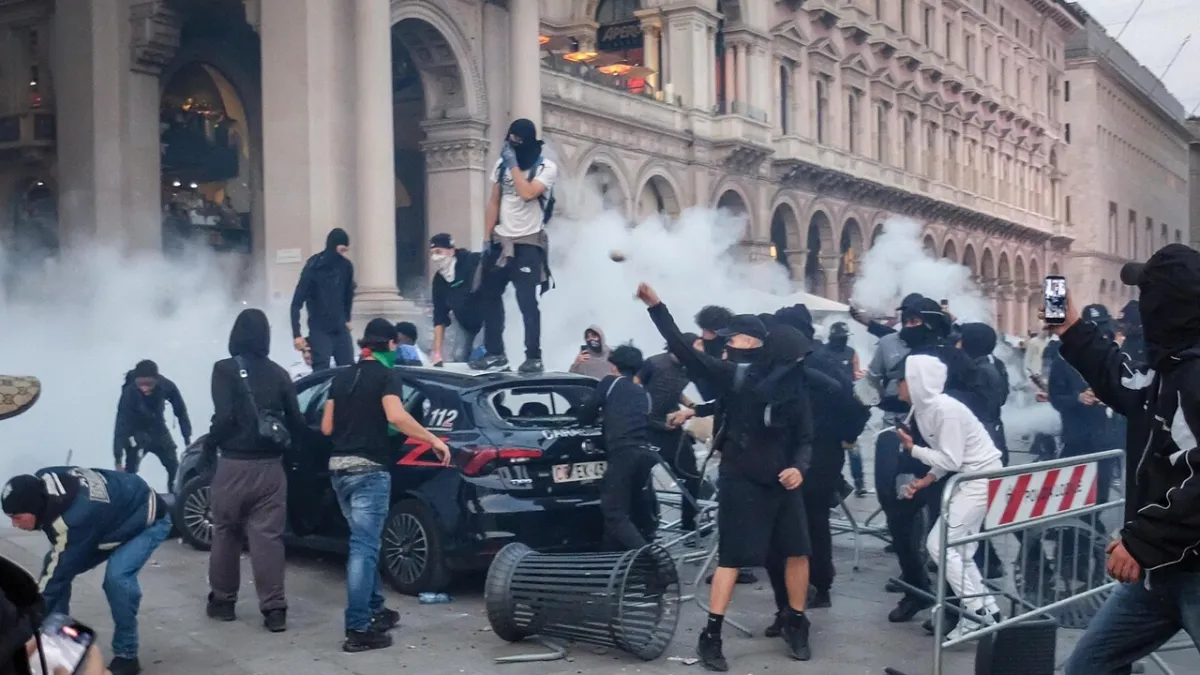
Indeed, the context of rising youth violence in Milan has been under the spotlight recently. Previous news reports have highlighted the urgency of addressing this issue, as reflected in articles such as Milan Gripped: Mayor Urges Comprehensive Solutions for Youth Violence and 500 Soldiers Deployed to Milan: Mattarella Strongly Condemns Brutal Violence. This shows that security is not a new issue, but the government's current approach is provoking a different reaction.
The government insists that emergency measures are necessary to maintain public order and protect citizens. However, substantial debate arises concerning the effectiveness and ethics of preventive detention policies, especially for groups still in their developmental stages.
CGIL and other civil society organizations underscore the importance of constructive dialogue among the government, labor unions, and society to formulate balanced policies. They emphasize that long-term solutions must involve strengthening social networks and improving the quality of life for all, not just through sanctions.
In the political dynamics of 2026, pressure on the government to balance security and social justice will intensify. How the government responds to the voices of protest from the streets of Milan will be a crucial determinant for the future direction of Italy's social and security policies.
Editorial Insight:
The situation in Italy demonstrates a classic tension between a repressive security approach and demands for social justice. The decree for preventive detention of minors, while aiming to curb criminality, risks overlooking structural factors such as poverty and lack of educational access that often trigger social problems. The presence of the Mayor of Milan at the labor protest indicates a potential gap in perspectives between the central and local authorities, and potential policy conflicts if the central government does not involve stakeholders in formulating more holistic policies. The future handling of security and inequality issues in Italy will largely depend on the government's capacity to listen to and integrate diverse perspectives, rather than relying on a single solution. A balanced and evidence-based approach will be essential to prevent deeper polarization.