 Demian Sahputra
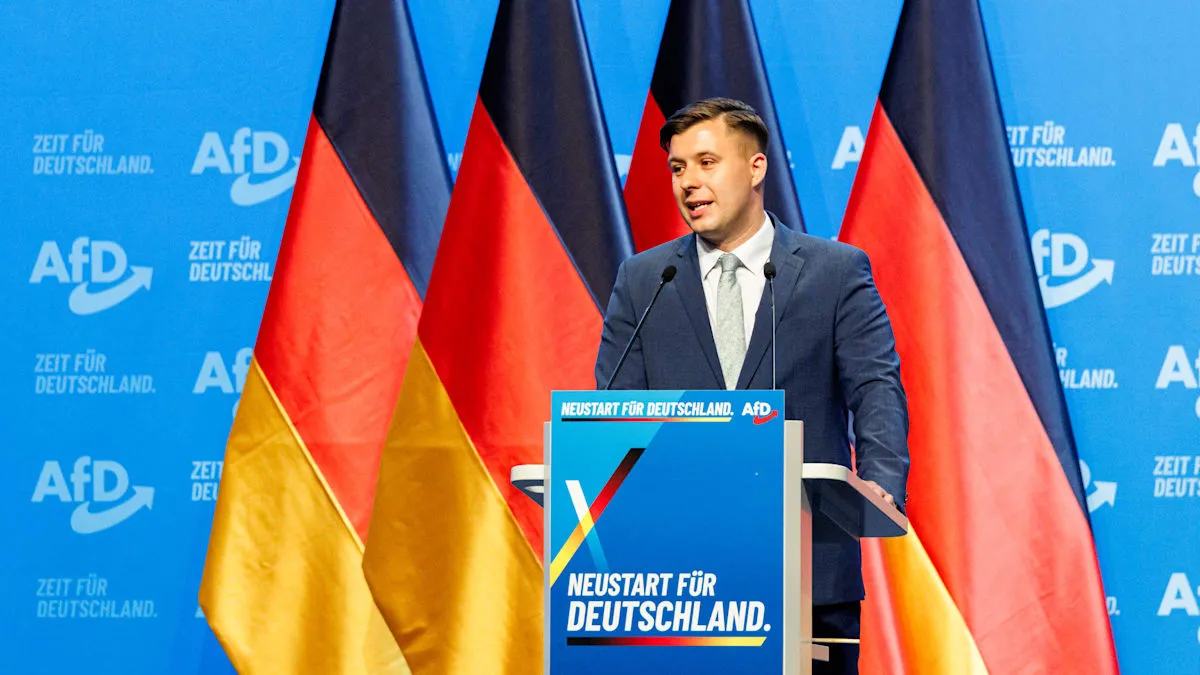
Magdeburg – The youth wing of the Alternative for Germany (AfD) party, Generation Deutschland, convened its inaugural federal congress in Magdeburg in 2026. This historic gathering, the first since its founding in November 2025, signals a consolidation of power and strong self-confidence amidst Germanys dynamic political landscape. WELT reporter Steffen Schwarzkopf delivered an on-site report, highlighting the members enthusiasm and determination.
The congress provides Generation Deutschland with a platform to project an image of political independence and vitality. Since its official establishment, the group has drawn significant public and media attention, often linked to narratives challenging traditional German political establishments. Their presence on the national stage reflects AfDs strategy to garner support from younger voter segments.
AfD itself continues to make waves in the German political landscape, particularly with its anti-immigration and Eurosceptic platforms. The establishment of an organized youth wing, Generation Deutschland, is a logical step to strengthen their ideological base among the succeeding generation, ensuring the continuity of the partys agenda for the future.
Reports clearly indicate that Generation Deutschland members are 'brimming with self-confidence'. This sentiment is undoubtedly fueled by AfDs rising popularity in several regional and national polls, providing a fresh impetus for young sympathizers.
The Magdeburg assembly is expected to formulate internal policy directions, campaign strategies, and strengthen coordination among regional branches. Agenda discussions will likely cover crucial issues such as national sovereignty, European Union reform, and stricter immigration policies, consistent with their parent partys overarching framework.
Germany, as one of Europes largest economies, consistently serves as an important barometer for regional political stability. The emergence and strengthening of groups like Generation Deutschland ignite intense debate about the future of liberal democracy and pluralism within the country.
Public reactions to the congress are varied. Some political observers express concerns about the potential for political radicalization among youth, while AfD supporters view this as a legitimate expression of democracy and a sign of a nationalist movements resurgence. German national media widely covered the event, reflecting its significance.
The long-term impact of this inaugural congress may not be immediately apparent. However, Generation Deutschlands consolidation has the potential to alter electoral dynamics, especially in upcoming local and regional elections, where youth votes hold significant sway.
This phenomenon of strengthening AfD youth wing movements aligns with previously highlighted trends. The article Generasi Muda AfD Guncang Jerman: Tolak Euro-Exit, Jaga Schengen! once discussed how AfD youth attempted to define their position on European issues.
Debates surrounding AfDs existence and influence are also not new. The issue of banning the party once emerged and triggered widespread controversy, as discussed in Polemik Pelarangan AfD Guncang Jerman: Demokrasi di Persimpangan?. Generation Deutschlands congress can be seen as a response to such pressures.
With fervent spirit and a defined vision, Generation Deutschland is now moving forward, ready to challenge existing political narratives and champion their agenda on the national stage. Their presence confirms that new political forces continue to grow and develop in Germany.
Editorial Insight: Generation Deutschland's inaugural congress in Magdeburg in 2026 is not merely a routine meeting, but a clear political statement. It demonstrates AfD's success in instilling its ideology in the younger generation, ensuring the continuity of their movement. This consolidation has the potential to increase political polarization in Germany and pose significant challenges to established parties in upcoming elections. Particular attention must be paid to how the rhetoric and policies of this youth group will influence broader public discourse.