 Dodi Irawan
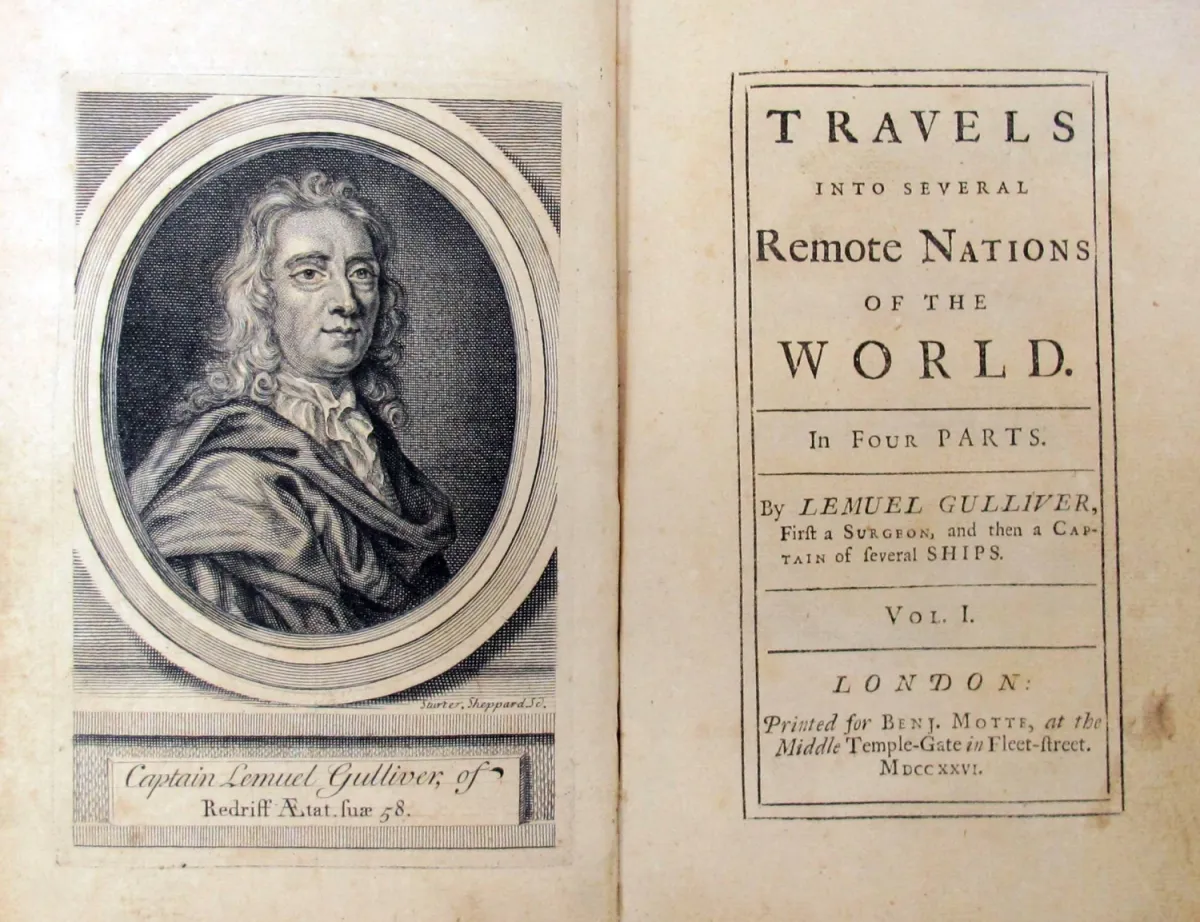
JAKARTA – Three centuries ago, a renowned satirist, Jonathan Swift, through his masterpiece Gullivers Travels, offered a sharp critique of unchecked scientific ambition. Now, in 2026, reflections from the third part of Gullivers journey to the remote regions of the world dominated by scientists, technologists, and projectors feel profoundly relevant to humanitys disorientation facing the exponential pace of artificial intelligence (AI) development.
Swift, known for his keen observation of society, depicted a fictional civilization called Laputa. There, scientists and philosophers were engrossed in absurd projects utterly useless for practical life, often causing damage instead. His work implied the dangers when science and technology detach from humanity and common sense.
Swifts projector characters, who spent their time on bizarre and impractical experiments, bear a striking resemblance to some trends in the 2026 AI world. Although AI has brought remarkable innovations, growing concerns persist regarding unethical development, projects that create more problems than solutions, and the dominance of algorithms over human decisions.
Several modern literary and technology experts highlight how Swifts vision in 1726, which then satirized the Royal Society and empiricism, can now be interpreted as an early warning against a potential crisis of identity and morality in the digital age. They argue that Gullivers disillusionment with a world solely reliant on science, without wisdom, is an apt reflection of many current anxieties.
Global governments, including in Indonesia under President Prabowo Subianto, and international bodies, are beginning to underscore the importance of ethical AI regulation. Debates surrounding algorithmic bias, data privacy, and the threat of job displacement due to automation are top agenda items. This reflects an effort to prevent us from falling into a Laputa-esque dystopia.
As a concrete example, consider how AI technology now dominates various sectors. From financial decision-making and defense systems to daily social interactions. The United States, for instance, has recognized AI giants like Nvidia and OpenAI as national technology pioneers, demonstrating how central these companies are in shaping the future.
However, beneath the splendor of innovation, a fundamental question arises: have we created systems that serve us, or are we enslaved by our own creations? This concern, at its core, resonates with the same question Swift posed three centuries ago.
Should Gulliver revisit our world in 2026, with all its rapid advancements and reliance on AI, it is highly probable he would experience similar, if not worse, disappointment. He might witness how human imagination and rationality are often overridden by machine logic, or how innovation creates new social divides.
Swifts work reminds us that technological progress, without a strong moral compass and concern for social impact, can lead to ruin or at least to an inhumane condition of life. This is a relevant lesson for every scientist, technologist, policymaker, and general public in facing the AI revolution.
Editorial Insight:
The repetition of history, albeit in different contexts, often offers valuable lessons. Jonathan Swifts critique of unchecked scientific ambition serves as a timeless mirror for every generation. The AI era of 2026 demands that we be not only intelligent innovators but also wise humans. A balance is necessary between the drive for progress and ethical prudence, ensuring that technology remains a tool for human advancement, rather than diminishing human dignity and value.