 Angela Stefani
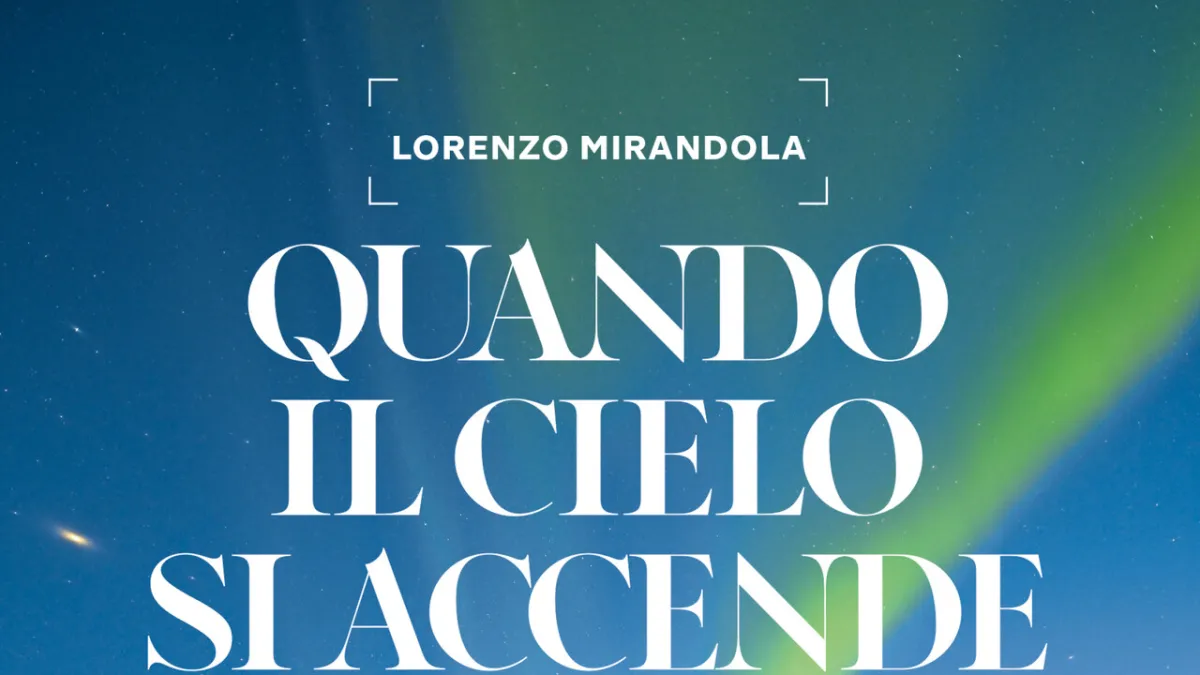
ROME – Renowned nature explorer and photographer, Lorenzo Mirandola, recently launched his latest work, a book titled 'When the Sky Lights Up'. This release, occurring in 2026, immediately captured the attention of the public and the scientific community. The book not only shares Mirandola's lifelong experiences chasing the aurora borealis but also serves as a comprehensive guide that thoroughly debunks various myths and offers practical tips for seekers of the northern lights.
Mirandola's journey in pursuit of this mesmerizing celestial phenomenon has taken him across diverse cold landscapes in the northern hemisphere. From the icy plains of Iceland to the pine forests of Norway, he documented every moment, capturing the rarely repeated dance of colors. His extraordinary dedication to aurora hunting has established him as one of the most respected experts in the field.
'When the Sky Lights Up' emerged as a response to the numerous questions and misconceptions surrounding the aurora borealis. Mirandola identified that many people still cling to false information, even with rapid advancements in technology and science. Therefore, he felt compelled to present truths based on direct observation and scientific data.
One of the book's main focuses is to dismantle popular myths that often hinder an optimal viewing experience. For example, the belief that aurora can only be seen in extreme temperatures or specific locations, whereas key factors are atmospheric conditions and solar activity, not merely air temperature. Readers will find detailed explanations of the science behind this phenomenon, presented in easily digestible language.
Besides debunking myths, this book, over 200 pages thick, also features a series of essential tips for anyone planning to witness the aurora. These range from choosing the best time and strategic locations to selecting the right photography equipment to capture the sky's luminous beauty. Mirandola also includes advice on physical and mental preparation for extreme weather conditions.
Mirandola stated, 'I hope this book is not just a guide, but also an inspiration for many to get closer to the wonders of nature. The aurora is not merely a spectacle; it is a transformative experience that teaches us humility and the grandeur of the universe.' He delivered this statement during a book review event in Rome last week.
Since its publication, 'When the Sky Lights Up' has received a warm reception. Critics praise the depth of information and captivating writing style, while readers appreciate the ease of the presented guidance. The book is expected to become a primary reference for amateur astronomy enthusiasts and adventurous travelers.
The book's influence even extends to the tourism sector. Several tour operators in the Arctic region have begun recommending 'When the Sky Lights Up' to their clients as preparatory reading. This demonstrates how relevant and useful Mirandola's information is in enhancing the aurora hunting experience.
The book's publisher, Terra Nova Publishing, expressed their pride in collaborating with Mirandola. A spokesperson for the publisher stated, 'Lorenzo Mirandola's work is a perfect blend of adventure, science, and art. We are confident that this book will become one of the most influential titles in the nature exploration genre this year.'
Through 'When the Sky Lights Up', Mirandola not only shares his knowledge but also fosters awareness about the importance of preserving the environment and invaluable natural beauty. This serves as a reminder that wonders like the aurora borealis are a heritage we must protect for future generations.
Editorial Insight: The launch of Lorenzo Mirandola's book 'When the Sky Lights Up' is not just a regular literary release. It marks a significant moment for increasing public literacy about rare natural phenomena, while also encouraging responsible exploration. Amidst the deluge of digital information, authentic works like this provide an essential anchor of credibility, guiding readers from myth to solid scientific understanding. It also demonstrates how individual passion can greatly contribute to science and the appreciation of cosmic wonders.