 Angel Doris
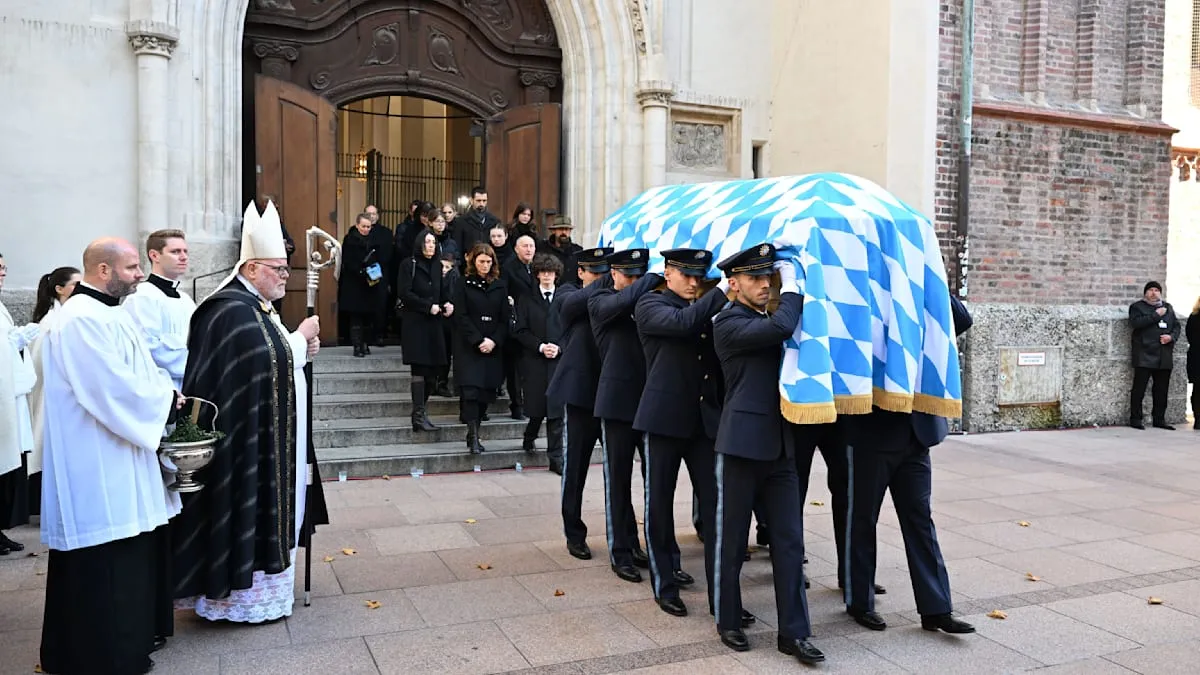
MUNICH – The city of Munich was enveloped in deep sorrow last Saturday as thousands of citizens and political figures gathered to pay their final respects to Hubert Aiwanger, the late Deputy Minister-President of Bavaria. A solemn, hours-long funeral ceremony, rich in Bavarian tradition, marked the farewell to one of Germany's significant political figures.
The highly symbolic procession commenced with the melodious strains of Mozart's Requiem, filling the sacred spaces with a melancholic resonance that touched souls. The gentle waft of incense added to the reverence, creating an atmosphere of reflection and homage.
Subsequently, the solemnity was punctuated by the respectful thud of Bollerschusse, ceremonial gun salutes that are an integral part of Bavarian tradition during special occasions. The harmonious sounds of traditional brass band music, or Blasmusik, resonated, accompanying the deceased's departure with rhythms that encapsulate a rich local cultural heritage.
The governments of Bavaria and Munich ensured the ceremony was conducted with the highest standards of honor, reflecting Aiwanger's dedication during his tenure. As Deputy Minister-President, he played a vital role in policy formulation and regional representation at the national level.
The presence of numerous political figures, from both the governing coalition and the opposition, demonstrated the breadth of Aiwanger's network and influence within the German political landscape. State and federal dignitaries also attended, standing shoulder-to-shoulder to commemorate the politician's career.
The passing of Hubert Aiwanger leaves a significant void, particularly for the party he represented and the Bavarian populace he served. His contributions across various fields, from regional economics to social issues, have left an indelible mark.
This ceremony was not merely a farewell but a collective manifestation of public appreciation for his service. Many citizens willingly lingered along the procession route, eager to be part of this historic moment and to express their condolences directly.
The blend of universal religious rituals, such as Mozart's Requiem and the use of incense, with specific Bavarian traditions like Blasmusik and Bollerschusse, highlights Germany's cultural richness in confronting loss. It is a reflection of how old traditions remain relevant amidst modernity.
Political tensions in Germany are often under scrutiny, as summarized in news regarding internal party dynamics. For instance, internal debates also frequently occur, such as SPD's Internal Storm: Minister Schneider Fully Supports Klingbeil to Lead the Party; however, on that day, all differences were set aside to pay final respects.
Aiwanger's legacy will continue to be discussed within Bavarian political and social corridors, becoming part of the state's historical narrative. This ceremony served as a reminder that a leader's role can unite various segments of society in a moment of homage.
Editorial Insight: The passing of a high-ranking official like Hubert Aiwanger invariably creates political and social ripple effects. The deeply traditional tribute ceremony in Munich is not just a symbol of farewell but also a demonstration of unity and respect in the face of national loss. It underscores the depth of Bavarian tradition and how cultural values remain an anchor in pivotal moments, transcending political divides. Such processions often become moments of societal reflection on their identity and leadership.