 Demian Sahputra
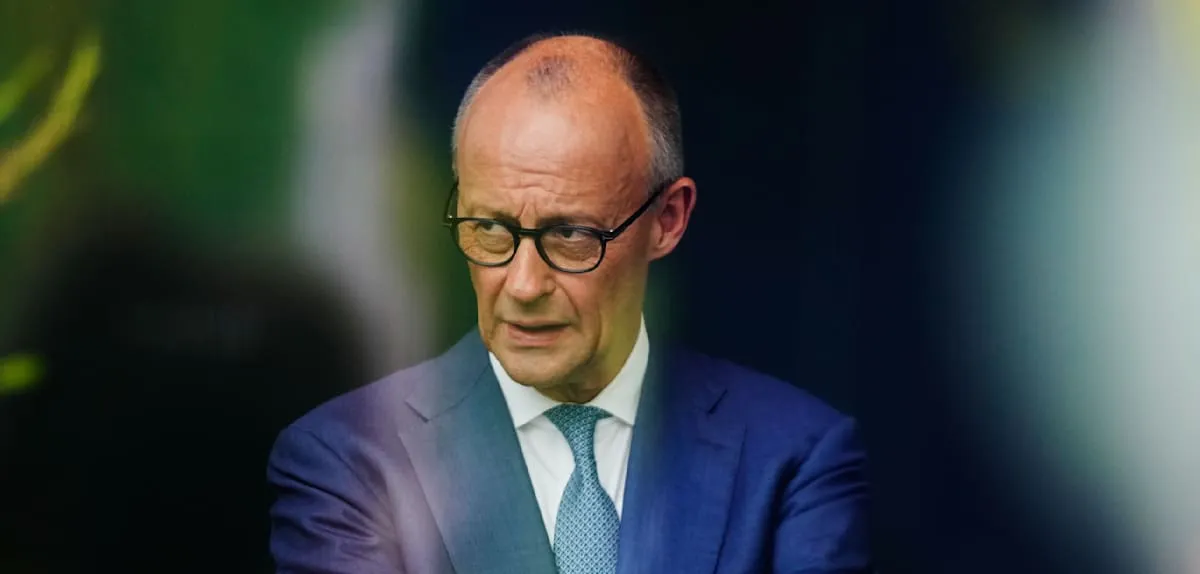
BERLIN – Prominent historian, Professor Dr. Heinrich Rodder, has put forth a fundamental perspective on the future of German leadership, specifically highlighting Friedrich Merz, leader of the Christian Democratic Union (CDU). Rodder believes that Merz possesses a significant opportunity to overcome his political existential crisis and emerge as an influential German chancellor in the long term. This statement comes amidst a challenging European political landscape, implying that Germany needs decisive direction.
Rodder emphasized that courageous leadership and a willingness to consider a minority government option are key for Merz in addressing the urgent historical tasks awaiting Germany. This context is highly relevant given the internal and external debates surrounding the stability of the current coalition government and the need to adapt to new geopolitical realities.
The Chancellor, with modern and courageous leadership, can free himself from his existential crisis, Rodder stated in an exclusive interview. His comments underscore the importance of a leader who is not only responsive but also proactive in shaping national narratives and policies.
This view arises at a time when German politics is often accused of lacking long-term vision and courage in making strategic decisions. Challenges ranging from energy transition, inflation, to migration issues demand responses that go beyond mere pragmatism.
According to Rodder, the willingness to lead under crisis conditions is the true test of a chancellor. It is not merely about winning elections, but also about the capacity to inspire and unite the nation during difficult times.
Furthermore, Rodder also pointed to the potential of a minority government formation as a valid alternative. Even a minority government must be an option, because crucial historical tasks now await, he asserted. This idea, though controversial in some circles, could offer political flexibility amidst an increasingly fragmented parliament.
The historical tasks referred to by Rodder likely include strengthening Germany's position in the European Union, confronting geopolitical aggression, and ensuring economic sustainability in an uncertain era. This requires a comprehensive strategy that extends beyond the usual electoral political cycles.
Recent German political developments have indeed shown turbulent dynamics. For instance, the political controversies in Germany are intensifying, as reflected in the issue of Mario Voigt's Vote of Confidence in Thuringia, which recently emerged, demonstrating the dynamic nature of power. Local political movements, such as the former independent mayor of Ziesendorf joining the AfD, also indicate shifts in support and challenges for established parties.
Friedrich Merz, as the leader of the largest opposition party, is in a strategic position to capitalize on public sentiment seeking strong leadership. However, he must also navigate high expectations and criticisms of his political approach.
Merz's opportunity to become a significant chancellor will heavily depend on his ability to articulate a cohesive and convincing vision, not just for his party's constituents, but also for a broader spectrum of voters. This includes addressing concerns and building consensus amidst polarization.
Rodder also drew comparisons between the current situation and crucial moments in German history when great leaders successfully altered the nation's course through courage and determination. Merz's challenge is to prove he possesses similar capacity for the modern era.
Building a stable coalition or even effectively leading a minority government will require exceptional negotiation skills and a capacity to compromise without sacrificing core principles. This is a formidable test for any ambitious politician.
Ultimately, Rodder's assessment underscores that true leadership is measured not only by fleeting popularity but by its long-term impact on the nation's welfare and stability. For Merz, the path to a significant chancellorship is one that demands integrity and vision.
Editorial Insight: Historian Rodder's perspective highlights that Germany's political future is not solely determined by party dynamics, but by the quality of leadership capable of tackling complex challenges. Merz's potential as a significant chancellor hinges on his ability to present bold solutions, including confronting the idea of a minority government, amidst a crisis testing the resilience of German democracy. This article provides crucial insight into what Germany might need from a leader in the years to come.