 Angela Stefani
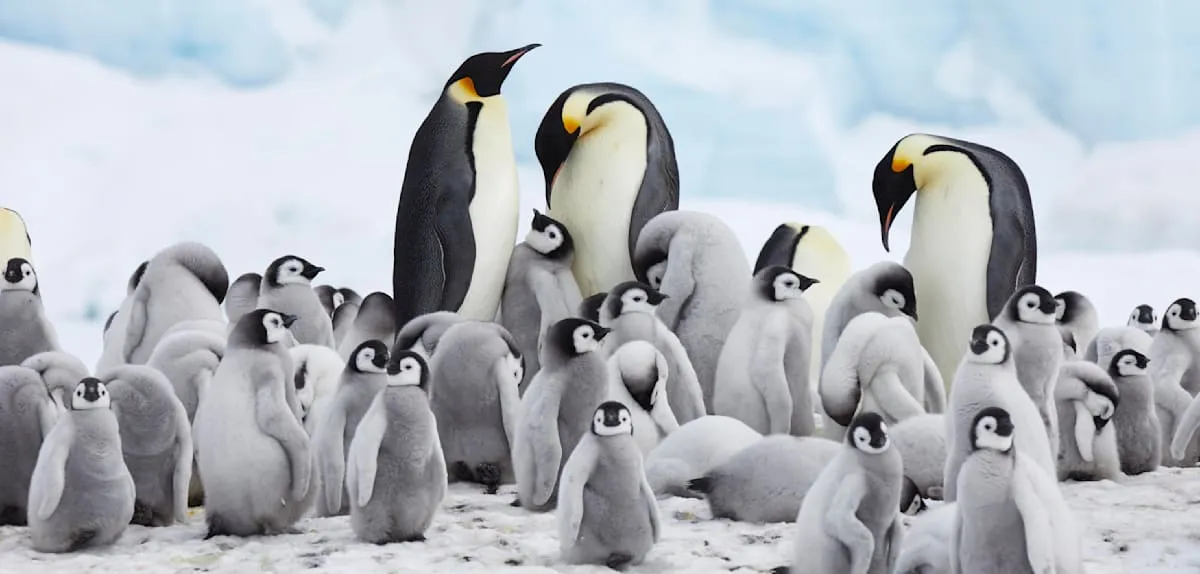
Antarctica—A horrific ecological tragedy recently unfolded in the depths of Antarctica, where thousands of emperor penguin chicks (Aptenodytes forsteri) reportedly starved to death en masse. This heartbreaking phenomenon was triggered by the presence of an unusual, massive iceberg, drastically disrupting their access to vital food sources and simultaneously destroying a system of sustenance that had been established for thousands of years within these penguin colonies.
The colossal iceberg, unprecedented in size for the area, had moved and become trapped in the penguins' migration routes or hunting grounds. The presence of this ancient ice mass effectively created a natural barricade, forcing adult penguins to travel significantly longer distances to forage for their young. These extended journeys drained their energy and time, often resulting in them returning empty-handed.
Emperor penguins are renowned for their complex breeding cycle, which heavily relies on stable sea ice conditions. They choose colony locations on sturdy ice, close to open waters (polynyas) that serve as primary food sources like fish and krill. The presence of such a large iceberg altered this habitat map, severing vital pathways between the colony and their hunting areas.
Parent penguins had to struggle across unpredictable icy terrain, extending their foraging time from mere hours to several days. Consequently, newly hatched or very young chicks were forced to wait without food for an unusually long duration. This situation, combined with Antarctica's extreme temperatures, rapidly led to mass starvation and the death of thousands of individuals.
The Antarctic ecological system is known for its fragility, where every component is interconnected within a complex web of life. Large-scale disturbances, such as the movement of this giant iceberg, can trigger devastating ripple effects. Scientists state that the emperor penguins' way of life, adapted over thousands of years to natural environmental fluctuations, is now threatened by more drastic and unpredictable changes.
Researchers from the British Antarctic Survey and other scientific institutions have been monitoring emperor penguin colonies through satellite imagery and field expeditions. Recent data indicates a drastic decline in chick populations at several locations, directly correlating with the emergence of the massive iceberg in the surrounding waters. Their reports provide concrete evidence of the deadly impact of this natural phenomenon.
Although iceberg movements can occur naturally, the frequency and scale of such events are believed to be increasing with global climate change. Warming sea temperatures and the destabilization of polar ice sheets have the potential to release more colossal icebergs into the ocean. This poses a threat not only to penguins but also to the entire polar ecosystem.
Emperor penguins, listed as vulnerable in conservation status, are among the species most affected by extreme environmental changes. Their reliance on sea ice as a breeding platform and foraging ground makes them crucial indicators of the health of the polar ecosystem. This mass death of chicks serves as a stark warning for global conservation efforts.
Experts warn that if climate change trends continue unchecked, similar events with equally dire consequences could occur in the future. Shifts in ice patterns and an increase in floating icebergs will continue to pose serious challenges to the survival of emperor penguin populations.
Therefore, rigorous monitoring of emperor penguin colonies and ice conditions in Antarctica is paramount. Ongoing research is needed to understand the dynamics of these changes and to develop effective mitigation strategies. Only then can we hope to protect this iconic species from extinction due to increasingly severe ecosystem disruptions.