 Gabriella
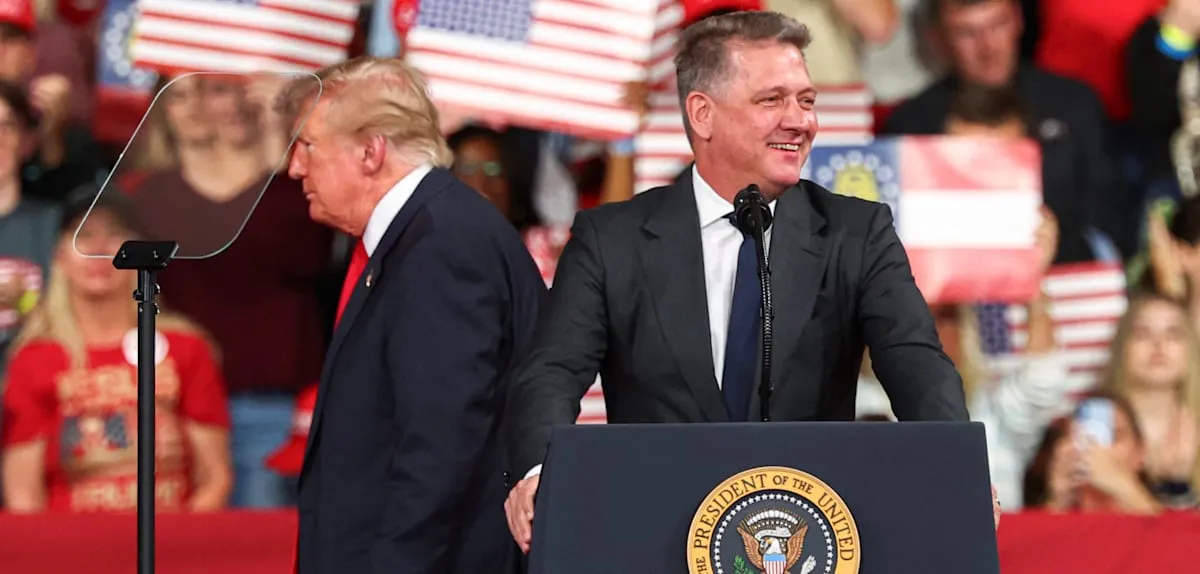
WASHINGTON – Audi CEO Markus Dollner finds himself at the center of a global political and business controversy following a contentious announcement regarding the construction of a new plant in the United States. This strategic decision, accompanied by a public appearance alongside US President Donald Trump during a political campaign, immediately sparked a wave of fierce criticism, even from the highest political echelons in Europe, who dubbed it betting on a dead horse.
Dollner's appearance on the US political campaign stage with President Trump surprised many. The event explicitly associated the German premium automotive brand with Trump's often-divisive political agenda. This announcement of a major investment, instead of being met with enthusiasm, raised serious questions about corporate independence and Audi's reputation in the global market.
The fierce criticism came not only from industry observers but also directly from above—referring to European political circles who felt Dollner's decision was excessively political. The betting on a dead horse analogy implies concerns that this investment might be a misguided step that will ultimately harm Audi, especially if Trump's political projections do not meet expectations.
Audi's move is believed to be a strategic effort to strengthen its position in the competitive US automotive market, while navigating the protectionist policies of the Trump administration, which frequently emphasizes the importance of domestic production. By building a plant in the US, Audi hopes to avoid potential import tariffs and respond to the 'America First' demands characteristic of Trump's administration.
However, critics argue that a public alliance with a political leader can damage the image of a global brand's neutrality. Audi, as part of the Volkswagen Group, has traditionally maintained distance from direct political affiliations to preserve the universal appeal of its products across various markets and demographics.
This decision also raises doubts about the company's values. For some, appearing alongside Donald Trump amidst the 2026 election campaign, which is expected to be fiercely contested, is a high-risk move. It could alienate segments of consumers who do not align with President Trump's ideology or policies.
In Germany, Audi's home country, scrutiny over this decision is intensifying. The German automotive industry has a long history of forging pragmatic economic relationships worldwide. However, such an open political connection is considered to cross reasonable boundaries. Some political circles in Germany, currently facing domestic challenges, may view this as a distraction or even a moral misstep.
Initial analysis suggests that this investment might aim to leverage fiscal incentives or other policies offered by the Trump administration. However, the price to pay is a polarized public perception and potential friction with stakeholders, including home governments and civil society groups.
The long-term implications of this decision for Audi remain to be seen. While plant construction could open doors to new markets and operational efficiencies, its impact on brand reputation and relationships with global governments and consumers outside the US could be a significant challenge. This move will continue to be a subject of discussion, especially given the current political and economic sensitivities in Europe and America.
Many are now awaiting official responses from the Volkswagen Group's top management or even the German government to clarify their stance on Dollner's audacious move. This is not merely a business investment; it is a political statement with far-reaching consequences.
Editorial Insight: Audi's decision under Markus Dollner's leadership to overtly align with Donald Trump's political agenda, especially during a campaign, is a high-stakes maneuver. While it may be driven by economic considerations and market access, its reputational impact in Europe and among a broader consumer base cannot be overlooked. This reflects the dilemma faced by many global corporations: how to balance business ambitions with geopolitical sensitivities without becoming entangled in divisive politics. The 'highest political echelons' expressing concern indicates that this move has the potential to trigger diplomatic tensions and complicate Audi's international standing.