 Dodi Irawan
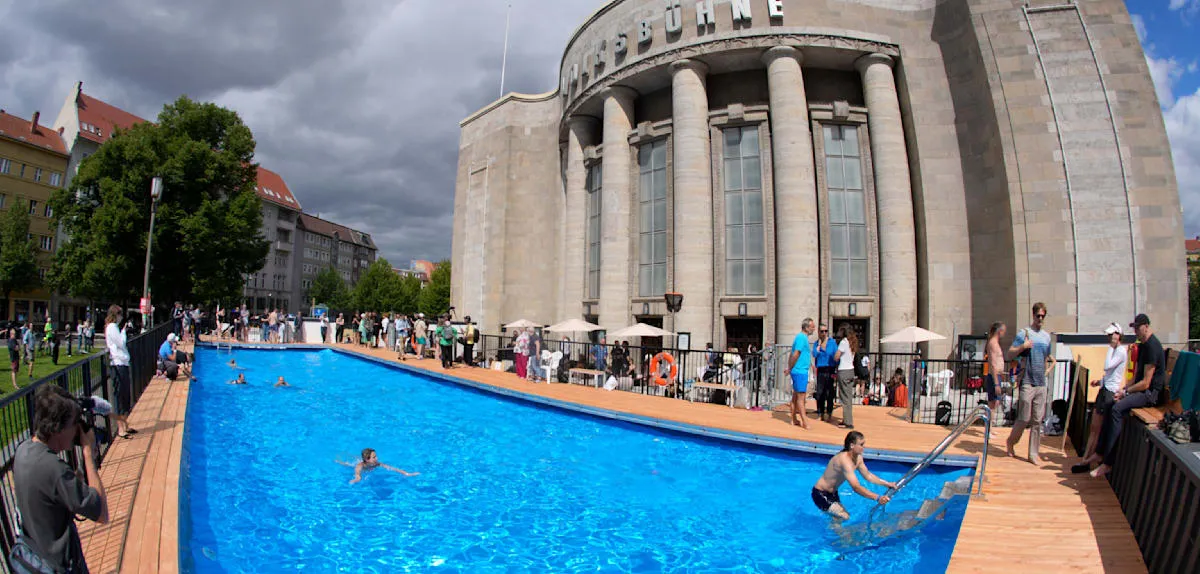
BERLIN – Volksbuhne Berlin, a prominent German art institution, recently announced the cancellation of an event slated to take place at its Volksbad venue. This surprising decision follows a wave of sharp criticism from various public and media circles regarding the event's format, which was intended to be exclusively for members of the African or black community. The controversy surrounding alleged reverse discrimination sparked strong reactions, compelling the organizers to withdraw the program to ease tensions.
The controversial program was initially advertised as an exclusive gathering for the black community, envisioned as part of efforts for inclusion and to provide a safe space for minority groups. However, this good intention was immediately met with arguments that creating exclusive spaces based on race, even for minorities, potentially violates the principle of universal equality.
Criticism emerged not only from politicians and public figures but also from journalists and human rights activists. They expressed serious concerns that such an approach could divide society along racial lines rather than unite it. Some observers even equated it with a form of unjustifiable segregation.
Volksbuhne had previously stated that the event's objective was to provide a safe and supportive platform for individuals from black backgrounds, allowing them to interact and share experiences without external pressure. They argued that such initiatives were necessary to address structural and historical disparities.
Nevertheless, the intensity of public pressure compelled Volksbuhne management to reconsider its decision. In an official statement, the institution confirmed the event's cancellation, acknowledging legitimate concerns regarding the exclusive format. They pledged to re-evaluate their approach to promoting inclusion in the future.
The cancellation immediately sparked a broader debate about the boundaries between inclusive safe spaces and segregative practices. Many welcomed Volksbuhne's decision as a responsible step, underscoring the importance of universalist principles in all cultural initiatives.
Professor Lena Schmidt, a sociologist from Humboldt University specializing in multiculturalism studies, suggested that the intention to create supportive spaces for minority groups is commendable. However, she stressed the importance of ensuring that such initiatives do not inadvertently create boundaries or exclusions that contradict the values of an open society.
Some members of the African community in Berlin expressed their disappointment over the cancellation. They argued that such events could offer a rare opportunity to gather and celebrate their identity without the dominance of the majority culture, although they acknowledged that the implementation might need to be reviewed for greater inclusivity.
This incident is not the first of its kind in Germany. Several other institutions have also faced similar criticism when attempting to implement programs specifically targeted at certain ethnic groups, often with similar arguments about the need for spaces of representation. This highlights the ongoing challenges in navigating sensitive issues of identity and inclusion in a pluralistic society.
Germany's General Non-Discrimination Act (Allgemeines Gleichbehandlungsgesetz) explicitly prohibits discrimination based on race, ethnicity, gender, religion, disability, age, or sexual orientation. This controversy at Volksbuhne highlights the complexity of interpreting and applying this law within the context of cultural activities.
Editorial Insight: The cancellation of the event by Volksbuhne Berlin is a clear reflection of modern dilemmas in inclusion efforts. Building safe spaces for minorities is essential, yet the line between protection and exclusion is very thin. This decision indicates that cultural institutions must be more discerning in designing programs to achieve inclusive goals without triggering perceptions of segregation, while also strengthening commitment to universal equality, which forms the foundation of democratic societies. This debate will likely continue, fostering deeper discussions on how to balance specific group rights with comprehensive non-discrimination principles.