 Stefani Rindus
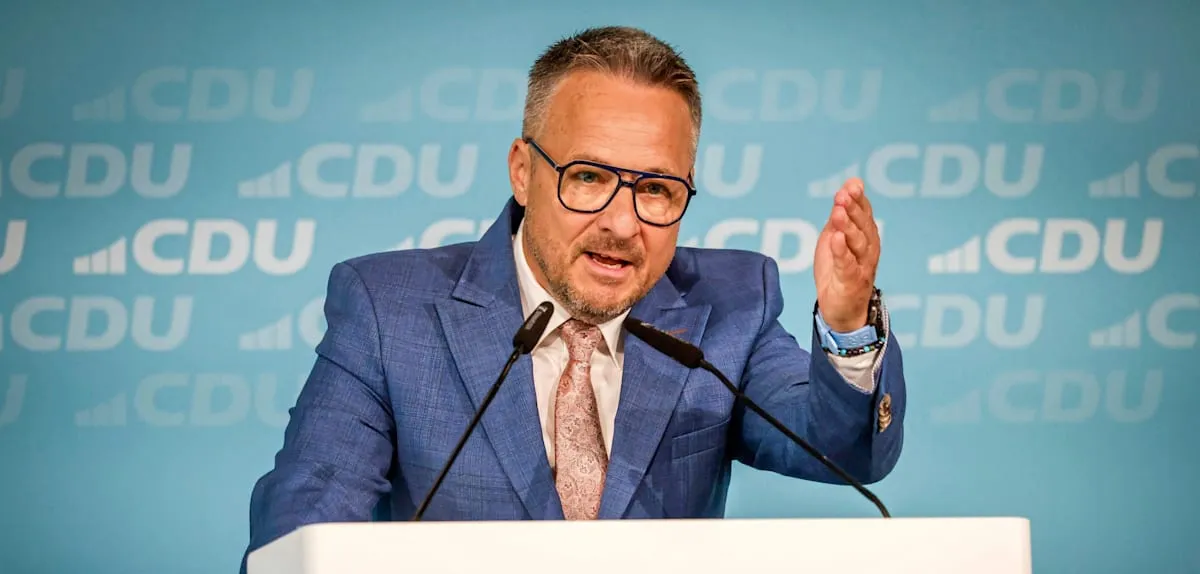
BREMEN — The chairman of the Christian Democratic Union (CDU) in Bremen, has criticized Chancellor Friedrich Merz in 2026. Merz is accused of still viewing the Federal Republic of Germany through a narrow "Old West Germany" lens, neglecting a more comprehensive vision of German unity. This statement quickly garnered solid support from the CDU faction in East Germany, signaling internal tensions regarding the future direction of both the party and the nation.
The sharp criticism emerged amidst fierce debates about national identity and policy priorities within the CDU. The Bremen CDU chairman argued that Merz's excessive focus on a Sauerländer perspective, a region in western Germany, hinders an understanding of the realities and aspirations of all of Germany, including the eastern regions with their unique post-Wende history.
CDU leaders in East Germany openly voiced their agreement with the statement from Bremen. They feel Merz's views are too rooted in the pre-reunification era, where differences between former West and East Germany were still very prominent. This raises concerns that the party's policies may not fully represent the interests of all German citizens.
This perspective, deemed to be rooted in "Old West Germany," could create misalignment in the national development vision. Issues such as economic distribution, infrastructure, and job opportunities in the eastern regions often require different approaches, which might be overlooked if policy focus is too centralized on western experiences.
Germany's unification history, known as Die Wende, in 1989-1990 was a monumental event that shaped modern Germany. However, this transition also left a legacy of structural and perceptual differences that are still felt today. The criticism of Merz indicates that these old wounds have not fully healed and continue to be a point of political friction.
National identity is crucial. A united Germany should transcend geographical and historical divisions. Chancellor Merz is expected to embrace an inclusive narrative, accommodating experiences and perspectives from every region, rather than maintaining a mindset deemed outdated by some of his party members.
These internal tensions could threaten the unity of the CDU ahead of the next federal election. If regional factions continue to feel marginalized, it could weaken the party's overall position in the eyes of voters, especially in key battleground regions.
Political observers suggest that Chancellor Merz should take proactive steps to bridge these differences. Open dialogue and more equitable representation within the party's leadership structure could be solutions to prevent further fragmentation that could be exploited by opposition parties.
The debate surrounding Merz's views is also relevant to broader socio-economic issues, including debates about the pension system and regional disparities. For instance, discussions about the future of German pension security often highlight differences in demographic and economic conditions between western and eastern regions, as reflected in the article on Germany's Pension Storm.
The political impact of this criticism is expected to be felt in the coming period. Chancellor Merz must be able to demonstrate that he is a leader for all of Germany, capable of uniting diverse perspectives and experiences for the holistic progress of the nation.
The integrity and internal cohesion of the CDU heavily depend on how Chancellor Merz responds to this call for inclusiveness. More balanced and representative policies will be key to ensuring the CDU remains relevant and strong in Germany's evolving political landscape of 2026.
Ultimately, the criticism from the Bremen CDU, supported by the eastern faction, is a call to re-evaluate a true "united Germany" vision. This is a critical moment for Chancellor Merz to prove his leadership can embrace the entire spectrum of German society without historical bias.