 Chris Robert
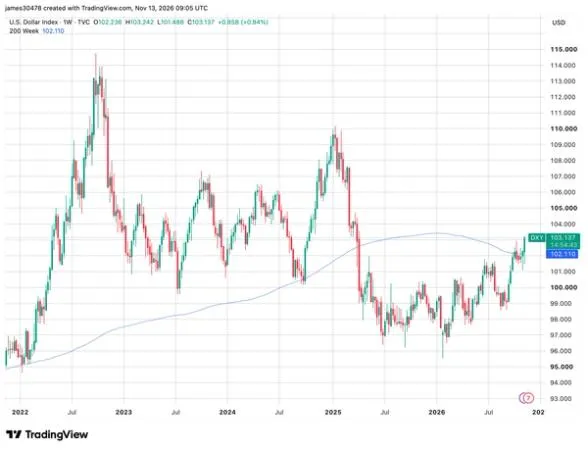
JAKARTA – The global cryptocurrency market experienced significant turmoil in mid-2026 as Bitcoin prices plummeted sharply, breaking below the critical 200-week moving average that analysts and investors have long considered crucial. This weakening occurred amid the continued strengthening of the US Dollar Index (DXY), which managed to stay above the 103 level, triggering massive selling pressure on various risk assets worldwide.
Bitcoin's drop below its 200-week moving average is a highly observed technical signal. This indicator often defines the demarcation line between long-term bullish trends and periods of deeper correction or even bearish sentiment. Since its inception, Bitcoin has rarely stayed below this historical support line for long, thus the current decline raises serious concerns among market participants.
The strengthening of the US Dollar is the primary driver behind this market correction. The US Dollar Index, which measures the greenback's strength against a basket of other major currencies, reflects increased demand for safe-haven assets amidst global economic uncertainty. Investors tend to shift to the US dollar as a hedge when risk sentiment rises.
The ripple effect of the dollar's strength was not only felt by Bitcoin. Commodity markets also showed mixed reactions. Gold prices, traditionally another safe-haven asset, struggled to show any significant recovery. This indicates that the dominance of the US dollar is so strong that even gold has been unable to act as an effective counterweight.
In contrast to gold, crude oil prices actually showed a fairly solid rebound or recovery. The increase in oil prices may be driven by separate fundamental factors, such as supply disruptions, seasonal demand increases, or geopolitical speculations that differ from the dynamics of currency and digital asset markets.
This situation reminds investors of previous periods when a substantial strengthening of the US dollar weighed heavily on more speculative assets. The global macroeconomic environment of 2026, still shadowed by persistent inflation and the potential for further interest rate hikes by major central banks, has further exacerbated negative sentiment towards risk assets.
Market analysts predict continued volatility in the near term. Some investors may view this decline as an opportunity to accumulate Bitcoin at lower prices, while others choose to hold back, awaiting clearer trend reversal signals. Investor decisions depend on their perception of Bitcoin's long-term fundamentals and global economic stability.
Similar conditions occurred recently when Bitcoin prices plunged below 70,000 US Dollars. This event adds to a long list of pressures faced by the digital asset amidst various global challenges.
Cryptocurrency service providers are not immune to the impact. Various entities have had to redraw their strategies to maintain solvency. A clear example is BTCS's emergency strategy of selling Ethereum at a loss to save billions of Rupiah in Aave loans, demonstrating the crucial importance of risk management in a volatile market.
Indeed, the dynamics of global financial markets are interconnected. The movement of one asset, especially a world reserve currency like the US dollar, can create widespread ripples, affecting everything from digital currencies to energy commodities. Investors and regulators alike are challenged to understand the complexities of these interactions.
Editorial Insight: Bitcoin's movement below the 200-week moving average is not just a technical anomaly, but a deep reflection of the market's shifting sentiment towards risk. The strengthening US dollar underscores investor reluctance to take on risk in the uncertain economic landscape of 2026. While Bitcoin has shown remarkable resilience in the past, its ability to recover this time will largely depend on how global central banks tackle inflation and whether sentiment towards the US dollar begins to soften. This could be a crucial period that will shape the direction of the crypto market for years to come.