 Angel Doris
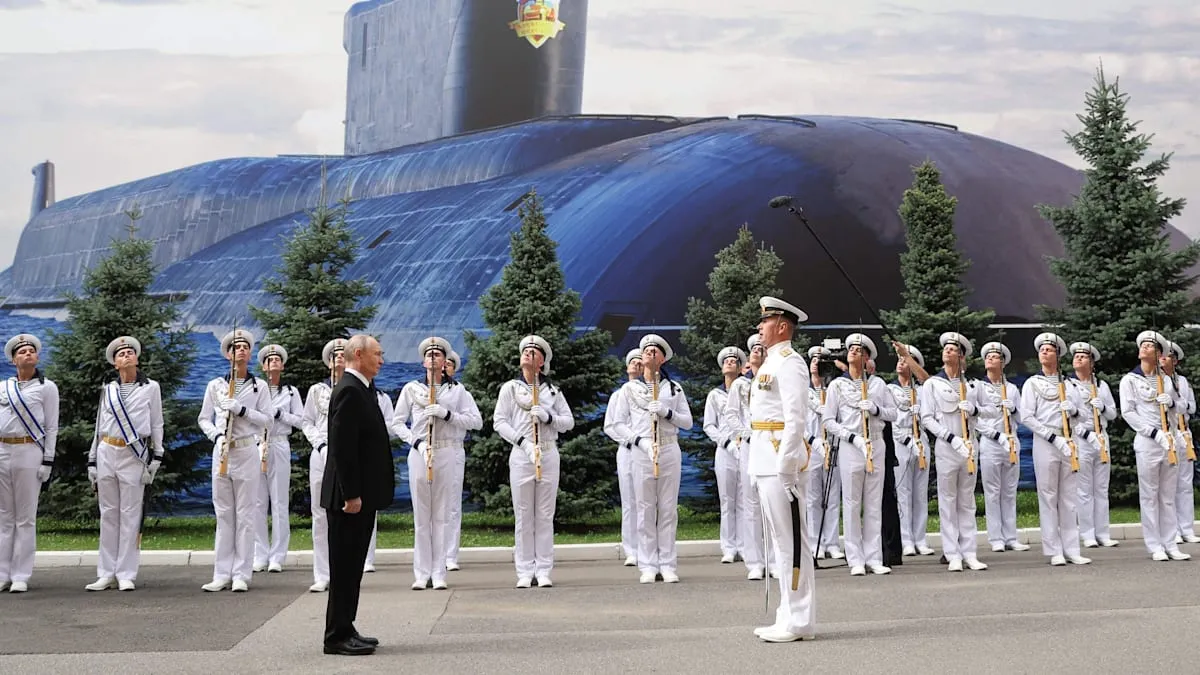
St. Petersburg — Russia's 2026 Navy Day celebration in St. Petersburg unfolded on a much more modest scale compared to previous years. Fears of potential Ukrainian drone attacks served as the primary catalyst behind the drastic reduction in the event's scope, transforming a tradition of grand parades into a minimalist occasion.
Instead of colossal warships lining the Neva River and bay, and vibrant public festivals, citizens witnessed only a heavily restricted program. This decision reflects the ongoing escalation of geopolitical tensions, particularly amidst the protracted Russia-Ukraine conflict.
Authorities took extreme measures to ensure security, opting to display images of nuclear-powered submarines on projection screens, a symbolic representation of Russia's maritime might typically showcased live. This marks a significant shift in a national celebration usually observed with great grandeur.
Just a few years prior, Navy Day in St. Petersburg was a magnet for tourists and locals, offering impressive displays of military might and unforgettable public festivities. Now, the celebration has shrunk to a mini-parade, an epithet illustrating this stark contrast.
These restrictions inevitably impacted St. Petersburg's tourism sector and local economy. Small businesses and service providers reliant on large event crowds experienced a significant drop in revenue, adding to the list of economic challenges facing the region.
While no official statement explicitly named Ukraine as a direct threat, the decision to scale down the event has been widely interpreted as a proactive response to potential dangers. Commander of the Baltic Fleet, Admiral Nikolai Yevmenov, previously emphasized the importance of operational readiness.
Concerns about drone attacks are not unfounded. Similar incidents in Crimea and Russian border regions have served as constant reminders of Ukraine's long-range attack capabilities. Similar conflict dynamics are also observed in various parts of the world, such as the escalating Middle East, where military powers continue to adapt to asymmetric threats. This has prompted Russian authorities to heighten vigilance across strategic points.
This change in the format of Navy Day celebrations can also be seen as an indication of Russia's military strategy adaptation. The security of civilians and military assets appears to be a primary consideration, even if it means sacrificing traditional public displays.
Public reaction to the simplified parade has been varied. Some citizens expressed understanding regarding the security measures taken, while others felt disappointed at losing the grandeur of a long-awaited annual celebration.
The future of Navy Day celebrations and other large-scale public events in Russia will largely depend on the ongoing conflict dynamics and the perceived threat level. This event in St. Petersburg may set a precedent for similar adaptations in the future, illustrating how geopolitics shapes national traditions.