 Stefani Rindus

BERLIN – Signals of internal division within Germany's Christian Democratic Union (CDU) are intensifying after a letter of support from CDU state premiers to Chancellor Friedrich Merz was interpreted by prominent political scientist Professor Volker Kronenberg as a sign of weakening. Kronenberg sharply suggests this move indicates concerns from the party's grassroots, potentially triggering unforeseen political upheaval in the near future.
The letter, issued by CDU state leaders, aimed to bolster Merz's position amidst various political challenges confronting the party. However, instead of demonstrating solidarity, Kronenberg of the University of Bonn views it as a reactive response to perceived pressure, indicative of a substantial lack of confidence.
It can also come to an earthquake from the base. Then no stone will be left unturned, Kronenberg stated, hinting at potential fundamental changes in the party's leadership structure and policy direction. He further warned that the upcoming Sunday could set in motion a dynamic that one cannot anticipate now.
Kronenberg's analysis highlights the fragility of the CDU's internal coalition, where verbal support may not reflect strong strategic alignment. This situation unfolds amid rising public sentiment against established parties and the strengthening of far-right political forces like the Alternative for Germany (AfD).
The CDU, historically a pillar of German political stability, now faces a formidable test in retaining its electoral base. Issues such as a slowing economy, inflation, and concerns over job security have created a climate of uncertainty that can be exploited by the opposition. This aligns with earlier warnings by Schwesig that the AfD threatens the German economy and thousands of jobs.
Pressure also stems from within the broader coalition government, as evidenced by debates over energy and fiscal policies. Criticism of the government's response to economic challenges, including fuel prices, has been a focal point, sometimes drawing condemnation from other parties like the SPD against Germany's economic minister.
Professor Kronenberg elaborated that the earthquake from the grassroots dynamic could manifest in various forms. This might entail a rebellion from lower-tier party members, rejection of specific policies, or even a push for more drastic leadership changes.
Chancellor Merz, in his recent tenure, is at a crossroads. He must prove his ability to unite factions within his party while simultaneously responding to increasingly diverse and skeptical public demands. His success or failure will determine not only the CDU's future but also the entire German political landscape.
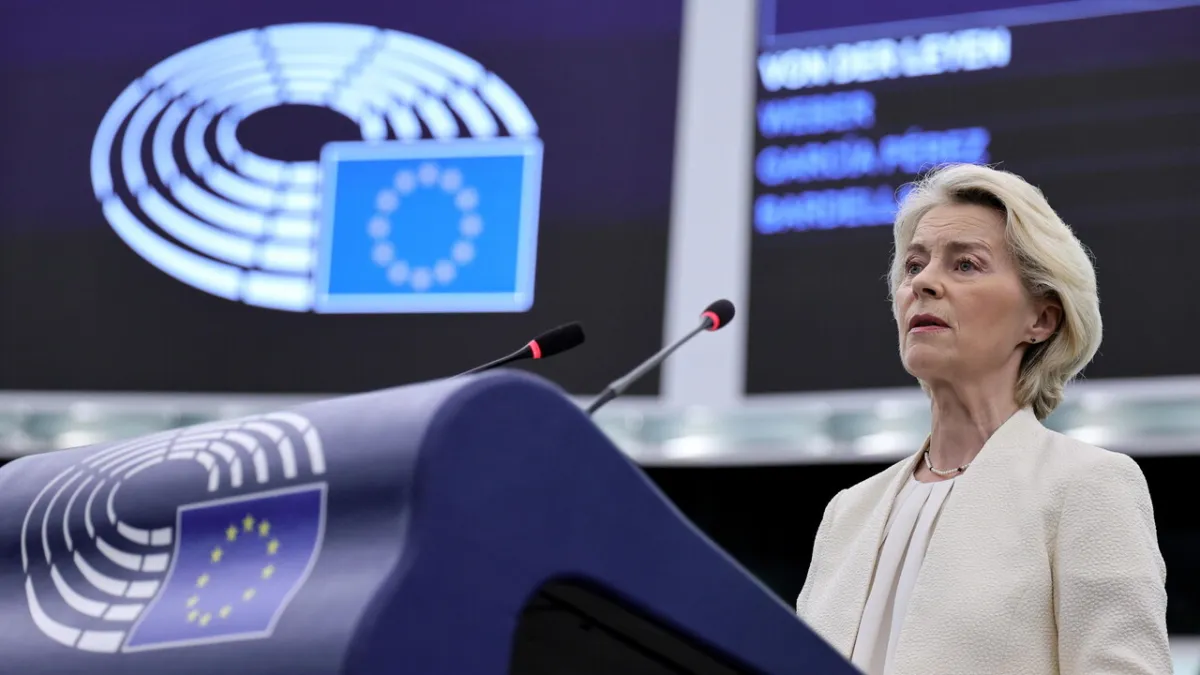
The events slated for Sunday represent a crucial anticipated moment. Observers will scrutinize every indication of power shifts or signals of strategic directional changes that might emerge from internal party meetings or statements. This uncertainty also parallels broader European fragmentation issues, as highlighted by Von Der Leyen, who noted that the European Union is threatened by fragmentation due to ultranationalist forces.
This situation reminds observers of wider tensions across Europe, where many nations face similar challenges concerning internal divisions and the threat of populism. Germany, as a major economic power in the European Union, plays a central role in maintaining regional stability. Therefore, internal political turmoil in Berlin will have widely resonating impacts.
Editorial Insight: Professor Kronenberg's interpretation of the letter of support for Chancellor Merz underscores that formal political gestures often conceal complex realities. If an earthquake from the grassroots indeed materializes, it could significantly alter Germany's political power map, potentially paving the way for new leaders or more radical party strategies to respond to rapidly changing electoral dynamics.