 Chandra Wijayanto
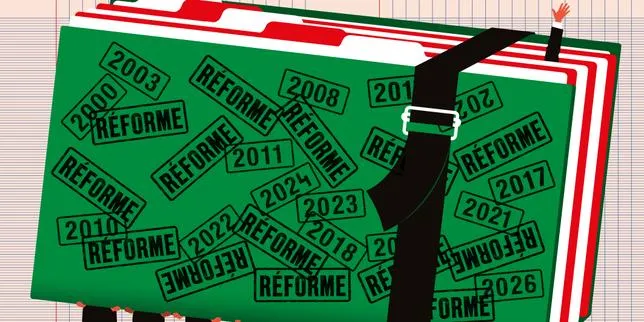
PARIS – Le Monde, a leading French media outlet, recently published an in-depth analysis highlighting the impact of constant changes to France's National Education Code since its inception in 2000. The report reveals that the succession of reforms over the past quarter-century has led to a significant accumulation of workload and professional suffering for teachers across the country.
This meticulous analysis dissects the modifications to the framework that underpins the French school system. The findings explicitly confirm a phenomenon familiar to educators: an endless piling up of education reforms. The frequency and intensity of these overhauls are a clear reflection of unstable policies.
Since the turn of the millennium, France's National Education Code has undergone various substantial amendments. This document, which ought to be a stable foundation for school operations, has instead become a constant battlefield of change. Every modification, no matter how small, requires adaptations to curriculum, teaching methods, and assessments, all borne by teachers.
Teachers, from primary to secondary levels, live in a reality of continuous adaptation. They are on the front lines, tasked with translating every new policy into classroom practice. This is often done without adequate training or supporting resources, creating a gap between policy expectations and implementation capacity on the ground.
Le Monde's findings underscore that this dynamic is not merely a bureaucratic challenge. Rather, it has transformed into one of the primary sources of professional suffering for teachers. Stress, exhaustion, and demoralization are common symptoms among educators who feel perpetually under the pressure of reform.
This accumulation of reforms forms an exhausting cycle. Before one reform is fully internalized and shows results, a new one is announced, sometimes even clashing with previous policies. This situation hinders the development of consistent and sustainable pedagogy and makes it difficult for teachers to build solid teaching practices.
This condition also aligns with previous reports regarding promises of system improvement. For instance, there are expectations for comprehensive reform pledges. However, teachers hope that the changes promised this time will genuinely bring stability and support, not just another cycle of reforms that adds to their burden. Readers can review the political context of these promises in the article French Education Minister Promises Thorough Reforms Amid Political Tug-of-War.
This policy instability also has the potential to erode public trust in the education system. Parents and students may struggle to understand the direction of education when changes occur too rapidly and frequently, raising questions about the effectiveness and long-term goals of each reform.
Furthermore, Le Monde concludes that while the intentions behind each reform may be good—to improve the quality of education—the fragmented implementation methods have had the opposite effect. Teaching quality and teacher well-being are two sides of the same coin; if one is disturbed, the other will also feel the impact.
This situation calls for the French government to consider a more holistic and stable approach to designing education policies. Deeper consultation with stakeholders, especially teachers, along with gradual and fully supported implementation, are key to creating a resilient and sustainable education system.
Editorial Insight: The 'reform waltz' phenomenon in French education mirrors a global challenge in designing educational policies. Stability and long-term consensus are essential for reforms not to become a burden but a catalyst for progress. Without a commitment to planned implementation and strong support for educators, even the best innovations will fail to reach their full potential, leading to erosion of motivation and teaching quality.