 Dodi Irawan

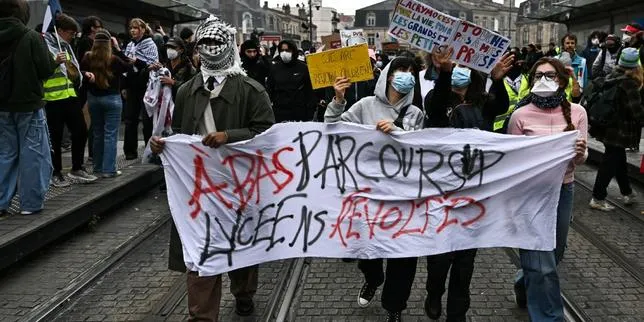
PARIS – France's higher education selection system, Parcoursup, is once again under intense scrutiny after prominent historian Claude Lelievre called for a comprehensive public debate. Lelievre, in a recent piece published in Le Monde, warned that the singular approach to selecting university applicants ignores fundamental differences between various types of baccalaureates, a crucial factor for the future of France's higher education system in 2026.
Lelievre's primary criticism centers on Parcoursup's philosophy, which tends to favor a sorting from the top (sortir par le haut) approach. According to him, such a perspective fails to accommodate the diverse profiles and preparations of students from different baccalaureate tracks, whether general, technological, or professional.
To speak of the baccalaureate and higher education in the singular is to ignore the strong differentiations that exist between these tracks, Lelievre wrote. These differentiations cannot be disregarded if we wish to reflect wisely on the future of Parcoursup.
Parcoursup, as the national platform for university and higher education institution applications in France, was designed to simplify the application process. However, its evaluation and ranking methods have repeatedly sparked debate regarding fairness and equal representation for all secondary school graduates.
In France, the baccalaureate is more than just a regular high school diploma. It is a national qualification marking the end of secondary education and the main gateway to higher education. There is the General Baccalaureate, which is academically oriented; the Technological Baccalaureate, focusing on practical and vocational applications; and the Vocational Baccalaureate, which is highly specific in preparing students for particular fields of work.
The differences in curriculum, educational objectives, and competencies tested in each baccalaureate type are highly significant. Assuming all types of baccalaureates hold the same weight and purpose in the Parcoursup selection process is a fatal error that risks creating structural injustices.
Lelievre emphasizes that without a deep understanding and recognition of these differences, any attempt to reform or improve Parcoursup will be superficial. A transparent and inclusive public debate is necessary to align Parcoursup's objectives with the reality of the diverse baccalaureate system.
This debate is expected to involve not only academics and policymakers but also student representatives, parents, teachers, and industry players. The goal is to formulate more nuanced and fair selection parameters, ensuring that each educational path receives due recognition in access to higher education.
If baccalaureate differentiations continue to be ignored, the impact could extend to students' study choices at the secondary level, creating unhealthy pressure to select certain tracks deemed more superior by the selection system. This could exacerbate social and academic disparities in the future.
Lelievre's ignited debate underscores the importance of deep reflection on the foundations of the French higher education system, especially amidst global demands for equality and adaptive educational quality.
Editorial Insight: Claude Lelievre's critique highlights a core issue in meritocratic education systems often overlooked: the assumption of uniformity amidst diversity. A sorting from the top approach without considering the context of baccalaureate differentiation can lead to hidden exclusion. The public debate requested is not just about selection technicalities but about the broader philosophy of national education in France, which should be oriented towards developing each individual's potential, regardless of the secondary education path they pursue. The success of Parcoursup reform will heavily depend on the political will to listen and integrate voices from various perspectives, ensuring equitable access to higher education.