 Stefani Rindus
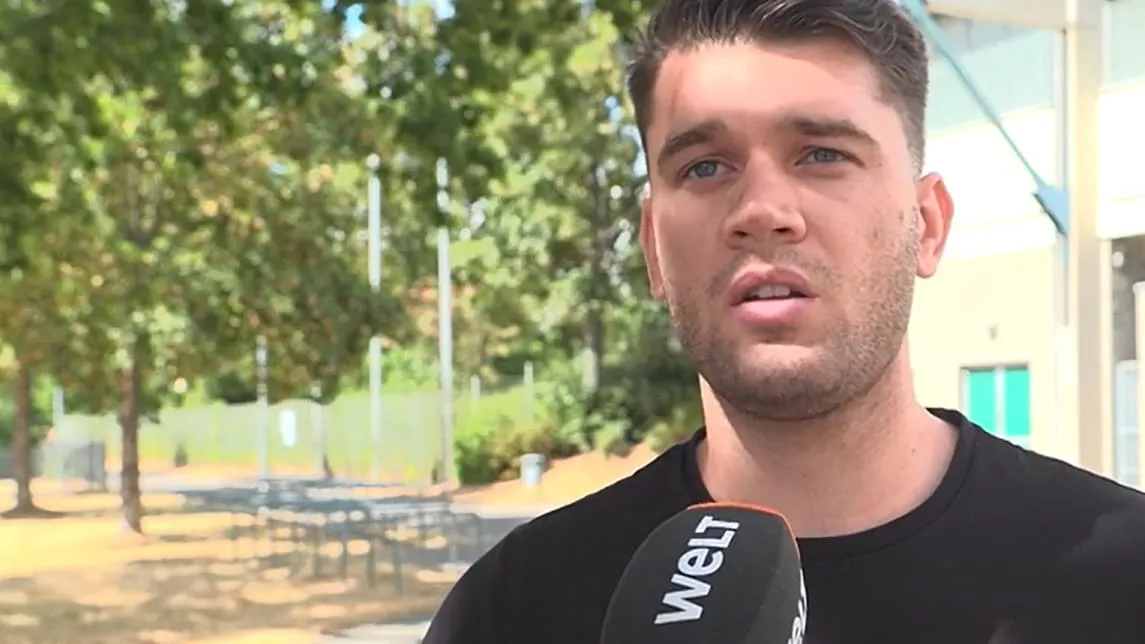
EUSKIRCHEN – Nearly the entire sports court of the Euskirchen District Football Federation in Germany collectively resigned in 2026. This drastic decision was triggered by the presence of Noah Schmuck, a youth referee representative also known to be a member of the Alternative for Germany (AfD) party, a far-right political party in Germany. The event has ignited fierce debate regarding political neutrality in the world of sports.
The incident stemmed from controversy surrounding Schmuck's role as a youth referee representative and his affiliation with the AfD. Amid Germany's increasingly polarized political climate, Schmuck's membership in the party came under scrutiny, particularly in the context of decision-making within the realm of sports justice, which should ideally be impartial.
The sports court, tasked with upholding fair play rules and resolving disputes on the field, felt compromised by the political association of one of its members. Internal sources indicate that the primary concern was the potential for bias in enforcing discipline or evaluating match incidents.
“We must look at the severity of the foul, not skin color or political background,” is the essence of a principle often championed in the spirit of sports, yet now threatened by the dynamics in Euskirchen. The resigning court members collectively affirmed the importance of their institution's integrity and independence from any political influence.
This decision to resign is not merely an act of protest but a firm statement that the ethos of sports must be free from divisive ideologies. Their collective departure effectively paralyzes the sports justice function in the region, creating a significant leadership void.
The Euskirchen Football Federation now faces a serious crisis. They are compelled to find an immediate solution to restore the functioning of the sports court while reaffirming their commitment to the values of objectivity and non-discrimination in regional football.
The AfD party itself is often a subject of controversy in Germany due to its anti-immigrant views and accusations of eroding liberal democratic values. The involvement of its members in strategic positions within public institutions, including sports, consistently sparks strong reactions from various segments of society.
This phenomenon reflects a larger challenge for German society in maintaining social cohesion amidst the rising influence of extremist parties. Similar debates have emerged in broader political contexts, such as discussions surrounding political strategies to contain the far-right. The public recalls efforts like the brave strategy of left-wing parties to prevent far-right power in Sachsen-Anhalt in 2026, demonstrating the crucial nature of this issue.
Although football should fundamentally be an arena that unites, the incident in Euskirchen shows that even sports are not entirely immune to the infiltration of social and political tensions sweeping a nation. Neutrality is a crucial foundation that must be maintained.
Sports observers and anti-discrimination activists are urging all sports federations to review their policies regarding the political involvement of officials. The integrity of competition and the spirit of sportsmanship must always be prioritized above any group interests or ideologies.
Editorial Insight: This incident in Euskirchen is not merely a local football crisis, but an alarm for any sports institution in Germany to seriously consider the implications of officials' political affiliations. As the AfD continues to gain support, pressure on public institutions to maintain neutrality and objectivity will grow. This underscores the urgency for sports federations to have clear codes of ethics to preserve integrity and public trust, preventing politicization that could undermine the very essence of sport.