 Debby Wijaya
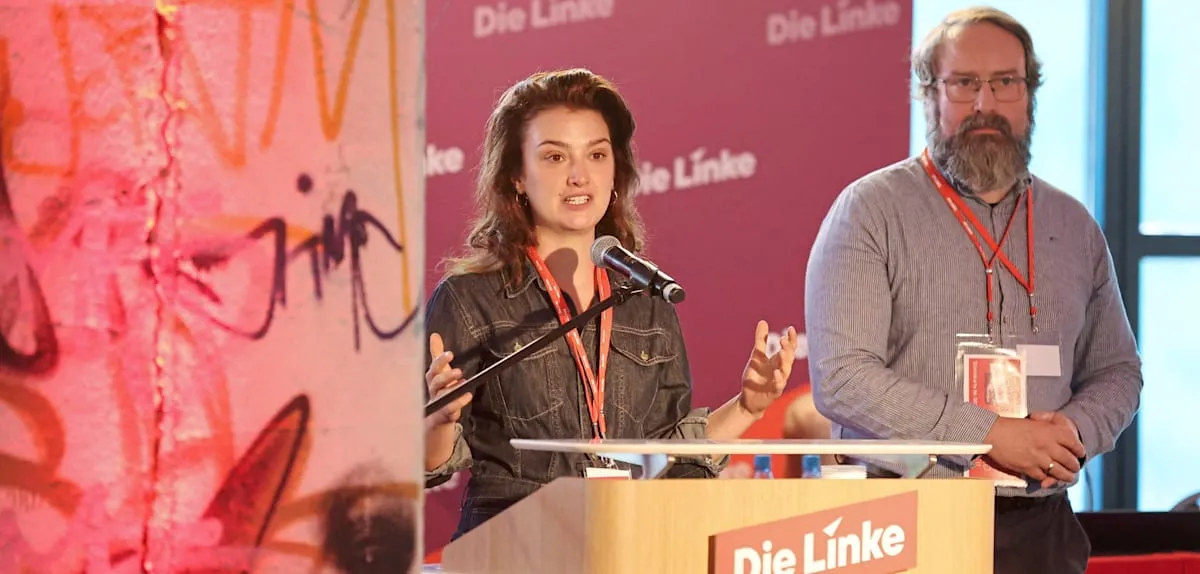
BERLIN – The political landscape in the German state of Thuringia is in turmoil after the Left Party explicitly demanded that Minister President Mario Voigt of the CDU call for a vote of confidence. This insistence comes following the collapse of the BSW (Bundnis Sahra Wagenknecht) faction, which has further destabilized the parliamentary situation. The Left Party stated that it would not serve as a mere cheap majority provider for Voigt, urging a concrete plan for stable governance in 2026.
Internal conflicts within the BSW faction have created a significant vacuum in the configuration of parliamentary power in Thuringia. This has led to political uncertainty that directly impacts the ruling coalitions ability to govern effectively. This condition is the primary trigger for the Left Partys demand.
A Left Party spokesperson asserted that Voigt must democratically demonstrate the legitimacy of his government. It would be logical for Mario Voigt to ask for a vote of confidence, the Left representative stated. They believe that without clear support and a structured vision, their participation would only undermine democratic principles.
Mario Voigt, as Minister President and representative of the CDU Party, now faces immense pressure. The coalition he leads requires broader support to achieve stability. The loss of votes from the BSW faction makes his position vulnerable and forces him to seek consensus or support from other parties, including the now-critical Left Party.
Thuringia has often been a fiercely contested political battleground in Germany. A history of fragile coalitions and shifts in political power there is not new. Such dynamics highlight the complexity of Germanys multi-party system, where it is often difficult to form a solid majority government without extreme compromises or unexpected cross-party support.
This demand for a vote of confidence is not merely a common political maneuver. It reflects a crisis of trust in the Voigt governments ability to ensure stability. The people of Thuringia need certainty regarding the implementation of government programs, especially amidst the ongoing economic and social challenges in 2026.
The Left Party, with its democratic socialist ideology, often serves as a vocal opposition in various German state parliaments. Their demand for Voigt to call a confidence vote is an an attempt to gain political concessions or push for policy changes that align more with their agenda. They do not wish to be a mere tool to save a faltering government.
The events in Thuringia could also have broader implications for national German politics. Turmoil at the state level often serves as a barometer for voter sentiment and can influence the federal political landscape. Major national parties will be closely monitoring these developments.
The next steps for Mario Voigt will be crucial. He must decide whether to meet the Left Partys demand by calling a vote of confidence or seek another path to secure a majority. Both options carry significant political risks.
Several scenarios might unfold:
- Voigt calls for a confidence vote and successfully secures support, reaffirming his legitimacy.
- Voigt fails the confidence vote, triggering new elections or the formation of a new coalition government.
- Voigt refuses the confidence vote but must struggle with an unstable minority government.
All these outcomes will determine Thuringias political direction in the near future.
Editorial Insight: The situation in Thuringia underscores the fragility of politics within a multi-party system, especially when new factions emerge or experience divisions, such as the BSW. The Left Partys demand for a vote of confidence is not mere bluster; it is a clear signal that the coalition government must demonstrate legitimacy and concrete plans for stability, rather than relying solely on ad hoc support. Mario Voigt now stands at a crossroads, and his decision will determine not only the fate of his administration but also the entire political climate of Thuringia. This dynamic also serves as a reminder of the importance of building strong, trust-based coalitions, not just parliamentary arithmetic.