 Chandra Wijayanto
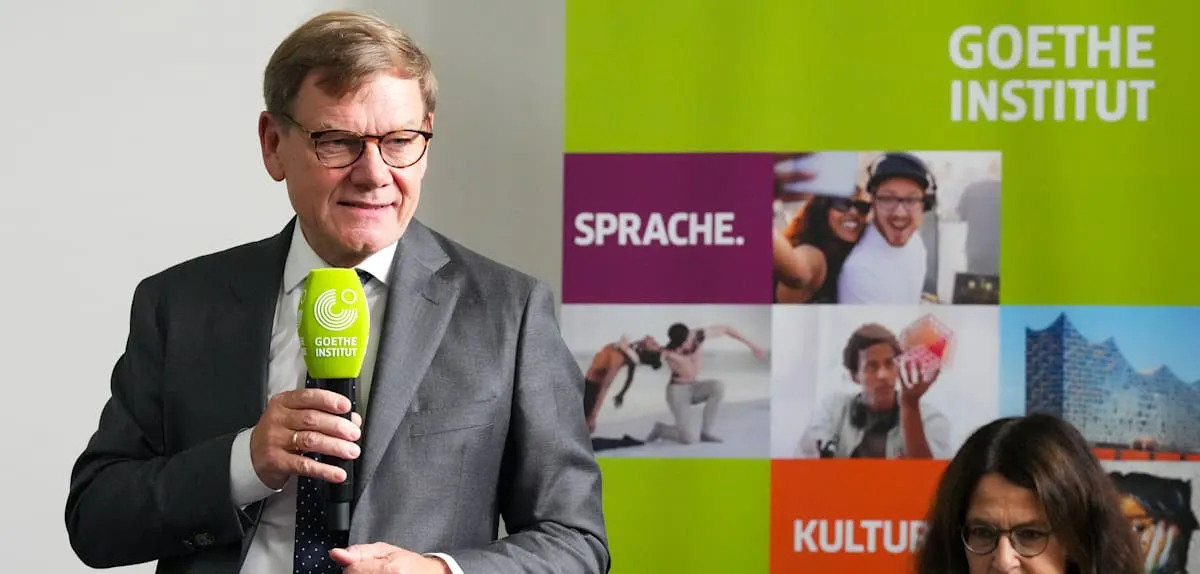
Berlin — A fierce debate regarding the future of the Goethe-Institut has emerged in Germany in 2026, following calls from members of parliament of the Union Coalition (CDU and CSU) and signals from the Foreign Office to re-evaluate its role and funding. Key criticisms highlight alleged political leanings perceived as too left-wing and budgetary inefficiency, triggering serious concerns about significant funding cuts that could damage Germany's global cultural reach.
Parliamentary budget overseers from the CDU and CSU have openly stated the potential for substantial savings in German cultural policy. They argue that several institutions, including the Goethe-Institut, need to review their priorities and expenditures to align better with national vision and avoid waste.
The German Foreign Office, which has close ties to the Goethe-Institut, has also signaled a potential shift in the institution's operational direction. This signal adds pressure on the cultural institution that for decades has served as Germany's cultural ambassador worldwide.
The Goethe-Institut, with its extensive network in over 90 countries, has issued a stark warning about the adverse effects of budget cuts. They claim that reduced funding would not only limit vital programs but also damage Germany's image as a nation committed to global cultural dialogue and exchange.
This debate is inseparable from Germany's increasingly fragmented political landscape and the rise of conservative voices. The issue of being “too left-wing” often comes under scrutiny within the ongoing “cultural war,” where ideology becomes a central point of political contention. This aligns with views from previous German Culture Ministers, who in recent years highlighted “wokism” and nationalism as drivers of cultural tension.
Criticism of the Goethe-Institut's political orientation is not new. Some conservative politicians argue that its programs are often biased or do not represent the broad spectrum of German values. They advocate for cultural institutions that are more neutral or at least more balanced in the narratives they promote.
Internal sources at the Foreign Office indicate a desire to ensure that every public investment yields maximum impact and is relevant to Germany's strategic interests. This includes an evaluation of the effectiveness of cultural programs in promoting a positive image of Germany on the international stage.
The Goethe-Institut itself rejects accusations of political bias or inefficiency. Its representatives affirm that all programs are designed to promote the German language, culture, and international cooperation, while upholding the principles of artistic freedom and diversity of thought.
This situation is expected to ignite heated discussions in the German parliament. Members of parliament from across the political spectrum will clash, with proponents of global culture striving to maintain the institution's autonomy and funding, while conservative groups demand reform and efficiency.
This tension indicates that cultural policy has now become a crucial political battleground in Germany. Amid economic upheaval and shifting global priorities, every public budget cent will be rigorously scrutinized, including those allocated for cultural diplomacy. Time will tell how the Goethe-Institut will navigate these significant challenges in 2026 and beyond.