 Chandra Wijayanto

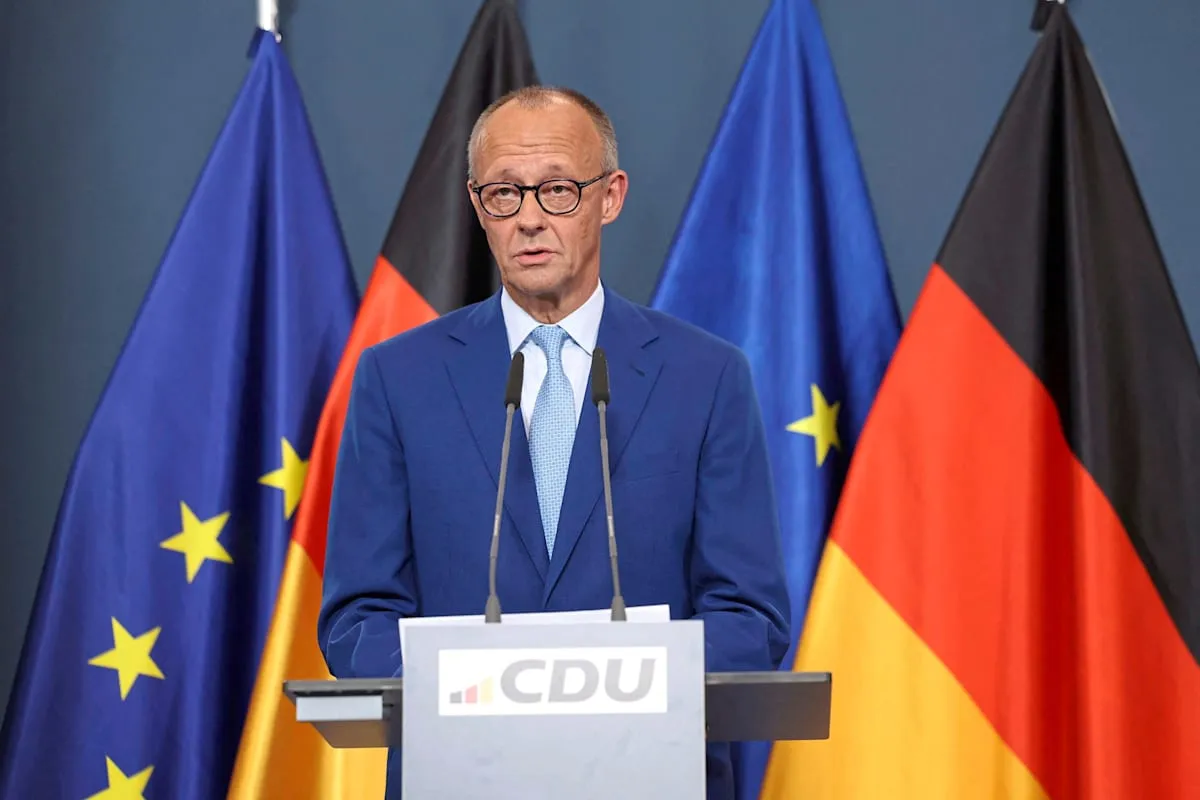
BERLIN – The Alternative for Germany (AfD) party has dominated early exit polls in the state of Mecklenburg-Vorpommern, also known as Pomerania, while The Left (Linke) party has taken the lead in the capital, Berlin. These surprising results have drawn a sharp reaction from Chancellor Friedrich Merz, who publicly described the current political situation as 'a disaster'.
These regional polls, held simultaneously in Berlin and Mecklenburg-Vorpommern, represent a crucial test for Chancellor Merz's leadership after the AfD party achieved significant success in the Saxony-Anhalt election just two weeks prior. The rising tide of support for this far-right party is increasingly concerning for Germany's established political parties.
In Mecklenburg-Vorpommern, located in eastern Germany, the AfD showed an exceptional performance, exceeding many analysts' expectations. This victory solidifies the trend of increasing support for the nationalist party in former East German territories, which often feel marginalized by central government policies.
Chancellor Merz, the leader of the ruling coalition, expressed his disappointment with the outcome. This is a disaster, he stated, highlighting the dismay within his party regarding the increasingly extreme shift in the political landscape. This statement reflects the immense pressure he faces to respond to the AfD's resurgence.
Meanwhile, in Berlin, The Left party successfully secured the top position. This victory strengthens the left-leaning party's foothold in the metropolitan city, which historically has a strong base of support for progressive and social ideologies. Previously, leading up to this election, a Linke candidate in Berlin even called for a 'Wahlintifada', sparking controversy, but it appears not to have eroded voter support.
Initial analysis suggests that these results indicate a deepening political fragmentation in Germany. Voters are tending to shift away from traditional parties towards options perceived as more radical, across both the left and right political spectrums. This creates significant challenges in forming stable coalitions at both regional and federal levels.
Historically, Mecklenburg-Vorpommern was a strong base for the Social Democratic Party (SPD). In fact, a few years ago, Manuela Schwesig of the SPD successfully led and made waves in the Landtag election there. The significant shift in support to the AfD now marks a dramatic change in political preferences in the region, reflecting deep dissatisfaction with existing political policies and representation.
Factors such as inflation, immigration policies, and disillusionment with EU bureaucracy are cited as primary drivers behind this electoral shift. Citizens feel that the stability promised by major parties has not materialized, pushing them to seek extreme alternatives.
AfD's victory in Pomerania is a continuation of the trend observed in Saxony-Anhalt two weeks ago, where the party also achieved impressive results. This pattern indicates solid pockets of AfD support in Eastern Germany, which demands serious attention from the central government.
Looking ahead, these regional election results are expected to reignite the national debate on Germany's political direction. Chancellor Merz faces the daunting task of curbing the wave of far-right populism while maintaining government stability. Internal party consolidation and more effective communication strategies will be key to addressing these challenges.
Editorial Insight: These regional election results are a clear wake-up call for traditional political forces in Germany. The rise of the AfD in the east and Linke's consolidation in Berlin demonstrate a growing polarization. Chancellor Merz's statement describing it as 'a disaster' is not merely rhetoric, but an acknowledgment of a real threat to Germany's political stability, potentially impacting broader EU policies. A comprehensive strategic response is needed to address this shift in voter sentiment, rather than just reactive measures.