 Edward DP Situmorang
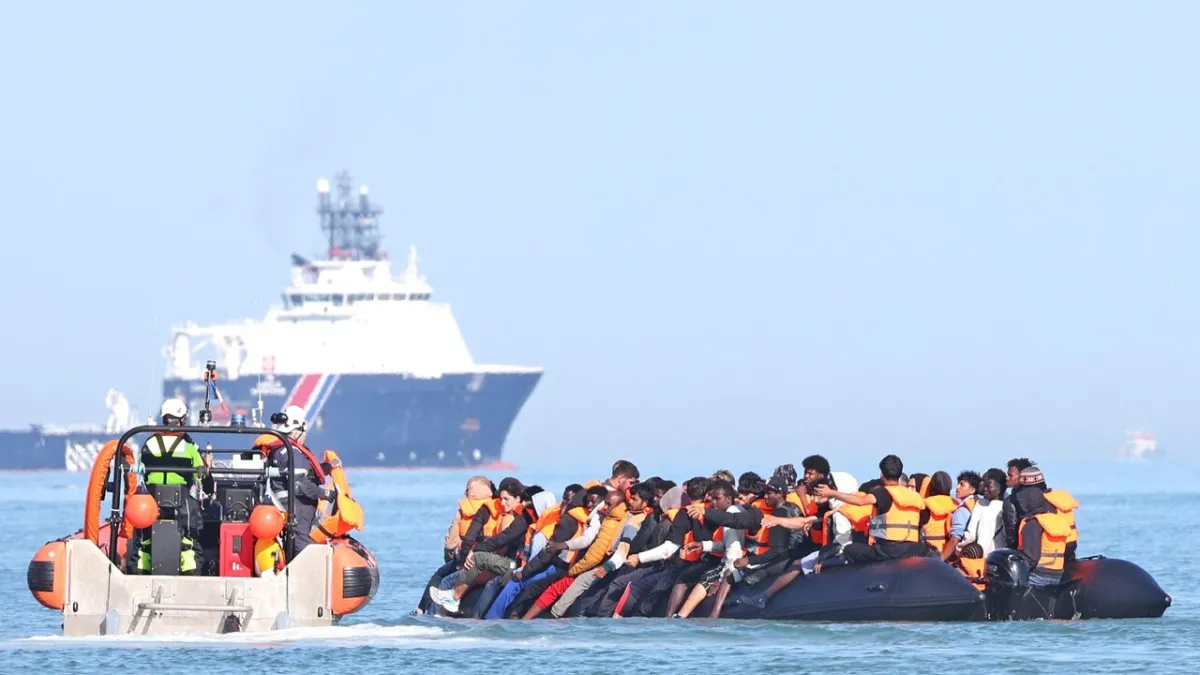
BERLIN – European immigration policy has flared up again after Germany took decisive action to reject migrants at its borders, sparking strong protests from Italy. Berlin explicitly stated it is implementing a 'New Pact' on immigration, a policy aimed at tightening controls and entry flows. However, Rome responded with a firm declaration: 'There is no one to take back'.
The conflict intensified when the European Union (EU) spoke out. Brussels confirmed that in mid-July, Italy was found to be non-compliant with its commitments under the European migration framework, an accusation that further strained bilateral relations between the two key member states.
Sources within the German Interior Ministry revealed that the implementation of this rejection policy is part of a systematic effort to enforce stronger border controls. Berlin emphasizes that the new Pact on Migration and Asylum is designed to distribute the burden fairly and prevent 'secondary movements' of migrants between member states.
On the other hand, Italy, historically a primary gateway for many migrants crossing the Mediterranean, argues that it already bears a disproportionate burden. Rome's 'Nessuno da riprendere' statement underscores its unwillingness to readmit individuals who have successfully reached Northern European territory via Italian routes.
The Italian government, under significant domestic pressure, has continuously called for greater solidarity from EU partners. They demand effective relocation mechanisms and a fairer distribution of responsibility in handling the waves of arrivals, particularly from North Africa and the Middle East.
Italy's alleged non-compliance, as cited by the EU, refers to Rome's failure to process asylum applications or adequately identify incoming individuals, thereby complicating the repatriation or redistribution process. This creates legal loopholes exploited by migrants to move freely within the Schengen zone.
Migration policy expert Dr. Sofia Bianchi from the University of Rome observes that this situation highlights the fragility of the European asylum system. 'Each member state tries to protect its national interests, but often neglects the spirit of cooperation that should be the foundation of the European Union,' she stated. 'Without a common solution, this cycle of mutual accusations will continue.'
This crisis is not a new phenomenon. For years, frontline countries like Italy and Greece have struggled with relentless migrant flows. However, Germany's hardline policy signals a new escalation in major recipient countries' efforts to control the situation.
The long-term impact of these tensions could damage the foundations of European solidarity. With increasing internal tensions, coordination in addressing other global challenges, such as economic or geopolitical issues, could be disrupted. This issue reflects the complexity of immigration governance amid diverse national interests.
Some political observers suggest that domestic pressure ahead of elections in several European countries also contributes to these tough stances. Politicians often use the migration issue as a tool to rally support from voters concerned about the social and economic impacts of immigrant arrivals.
Germany's assertive policy is also visible in other sectors, such as the enforcement of maximum penalties for social welfare violators, as reported in the article 'Germany Tightens Social Aid in 2026: Maximum Sanctions Await Violators.' This demonstrates Berlin's general pattern of enforcing stricter rules.
Editorial Insight: The escalation of tensions between Germany and Italy over migration policy indicates a fracturing of European Union solidarity on this crucial issue. The failure to cohesively implement the Pact on Migration and Asylum has the potential to create further fragmentation, placing an uneven burden on frontline states while questioning the effectiveness of the EU framework. Without strong consensus and fair burden-sharing mechanisms, the migrant crisis will continue to be a major stumbling block for European integration.