 Dorry Archiles
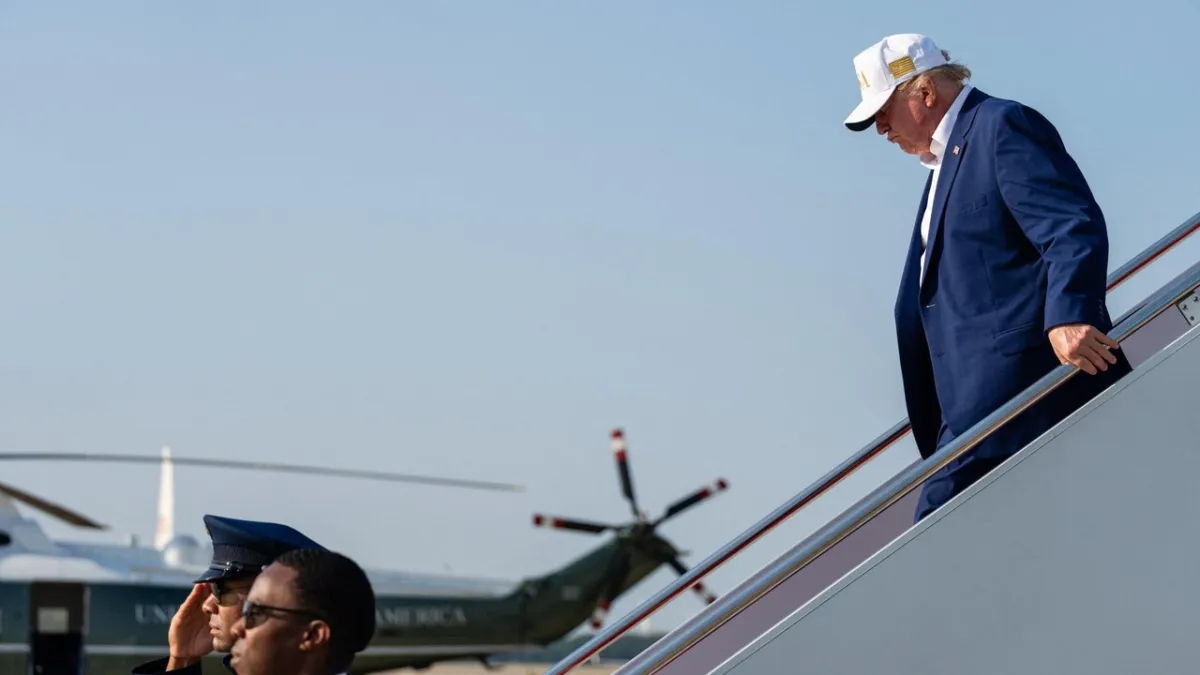
WASHINGTON – US President Donald Trump reportedly returned secretly from the North Atlantic Treaty Organization (NATO) Summit on a military aircraft, not Air Force One, following a serious assassination threat from Iran. This unusual decision, occurring after the alliance leaders' meeting in Europe, sparked widespread speculation about the severity of the threat and its implications for the security of the superpower's head of state.
Leaked information from intelligence sources indicates that the threat was credible and urgent. US intelligence received reports regarding an assassination plot orchestrated by certain elements in Iran, targeting President Trump post-NATO Summit. This threat is allegedly in retaliation for Washington's tough policies against Tehran, particularly regarding its nuclear program and ongoing economic sanctions.
Standard protocol for the US President's travel always involves Air Force One, a specially modified Boeing 747 with advanced security and communication systems. The use of another military aircraft, typically smaller and less conspicuous, significantly deviates from standard procedures. This indicates that the president's security team took extreme measures to ensure the safety of the nation's leader.
The recent NATO Summit, held in a European member country, focused on strengthening collective defense, evolving geopolitical challenges, and responding to regional aggression. President Trump's presence at this forum was crucial to affirm US commitment to NATO, but this incident unexpectedly highlighted the personal vulnerability of a head of state amidst a volatile global political landscape.
The White House has not issued an official statement regarding the details of President Trump's return journey or the specific threat from Iran. However, a senior official, who requested anonymity, confirmed heightened security measures following sensitive intelligence information. This secrecy further reinforces the public perception that the situation is indeed at the highest level of alert.
This presidential transport diversion signifies a drastic escalation in security risk assessment. It is not merely a routine precaution, but a response to a danger considered very real and possessing potential massive diplomatic and military consequences. Presidential security is a top priority, and any deviation from protocol is an indicator of a serious alarm.
National security expert, Dr. Anya Sharma from the Global Foresight Institute think tank, commented, The clandestine use of a military aircraft suggests that the threat received was deemed capable of penetrating Air Force One's security systems or its determined route. This is a clear illustration of how complex the challenge of protecting heads of state is in the modern era, especially when dealing with non-state actors or states with adequate intelligence capabilities.
Relations between the United States and Iran have long been tense, with conflict peaks often involving Iran's nuclear program and Tehran's support for regional groups. This threat, if proven to originate from a state-affiliated entity, could trigger a broader escalation of tensions in the Middle East, potentially even affecting political dynamics in Europe.
The incident also raises questions about the effectiveness of US intelligence and counterintelligence networks abroad. Was there a failure to identify the threat earlier, or is this an indication of the increasingly sophisticated methods used by parties intending to attack significant global figures? A thorough evaluation is certainly being conducted behind the scenes.
The decision to use an alternative military aircraft may also aim to send a message to Iran that any attempt to destabilize or target US leaders will be met with a firm response. At the same time, this step also risks exposing vulnerabilities and encouraging adversaries to continue seeking loopholes in the security system.
The long-term impact of this incident on US foreign policy, particularly concerning Iran, is expected to be significant. It is not impossible that Washington will consider retaliatory measures or increased diplomatic pressure and sanctions, which could further complicate the already complex geopolitical atmosphere in the Middle East.
Editorial Insight: President Trump's secret return on a military aircraft after the NATO Summit due to an Iranian threat is not merely a security incident; it is a potent signal about the fragility of global stability. This underscores that threats to world leaders are no longer confined to conventional battlefields but have permeated the more unpredictable domains of intelligence and terrorism. This event will likely set a new precedent in head-of-state security protocols and may prompt a restructuring within defense alliances to counter asymmetrical threats.