 Chris Robert
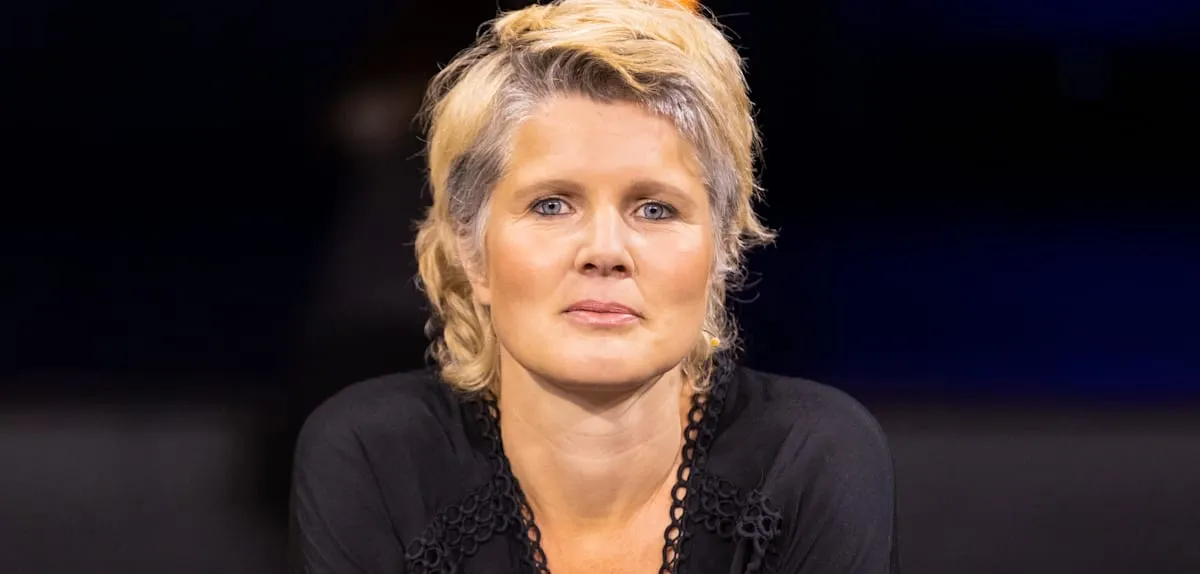
JAKARTA – Amidst a modern landscape that increasingly champions unlimited options, a provocative perspective emerges from the German thinker, Svenja Flaspohler. This prominent philosopher firmly asserts that true freedom, especially in the context of desire and personal relationships, is found through strong committed bonds, not through endless exploration of options.
Flaspohler's view challenges the prevailing narrative that often labels loyalty as hypocrisy and fixed relationships as outdated notions of ownership. She argues that in the hustle and bustle of a multi-option society, the concept of fidelity is often viewed with skepticism, as if it hinders individual potential.
However, for Flaspohler, the framework of a single, committed relationship offers a deeper space for self-development and authentic expression of desire. She sees the phenomenon of society constantly seeking new alternatives as potentially trapping individuals in a cycle of uncertainty and superficial fulfillment.
Explicitly, Flaspohler shares her personal experience which underscores her thesis. She states, 'To get back in touch with my desire, I needed my husband.' This statement is not merely a personal reflection but a philosophical manifestation of how deep bonds can be a catalyst for rediscovering oneself and one's zest for life.
The concept of freedom, according to Flaspohler, has been distorted in contemporary culture. Freedom is often misinterpreted as the absence of boundaries or the ability to constantly change objects of desire. Yet, true freedom, in her understanding, is the capacity to deeply form and realize oneself within consciously chosen boundaries.
In an in-depth interview, she elaborates on how a 'multi-option society' creates a bewildering illusion of freedom. Too many options can paralyze, shifting focus from intensive exploration of one relationship to an unending, extensive search.
Commitment, for Flaspohler, serves as an anchor that allows individuals to delve deeper into themselves and their partners. This depth then ignites a richer and more sustainable desire, unlike the temporary emotional fluctuations offered by non-committed relationships.
This perspective highlights the irony of modernity: the more choices available, the harder it is to find deep satisfaction. Freedom without structure can be a burden, while conscious commitment can be a liberating structure. This reminds us of how some common health myths are also often debunked by new research.
Flaspohler's argument also invites a broader philosophical discussion on the ethics of relationships and the ontology of human desire. Does true happiness lie in boundless self-exploration, or rather in intentional surrender within a bond?
With her views, Flaspohler invites the audience to re-evaluate the definitions of freedom and happiness. She highlights the transformative potential of faithful bonds, a concept that might seem paradoxical on the surface, but profoundly offers unexpected liberation.
Ultimately, Flaspohler's thought is not merely a critique of social trends but an invitation to introspection. She questions whether we have truly found freedom in infinite choices, or if we have instead gotten lost in a labyrinth of options, losing touch with our deepest desires.
Editorial Insight: Svenja Flaspohler's idea of freedom within commitment is a crucial response to the crisis of meaning in modern relationships in 2026. Amidst the strong currents of individualism and instant validation, her thinking offers a solid foundation for individuals seeking authentic fulfillment. This is not merely a conservative view, but a revolutionary call to discover personal strength and depth through intentional bonds, an essence that may have long been overlooked in the hustle of choices.