 Angela Stefani
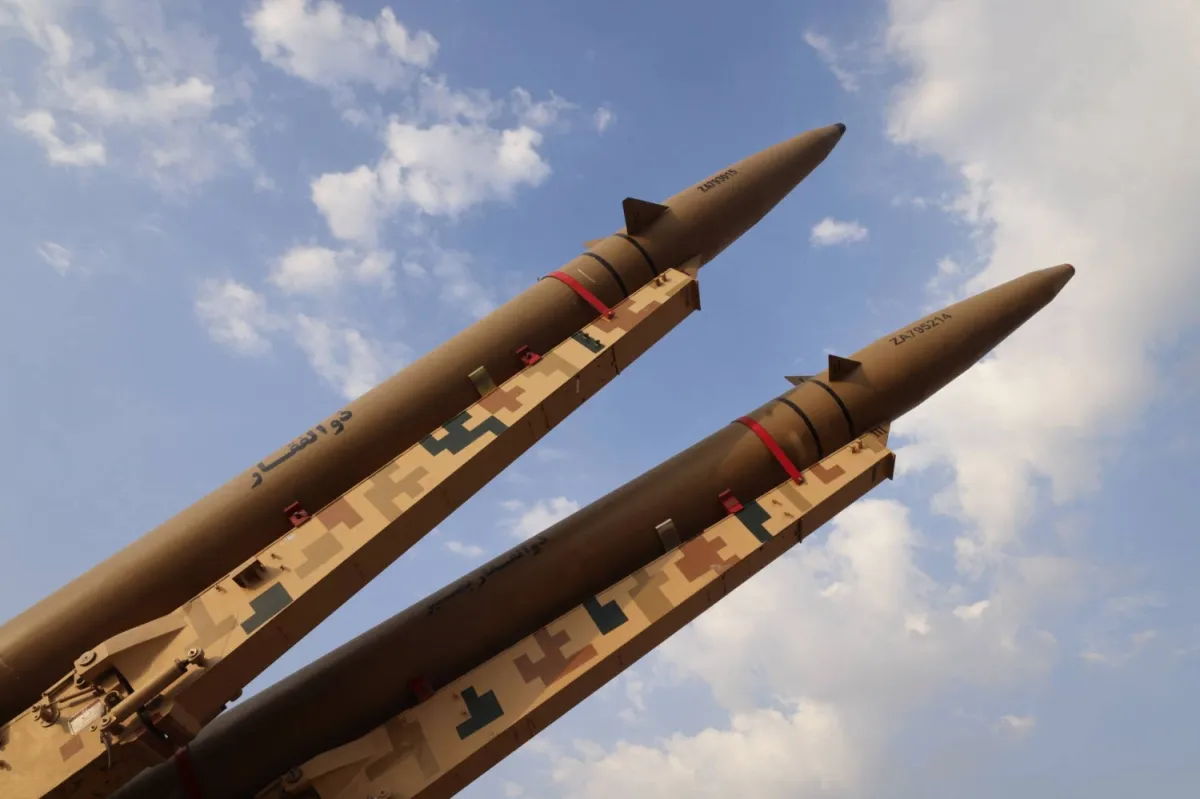
TEHRAN – Startling reports reveal Iran maintains a missile production capacity of up to 50 units each month. This fact directly challenges United States claims, which have, since the early days of the conflict, asserted that Tehran's defense industry was severely degraded and crippled. Iran's adaptive capability in developing its armaments has become a central focus amidst regional geopolitical tensions.
This information emerges amid intense scrutiny from the global intelligence community regarding Iran's nuclear and ballistic missile programs. Despite facing layers of economic sanctions and international pressure, Tehran appears to have found ways to sustain and even increase its production of strategic weaponry.
Washington has repeatedly affirmed that Iran's arsenal, along with its ability to reconstitute it, had been thoroughly degraded. However, recent data suggest that this narrative may require serious reassessment by policymakers in the White House. US President, Donald Trump, previously emphasized the importance of limiting Iran's influence in the Middle East.
The continuous missile production sends a strong signal to the world that Iran's military ambitions are not halted by embargoes. This raises significant questions about the effectiveness of sanctions imposed to date and how Iran circumvents restrictions on vital component supplies.
Defense analysts conclude that Iran likely relies on domestic sourcing or a hidden supply network for crucial components. This strategy allows Tehran to achieve self-sufficiency in weapon production, reducing dependence on global supply chains vulnerable to sanctions.
The impact of this production capability is highly significant for the balance of power in the Middle East. Neighboring countries, as well as US allies in the region, will grow increasingly concerned about the potential threat from an Iran with continuously growing missile capabilities.
Similar concerns previously triggered serious discussions in Washington. Some time ago, news circulated regarding the US Treasury Secretary moving to a military base, raising fears of a more imminent Iranian threat, illustrating the seriousness with which the US government views Iran's military capacity.
The resilience of Iran's defense industry also reflects the level of innovation and engineering undertaken by the countrys scientists and engineers. They continuously seek local solutions to overcome technological and material constraints imposed by sanctions.
This development has the potential to escalate tensions in the Persian Gulf. A growing number of missiles could strengthen Iran's bargaining position in any future negotiations, while also serving as a deterrent against military strikes.
The White House has not yet issued an official comment on the latest reports concerning Iran's missile production capacity. However, this situation is certain to be a key agenda item in upcoming national security meetings.
The continued missile production underscores that diplomatic and sanctions approaches need re-evaluation. A more comprehensive strategy may be required to effectively manage Iran's defense ambitions.
Editorial Insight: Iran's ability to maintain a substantial missile production rate, even amidst supposedly crippled industrial pressures, indicates a significant gap between Western intelligence assessments and on-the-ground realities. This is more than just production figures; it is an indicator of Iran's underestimated military resilience and domestic engineering capabilities. For the United States and its allies, this reality demands a total re-evaluation of sanctions policies and deterrence strategies in the region. Questions regarding the resources and technology Iran utilizes to achieve this warrant further investigation to understand the true geopolitical landscape.