 Dorry Archiles
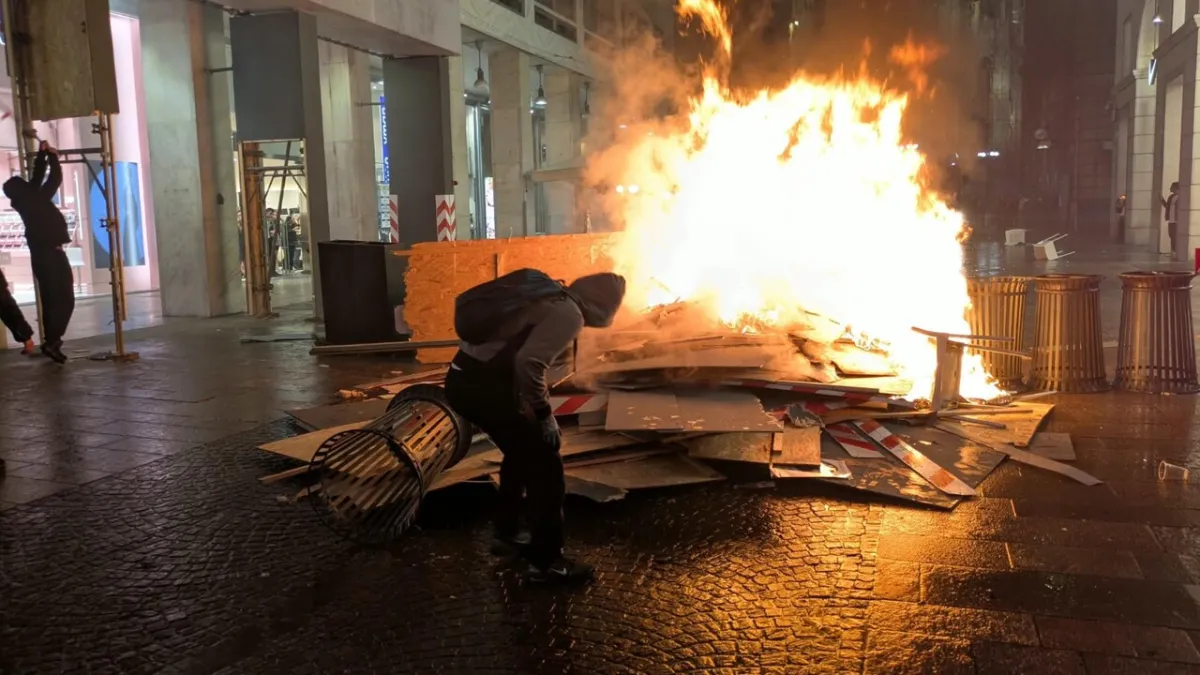
MILAN – A wave of protests demanding better living costs in Italy escalated into serious violence and clashes in Milan in early 2026, turning parts of the metropolis into a battleground. Prime Minister Giorgia Meloni reacted strongly, stating that 'any reticence about violence is a justification' for anarchy, following similar escalations in Turin and Bologna.
The demonstrations, initially peaceful expressions of public dissatisfaction with soaring basic commodity prices and inflation, were infiltrated by elements that instigated confrontations with security forces. Vehicles were set ablaze, public facilities vandalized, and makeshift barricades erected, creating a tense atmosphere in the heart of the city.
The rising cost of energy and food since late 2025 has significantly burdened Italian households. Inflationary pressures continue to loom, making daily life increasingly difficult for many citizens. This situation is compounded by the looming shadow of a global recession that continues to affect the European economy.
Prime Minister Meloni's strong statement underscored the government's uncompromising stance against vandalism and property damage. She emphasized the importance of maintaining public order and taking firm action against those attempting to exploit demonstrations for destructive purposes.
Not only Milan, reports from Turin and Bologna also indicated that similar protests ended in clashes between demonstrators and police. Crowds in both cities voiced the same demands, highlighting the government's perceived inability to address the economic crisis that broadly harms the populace.
The phenomenon of economic protests escalating into violence is not new in Europe. In the previous year, France also experienced similar unrest due to government policies perceived as detrimental to the people. This indicates a widespread pattern of public frustration across the continent due to economic pressures.
Analysts link this wave of protests to deeper concerns about Italy's economic stability. Although the government is trying to address them, issues like soaring shadow economy and global debt growth challenges, as voiced by Economy Minister Giancarlo Giorgetti, remain major unresolved tasks.
Several civil society groups and labor unions urged the government to initiate constructive dialogue with community representatives to find concrete solutions to the cost of living issues. They argue that a purely repressive approach will not resolve the deep-seated root causes.
This escalation of violence will undoubtedly exert significant political pressure on Meloni's government. How the government handles this crisis will be a critical test for coalition stability and public trust in their ability to manage the nation.
The potential for further waves of protests remains high if the government does not promptly deliver effective and publicly acceptable solutions. Italy's social and political stability now hangs in the balance amid complex economic challenges and simmering public discontent.
Editorial Insight: The wave of violence accompanying cost of living protests in Italy, particularly in Milan, Turin, and Bologna, indicates more than just momentary economic dissatisfaction. It is a manifestation of accumulated public frustration with prolonged inflationary pressures and perceived inadequate government responses. PM Meloni's firm statement is necessary to maintain order, but the root economic problems must be addressed promptly with more comprehensive and inclusive policies to prevent a broader escalation of social conflict.