 Demian Sahputra
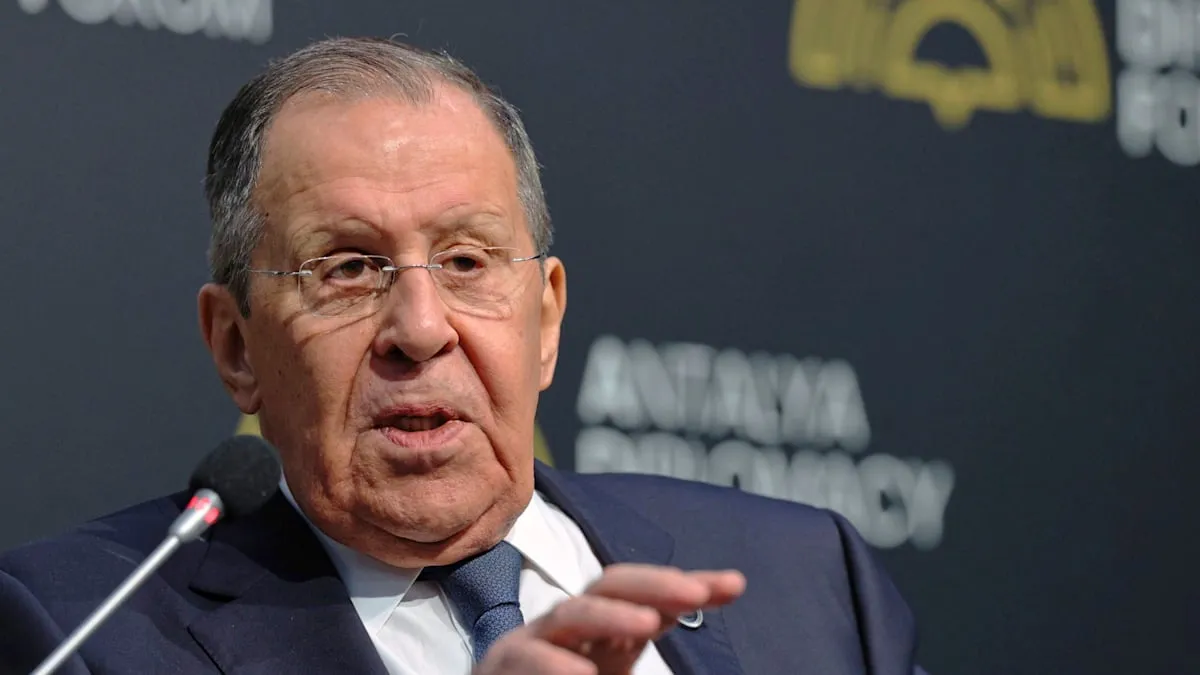
MOSCOW – The Russian government has officially closed all branches of the Goethe-Institut in its territory, an aggressive diplomatic move claimed as retaliation for a drone incident at Leipzig/Halle Airport, Germany. This surprising statement was delivered by Russian Foreign Minister Sergey Lavrov via the Interfax news agency, marking a new escalation of tensions between Moscow and Berlin amidst the geopolitical turbulence of 2026.
This decision stems from Moscow's accusations that the drone incident at the vital German airport was linked to parties deemed hostile to Russia. Although specific details regarding these 'parties' have not been explicitly disclosed by Russian authorities, the closure of this German cultural institution is a direct response that could trigger a spiral of diplomatic retaliation.
Indeed, the drone incident at Leipzig/Halle Airport has garnered international attention recently, raising serious concerns about the security of civilian infrastructure and potential foreign interference. Russia has indicated that this event was not an isolated incident but part of a series of provocations targeting its interests.
The closure of the Goethe-Institut, an institution that has long served as a bridge for German culture worldwide, effectively ends Russian citizens' access to German language education and cultural programs organized by the institution. This move aligns with the Kremlin's increasingly harsh rhetoric towards Western countries, especially Germany, which are seen as proactive in sanctions and criticism of Russia's foreign policy.
Foreign Minister Sergey Lavrov did not hold back in his statement. He emphasized that this action was a 'proportionate' response to what he considered 'unfriendly actions' from Berlin. 'We will not allow aggression against our sovereignty to go unanswered,' Lavrov stated, affirming his country's firm stance.
For Germany, the closure of the Goethe-Institut in Russia is a severe blow to decades of cultural diplomacy efforts. The institute is not only a language center but also a platform for dialogue, exchange of ideas, and cross-cultural understanding. Its loss will deepen the divide between the two countries.
This crisis adds to the long list of tensions characterizing Russia-Germany relations, which have deteriorated since the conflict in Eastern Europe. Previously, several German figures, including Manuela Schwesig, had acknowledged past errors in policy assessment towards Russia, indicating internal rifts within Germany.
Berlin's response to this closure is expected to emerge shortly. Analysts predict retaliatory measures, possibly in the form of restrictions on Russian institutions in Germany or diplomatic expulsions. This cycle of retaliation risks worsening the situation to an all-time low in bilateral relations.
It is worth noting that this closure is not the first for a cultural institution amid diplomatic conflict. History records many similar incidents where culture becomes a hostage of political tensions. Moscow has repeatedly shown its willingness to use all means in responding to international pressure.
The closure of the Goethe-Institut also has the potential to affect thousands of students, academics, and artists who utilize its programs. The long-term impact on mutual understanding and Germany's image in Russia, and vice versa, is expected to be highly significant.
Editorial Insight:
Moscow's decision to close the Goethe-Institut sends a strong signal that Russia is unafraid to confront Western pressure and is prepared to take extreme measures in response to what it perceives as provocations. This action effectively sacrifices cultural diplomacy for geopolitical interests, widening the communication and understanding gap between both parties. The domino effect of this closure will be felt long-term, potentially extinguishing any remaining dialogue and further isolating Russia from the European cultural sphere. This step also indicates that in 2026, even the cultural arena has become a battlefield in a new cold war.