 Gabriella
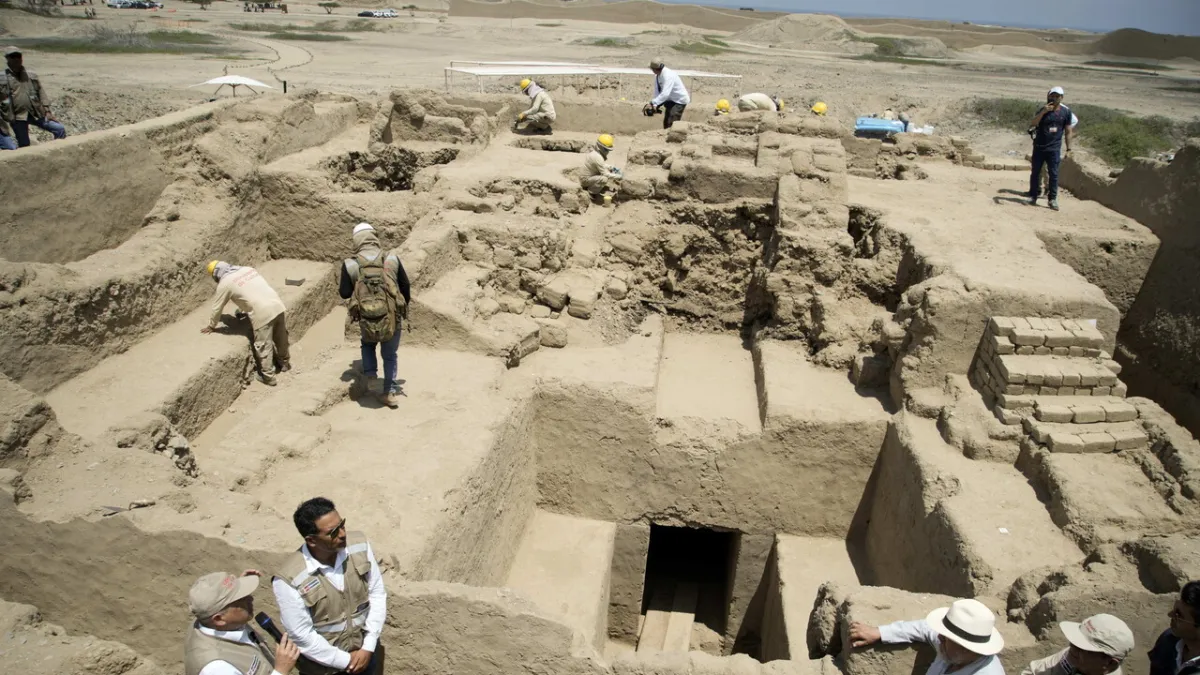
LIMA – A groundbreaking archaeological discovery, poised to electrify the global scientific community, was announced from the Peruvian coastal desert in 2026. Archaeologists have unearthed a pre-Inca tomb, over 600 years old, found in an astonishingly almost intact state. This discovery is believed to be the final resting place for high-ranking individuals of the Chimú Kingdom, peeling back new layers of insight into an ancient civilization that once thrived in South America.
An international research team, spearheaded by the Peruvian Institute of Archaeology (IAP), made this significant breakthrough at a previously unidentified remote archaeological site, located in the Lambayeque region of northern Peru. This area, renowned for its rich cultural heritage, consistently yields invaluable historical surprises.
The 'almost intact' condition of the tomb represents a rare anomaly in the archaeological world. It suggests the tomb remained untouched by looters for centuries, allowing experts to study its original context in unparalleled depth. This exceptional preservation is key to understanding Chimú burial practices and social hierarchy.
Within the tomb's structure, archaeologists discovered human remains believed to be those of a Chimú noble or spiritual leader. Surrounding these remains were various precious offerings, including intricately decorated pottery, high-quality textiles still retaining their original colors, and valuable gold and silver metal objects showcasing the legendary Chimú metallurgical expertise.
The Chimú Kingdom dominated the northern Peruvian coast between 900 and 1470 CE, before its eventual conquest by the Inca Empire. Their capital, Chan Chan, built entirely from adobe, was one of the largest cities in the world during its time and is now a UNESCO World Heritage Site. They were recognized for their sophisticated irrigation systems and captivating craftsmanship.
This tomb discovery is expected to provide crucial insights into the political, economic, and spiritual beliefs of the Chimú society. The classification of grave goods could unveil the specific roles of the interred individuals, whether they were rulers, priests, or influential military figures.
The presence of remarkably preserved textiles holds particular importance. These fabrics often feature complex symbolism and motifs that tell stories of mythology, rituals, or even historical events. Textile experts are now meticulously working to decipher these hidden messages.
Data from this tomb also facilitates a more accurate comparison with other pre-Inca cultures in the region, such as the Moche and Sican. This helps in constructing a more complete picture of cultural interactions and the evolution of civilizations in the Andes before the European arrival.
The excavation process was conducted with extreme care, utilizing modern techniques to ensure every soil layer and every artifact was meticulously documented. This endeavor involved a multidisciplinary team comprising archaeologists, anthropologists, conservators, and geologists.
The Peruvian government and the IAP have committed to protecting this site from looting and environmental damage. Long-term conservation measures are being formulated to ensure this precious heritage can be studied and and preserved for future generations.
This discovery will not only enrich academic knowledge but also has the potential to boost cultural tourism to Peru, particularly its northern regions. Public education about the importance of ancient civilizations remains a top priority.
Editorial Insight: The discovery of this nearly intact Chimú tomb marks a significant milestone for global archaeology. Amidst the hustle of modernization, successfully uncovering traces of a civilization hundreds of years old in pristine condition serves as a potent reminder of humanity's invaluable historical wealth. This is not merely about finding artifacts, but about opening a direct window into the life, beliefs, and social hierarchies of the Chimú people. The data collected from this site will form the foundation for a renewed understanding of pre-Inca dynamics, potentially even influencing existing historical narratives surrounding Inca dominance. The next challenge lies in how the government and international community can collaborate to preserve the site while maximizing its educational and research potential.