 Stefani Rindus
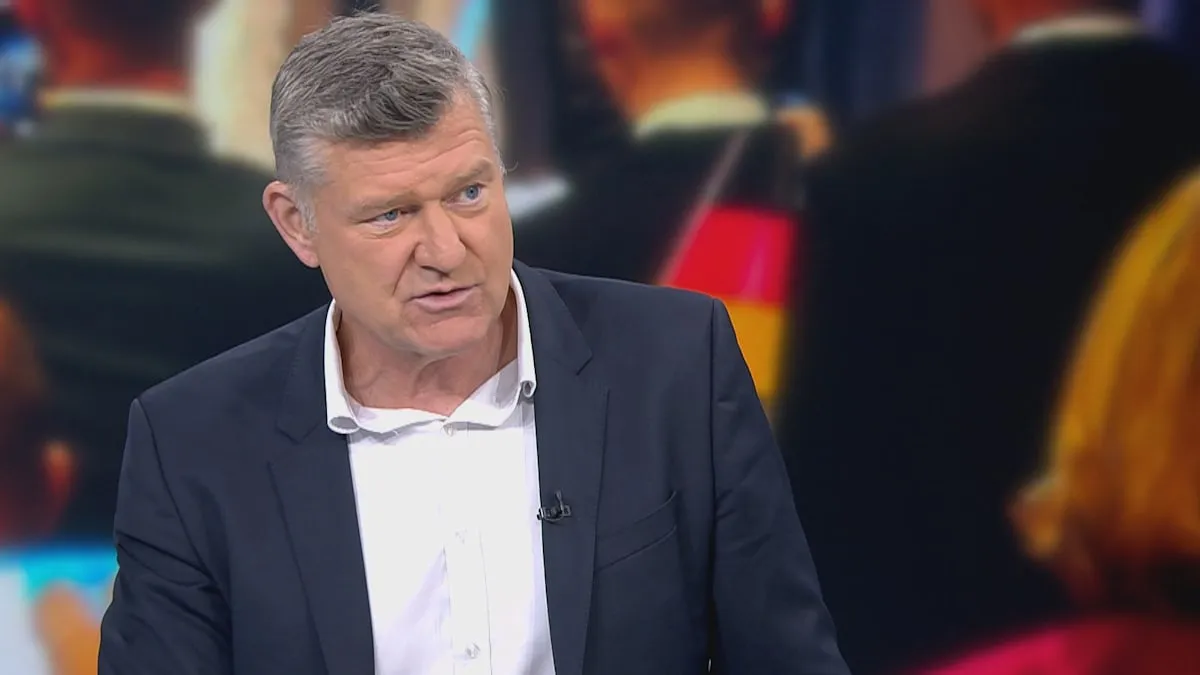
SACHSEN-ANHALT – The leader of the Alternative for Germany (AfD) party, Siegmund, is expected to aggressively push for an internal debate within the Christian Democratic Union (CDU) regarding their political firewall against the AfD. This urgency stems from the significant election results in Sachsen-Anhalt in 2026, where AfD garnered 44 percent of the votes, highlighting a major challenge to the CDU's isolation strategy.
Thorsten Jungholt, a senior WELT correspondent, asserted that maintaining the position of hiding 44 percent of voters behind a firewall – that is no longer tenable. This statement takes center stage, indicating a shifting political dynamic that compels the CDU to re-evaluate its strategy of refusing collaboration with the AfD.
The AfD's impressive victory in Sachsen-Anhalt not only shook the regional political landscape but also sparked a national discussion about the future of German democracy. AfD Shakes Sachsen-Anhalt: Far-Right Victory Rattles Germany 2026 is one report that illustrates the scale of this phenomenon.
The traditional Brandmauer or political firewall, steadfastly upheld by the CDU and other mainstream parties, is intended to prevent the legitimization and participation of the AfD in government, given their often-regarded far-right positions. However, the sheer volume of voter support now tests the consistency and sustainability of this policy.
Siegmund, with newfound confidence, is capitalizing on this moment to pressure the CDU to reconsider their refusal. He believes that ignoring nearly half the votes cast for the AfD in a region is an unrealistic and undemocratic stance in the long run.
The AfD itself now has several strategic options to fulfill the governing mandate it obtained from the election results. These choices will determine the political direction of Sachsen-Anhalt and potentially influence coalition formations at the federal level:
- Attempting to form a minority government, hoping to garner ad-hoc support for each proposed policy.
- Increasing pressure on mainstream parties, especially the CDU, to loosen their political firewall policy and consider some form of cooperation.
- Pushing for new elections, confident that they could achieve even greater support, potentially reaching 55 percent as Siegmund once vocalized. This issue was highlighted in the report Siegmund of AfD Rejects BSW Offer: Re-election Guarantees 55% Victory!.
This situation places the CDU at a crossroads. Failure to respond to significant voter sentiment could widen the gap between the party and its constituents, while collaboration with the AfD could alienate the CDU's traditional base and other potential coalition partners.
Several related articles such as CDU in Crisis, Frei Insists on Leading Sachsen-Anhalt Coalition 2026 and Germany in Turmoil: AfD Dominates Sachsen-Anhalt, CDU Admits Humiliating Defeat highlight the internal dilemma facing the CDU and its efforts to remain relevant in a drastically changing political landscape.
The German political dynamic is heating up, and what is happening in Sachsen-Anhalt is not just a local issue. It is a barometer showing the direction of the winds of change blowing across Germany, as reviewed in Sachsen-Anhalt Shockwaves Echo Globally: German Election Results in Spotlight. The pressure on the CDU to adapt has never been stronger.
Editorial Insight: The debate surrounding the political firewall against the AfD is not merely post-election rhetoric but a fundamental reflection on the challenges facing liberal democracy in Germany. AfD's significant electoral strength in Sachsen-Anhalt forces the CDU to choose between upholding ideological principles and adapting to new political realities. The decisions made by the CDU will have long-term implications for federal coalition stability and the future political direction of Germany, potentially leading to a redefinition of the traditional political spectrum.