 Angel Doris
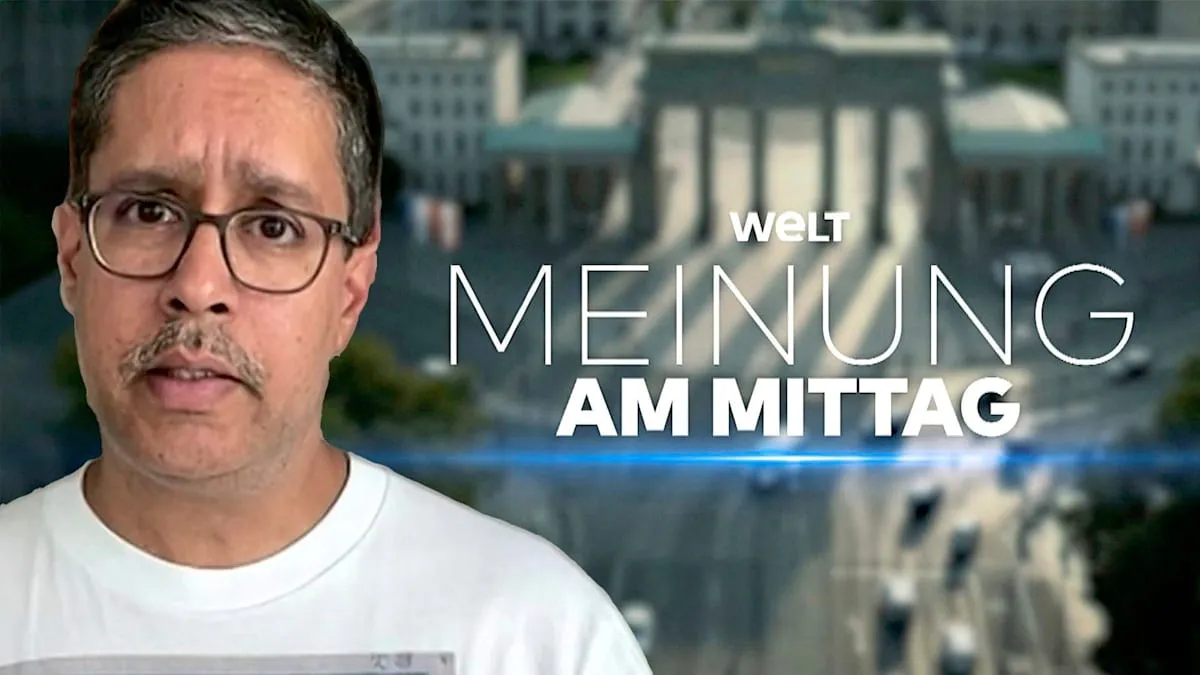
BERLIN – Germany's Christian Union (CDU/CSU) faces a profound crisis. Plunging electoral performance and the threat of consecutive defeats have drawn sharp scrutiny, particularly from prominent columnist Hasnain Kazim. Kazim attributes this decline to the ambiguous political strategy of party leader Friedrich Merz, dismissing the notion that the problem merely lies with ineffective communication. This critical situation casts uncertainty over the future of one of Europe's largest conservative parties.
In his recently published commentary, Hasnain Kazim asserted that merely 'improving political communication' will be insufficient to address the root problems confronting the CDU and CSU. He analogized Merz's policies as 'too often blinking right, yet then turning left,' implying an inconsistency that bewilders both conservative and moderate voter bases.
Recent public opinion surveys consistently show a decline in support for the Christian Union bloc, which historically has been one of Germany's dominant political forces. This negative trend has triggered serious concerns within the party, especially after several disappointing regional election results. According to previous reports, the CDU has even experienced a historic plummet in support over 70 years.
Kazim argues that Friedrich Merz has failed to establish a clear political identity for the Christian Union. Instead of drawing distinct lines differentiating his party from rivals, Merz has frequently appeared to shift between conservative and centrist positions, causing confusion among constituents and party members alike.
Criticism of Merz's leadership is not new. Since taking office, he has faced significant challenges in unifying party factions and redefining the Christian Union's vision post-Angela Merkel era. However, the narrative he has constructed has often been perceived as unconvincing or even contradictory.
'Politics requires clear direction, a compass that does not waver,' Kazim stated, as quoted from his article. 'When voters do not know where you stand, they will seek alternatives.'
Pressure on Friedrich Merz is intensifying as the next federal election approaches. Internal party consolidation and the restoration of public trust are urgent tasks that must be accomplished to prevent greater electoral losses.
The threat from far-right parties, especially the Alternative for Germany (AfD), is becoming increasingly palpable. The Christian Union's inconsistent stances could drive frustrated voters towards parties offering a more straightforward, albeit controversial, narrative. Related news even indicates that the CDU is at risk of being ousted from parliament in several regions.
This situation demands a fundamental strategic evaluation, not merely cosmetic adjustments. The future of Germany's Christian Union, and indeed the broader German political landscape, may heavily depend on Merz's leadership response to this crisis of confidence.
Editorial Insight:
The crisis of the German Christian Union under Friedrich Merz's leadership reflects the complex dynamics of modern politics, where party identity and message consistency are crucial. Hasnain Kazim's 'blink right, turn left' analogy highlights the dangers of ambiguity in attracting voters. If Merz does not quickly establish a clear direction, the Christian Union risks losing more of its support base, opening significant opportunities for other political forces, including the far-right, to fill the ideological void. Restoring public trust requires more than just rhetoric; it demands tangible action and a coherent vision.