 Angela Stefani
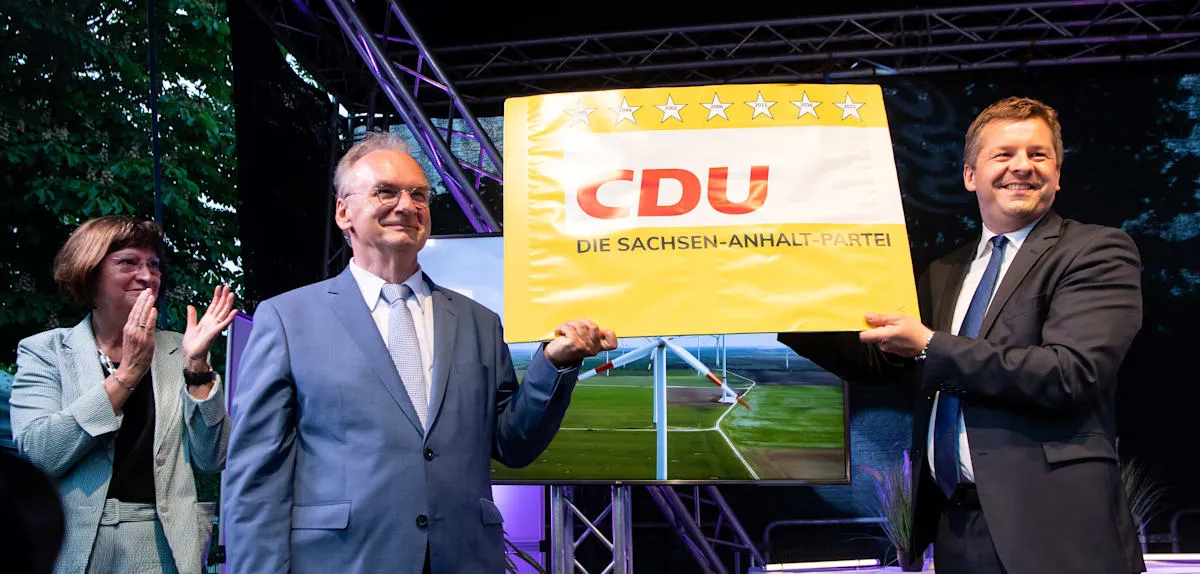
SACHSEN-ANHALT – Leading polling institutes in Germany are under intense scrutiny after their predictions for the 2021 Sachsen-Anhalt state election proved dramatically inaccurate. Various surveys conducted prior to polling day placed the Christian Democratic Union (CDU) and the Alternative for Germany (AfD) in a near neck-and-neck race, suggesting a fierce competition. However, the reality at the ballot box presented a stark contrast, with the CDU securing a decisive victory under the leadership of Reiner Haseloff.
Several public opinion research institutions had reported support for both parties to be at very close figures. The public was presented with an image of intense political polarization, with the projected difference expected to be only a few percentage points.
Yet, when the final results were announced, the CDU's lead was not only significant but overwhelming. The party led by Haseloff managed to secure a margin of over 16 percentage points from its closest competitor, the AfD, a victory margin far beyond any survey's predictions.
This striking disparity between projections and actual results immediately raised fundamental questions regarding the validity of political polling methods. Demoscopists, as political pollsters are known, are now compelled to provide a comprehensive explanation for such a large discrepancy.
One theory that has emerged is the phenomenon of silent voters or the spiral of silence effect, where some voters are reluctant to honestly disclose their political choices to pollsters, especially if those choices are considered controversial or socially unpopular. This often occurs in elections involving sensitive issues.
Furthermore, last-minute shifts in opinion before election day can also be a significant factor. An effective campaign in crucial moments, or even unexpected political incidents, has the potential to influence undecided voters.
Sampling methodology and data projection also become areas for evaluation. Was the sample truly representative? Were there biases in question formulation or in how data was interpreted? These are crucial questions that need to be answered.
Professor Klaus-Peter Schoeppner, a prominent public opinion expert, often highlights the complexity of predicting election results. He argues that elections are not merely a summation of numbers, but a reflection of ever-changing social and psychological dynamics.
Reiner Haseloffs resounding victory for the CDU in Sachsen-Anhalt proved that electability cannot always be precisely measured by conventional tools. This outcome also underscores the capacity of leaders to mobilize their support base, even when initial predictions are not promising.
This incident recalls several similar cases in various countries where polls failed to capture waves of political change. This is important for democracy, as the accuracy of surveys is often used as an early indicator of political trends and can influence public perception.
Although polling institutes continuously strive to refine their methodologies, the Sachsen-Anhalt 2021 case stands as a significant study on the limits of political prediction. It also highlights why the public needs to be critical of every poll result.
Lessons from this case must continue to be explored by researchers and political practitioners. Transparency in methodology and acknowledgment of potential margins of error are vital for maintaining public trust.
Previous related articles have also touched upon the political dynamics in this region, such as in the article AfD Dominasi Surveia Sachsen-Anhalt: Jerman Hadapi Hari Penentuan Politik, which highlighted the strong role of the AfD in political projections, even though the final results differed greatly.
Editorial Insight: This event not only challenges the credibility of polling institutes but also underscores the complexity of the modern political landscape. The failure to predict election results with such a large margin can erode public trust in political information, while also serving as a reminder that voter dynamics are often more difficult to decipher than mere numbers. The long-term implication is an impetus for polling institutions to innovate and for media to present poll results with greater nuance and caution.