 Angel Doris
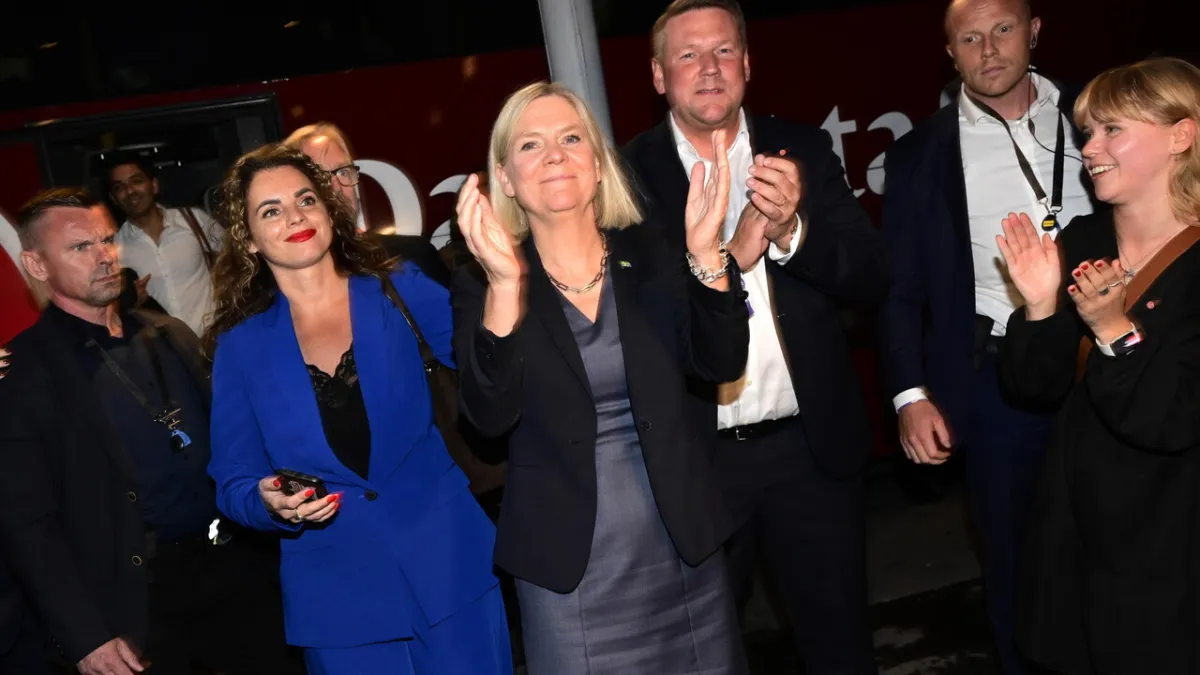
STOCKHOLM – Sweden's political arena is heating up once again with a fiercely contested general election currently underway. According to the latest projections from Swedish public broadcaster Svt, the left-center bloc currently holds a marginal one-seat lead after half of the votes have been counted. This situation indicates that the final outcome of the election remains highly unpredictable, leaving the fate of Sweden's government hanging in the balance.
Tension is palpable across the nation as citizens await confirmation of who will lead the government for the next five years. Initial data reveals fluctuating dynamics, with both blocs constantly vying for votes. Such a narrow margin underscores the strong political polarization among Swedish voters.
Svt's projections, widely regarded as a reliable barometer, indicate that ultranationalist groups have experienced a significant decline in support. This trend deviates from previous elections where far-right parties showed increasing popularity. This decline may be a key factor in maintaining the left-center bloc's advantage, albeit a slim one.
Political analysts in Stockholm emphasize that every vote now carries crucial weight. A one-seat lead is far from a comfortable margin, meaning the potential for shifts in results remains wide open as counting concludes in outstanding districts. This process demands high precision to ensure accuracy of the final outcome.
Leaders from both political blocs have urged their supporters to be patient. Discussions regarding potential coalitions, long a hallmark of Swedish parliamentary politics, are expected to be exceptionally complex. Reaching agreements between parties will be a major challenge given the almost evenly distributed votes.
Even with the left-center bloc's lead, the pressure to form a stable government will be immense. A fragile coalition could impede the implementation of crucial policies and generate economic and social uncertainty. Swedish citizens hope for clarity as soon as possible.
Some observers suggest that the decline of the ultranationalists could be interpreted as a signal from Swedish society desiring stability and moving away from extremism. However, their still substantial vote share indicates that the issues they champion remain relevant to a significant portion of the electorate.
This development echoes the dynamics of previous Swedish elections, where the left-center bloc also faced similar challenges in forming a majority. Earlier articles, such as Sweden in Turmoil: Social Democrats Lead, Coalition Building Remains Precarious (read here), have highlighted these complexities. History shows that post-election negotiations in Sweden are often lengthy and dramatic.
The impact of this election outcome will be felt not only domestically but also within the European arena. Sweden is an important pillar in the European Union, and the direction of its government's policies will affect regional and global issues. Sweden's political stability will be a concern for many stakeholders.
Regardless of the final outcome, it is clear that Sweden stands at a critical political crossroads. Voters' decisions reflect deep debates about national identity, immigration policies, the economy, and the future of social welfare. Every subsequent step will be closely watched by the public and the international community.
Editorial Insight: The head-to-head situation in the Swedish General Election illustrates an increasingly fragmented political landscape, not just in Sweden but across many European nations. While the left-center bloc holds a slight lead, the real challenge lies in their ability to build a robust and enduring coalition. The retreat of ultranationalist votes might reflect voters' reluctance towards extreme polarization, yet their still significant strength serves as a warning to mainstream parties to address the underlying issues fueling such sentiments. Forming a government in Sweden this time will be a true test of the art of political compromise.