 Angela Stefani
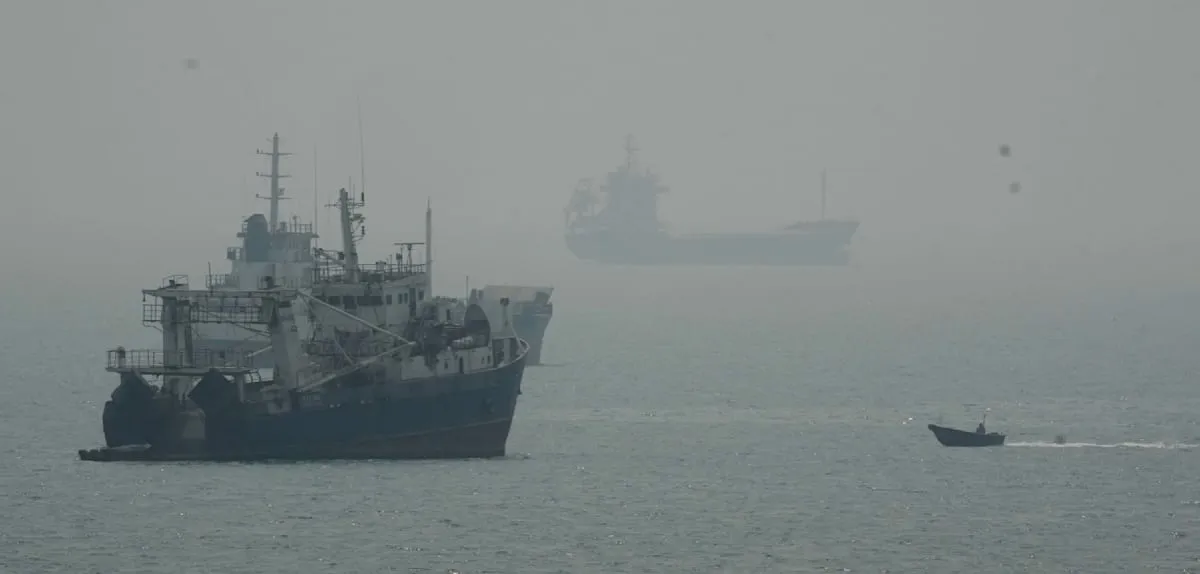
TEHRAN – An Iranian-flagged cargo vessel reportedly came under attack in the Strait of Hormuz during the night, triggering a series of loud explosions heard across the strategic region. This incident, confirmed by Iranian authorities, had previously been reported by a British maritime agency, underscoring escalating tensions in one of the worlds most crucial shipping lanes.
Irans official news agency, IRNA, stated that explosions occurred in the vicinity of the ship, though specific details regarding the nature of the attack or the extent of damage remain unconfirmed. Iranian authorities are conducting a thorough investigation to identify the perpetrators and the motive behind this serious maritime incident.
The Strait of Hormuz, located between the Gulf of Oman and the Persian Gulf, serves as a vital choke point for global oil supplies. Approximately one-third of all seaborne oil traded worldwide transits this strait daily, making it an extremely sensitive area susceptible to security disruptions.
Prior to Tehrans statement, the United Kingdom Maritime Trade Operations (UKMTO) had issued an initial report of an 'incident' in the region, advising vessels to exercise caution. While UKMTO did not directly specify the target or nature of the attack, its report indicated suspicious activity potentially endangering navigation.
Attacks on vessels in the Strait of Hormuz are not unprecedented. This region frequently becomes an arena for geopolitical friction, particularly between Iran and several Western nations, along with their allies in the Middle East. Various incidents, ranging from ship seizures to alleged sabotage, have marked these waters over many years. Similar attacks have occurred previously, including incidents that led to the shutdown of crucial oil pipelines in Saudi Arabia, where Iran was at one point accused as the perpetrator. Read more at Drone Attack Rocks Saudi Arabia.
Global concerns regarding maritime security in the Strait of Hormuz are intensifying following this incident. World oil prices, which often fluctuate due to uncertainty in the Middle East, are expected to react volatilely to reports of the attack.
Major powers, including the United States under President Donald Trumps leadership, as well as European forces, hold significant interests in maintaining stability and freedom of navigation through this strait. Any incident has the potential to trigger broader escalation in an already volatile region.
Tehran has consistently asserted its right to protect its shipping lanes and to counter any threats to its sovereignty. They have also frequently accused external parties of attempting to destabilize regional peace for political gain.
As of now, no party has overtly claimed responsibility for the attack, nor has Iran pointed fingers at specific entities. This silence only deepens the mystery surrounding an incident with significant potential to ignite a crisis.
The international community urges all parties to exercise restraint and support a transparent investigation to uncover the true facts. The stability of the Strait of Hormuz is a shared interest that must be protected from provocation.
Editorial Insight: The attack on a cargo ship in the Strait of Hormuz is not merely a routine maritime incident; it reflects simmering geopolitical tensions in the Middle East. With Iran being cautious in its accusations, and a British agency merely reporting an 'incident,' theres a strong indication that this event carries far broader implications than just material damage. It could be a test of international response or an attempt to provoke regional escalation. The world will closely monitor how this incident impacts global energy prices and the dynamics of power in the region.