 Dorry Archiles
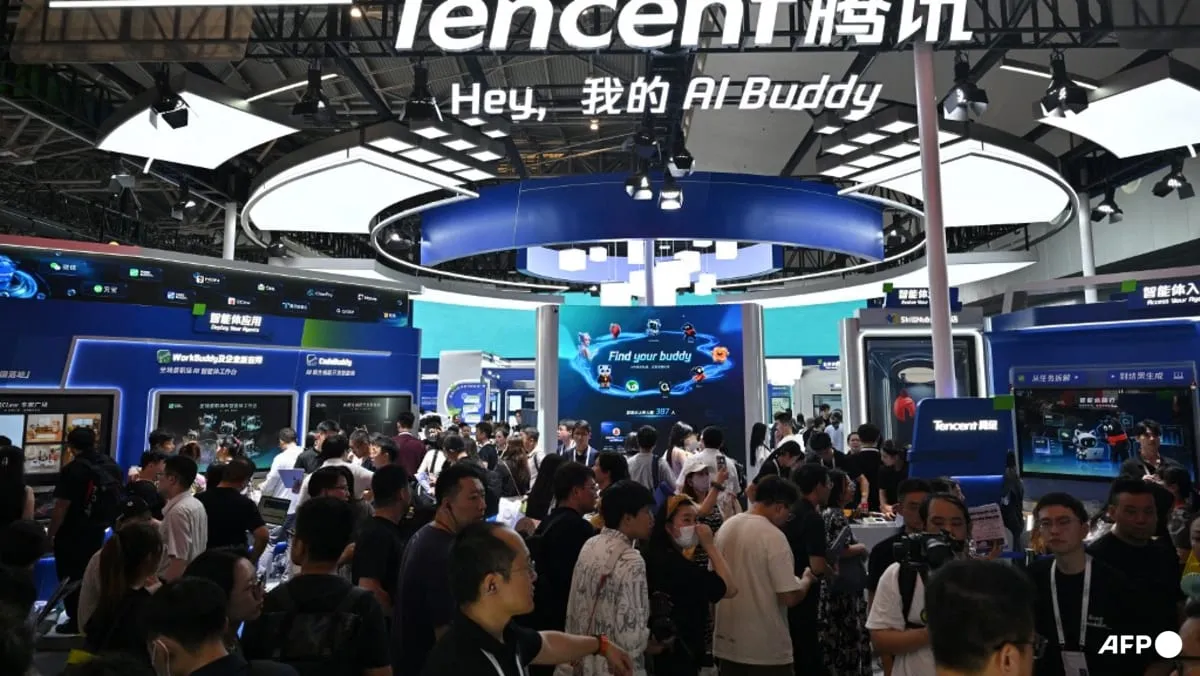
SHENZHEN – Chinese tech behemoth Tencent Holdings now stands at a crucial crossroads. The company, which built a massive empire on its WeChat ecosystem and gaming business, faces intense competition from rivals and disruptive artificial intelligence (AI) startups in 2026. The big question looms: can Tencent maintain its dominance amidst China's technology landscape, which is increasingly shaped by the AI revolution?
China's technology industry is undergoing a fundamental transformation, driven by the accelerating development of AI. This phenomenon creates a new wave of innovation while challenging the position of established players who may have become too comfortable with their existing business models. Tencent, with its multi-trillion rupiah market valuation, is not exempt from this pressure.
WeChat, the super-app that underpins the digital lives of hundreds of millions in China, is Tencent's most valuable asset. This multifunctional platform encompasses messaging, digital payments, social media, and mini-program services, making it a strong foundation for the company's ecosystem.
However, WeChat's advantage is now being tested by the need to integrate increasingly sophisticated generative AI capabilities. Competitors like ByteDance with Douyin (China's TikTok) and Alibaba continue to invest heavily in AI, potentially eroding Tencent's market share if its adaptation is slow.
Tencent's gaming business also remains a primary revenue pillar. The company boasts an extensive portfolio of games, from mobile to PC, generating substantial profits. Integrating AI into game development and personalizing user experience is key to maintaining player loyalty.
Industry analysts observe that Tencent's success depends not only on its internal innovation capacity but also on its strategy for acquiring and investing in promising AI startups. This is crucial to ensure the company remains at the forefront of technological advancements.
The competition in China's AI sector is not merely about who possesses the best technology, but rather who can effectively apply it to products and services widely used by the public. WeChat's vast ecosystem could serve as a unique competitive advantage in this regard.
For instance, AI features that can personalize news content, recommend products, or even facilitate user interactions within games could provide significant added value for Tencent users. This aligns with market trends increasingly leaning towards personalization and efficiency.
Another challenge stems from the Chinese government's increasingly stringent regulations on technology companies. Anti-monopoly policies and personal data protection measures could restrict Tencent's room for expansion and innovation, forcing the company to strike a balance between growth and compliance.
Several other tech companies, such as Zalando, are also aggressively investing in AI to boost operational efficiency, as highlighted in the news Zalando Launches Revolutionary AI Shopping Agent 2026. This indicates that AI adoption is no longer an option but a necessity to remain relevant.
Similarly, the case of Cipher Achieves $31 Million Profit Despite Revenue Drop, Aggressively Pivots to AI also underscores how technology companies must prioritize artificial intelligence to ensure business sustainability.
To address these pressures, Tencent is projected to undertake internal restructuring and allocate greater resources to AI research and development. This strategy is vital to prevent them from falling behind in the increasingly fierce innovation race.
Despite facing significant challenges, Tencent's fundamentals remain strong. WeChat's loyal user base and decades of experience managing large-scale platforms are valuable assets. The key lies in how quickly and effectively the company can transform itself into an AI leader.
Editorial Insight: The shift towards an AI-driven economy is an inevitability in China. Tencent, with its WeChat infrastructure and gaming dominance, possesses a significant early advantage. However, the speed of adaptation and the ability to innovate relentlessly will determine whether this giant can maintain its position as a technology locomotive or be overtaken by more agile AI innovation waves. Tencent's future in 2026 will heavily depend on its strategic response to this artificial intelligence revolution.