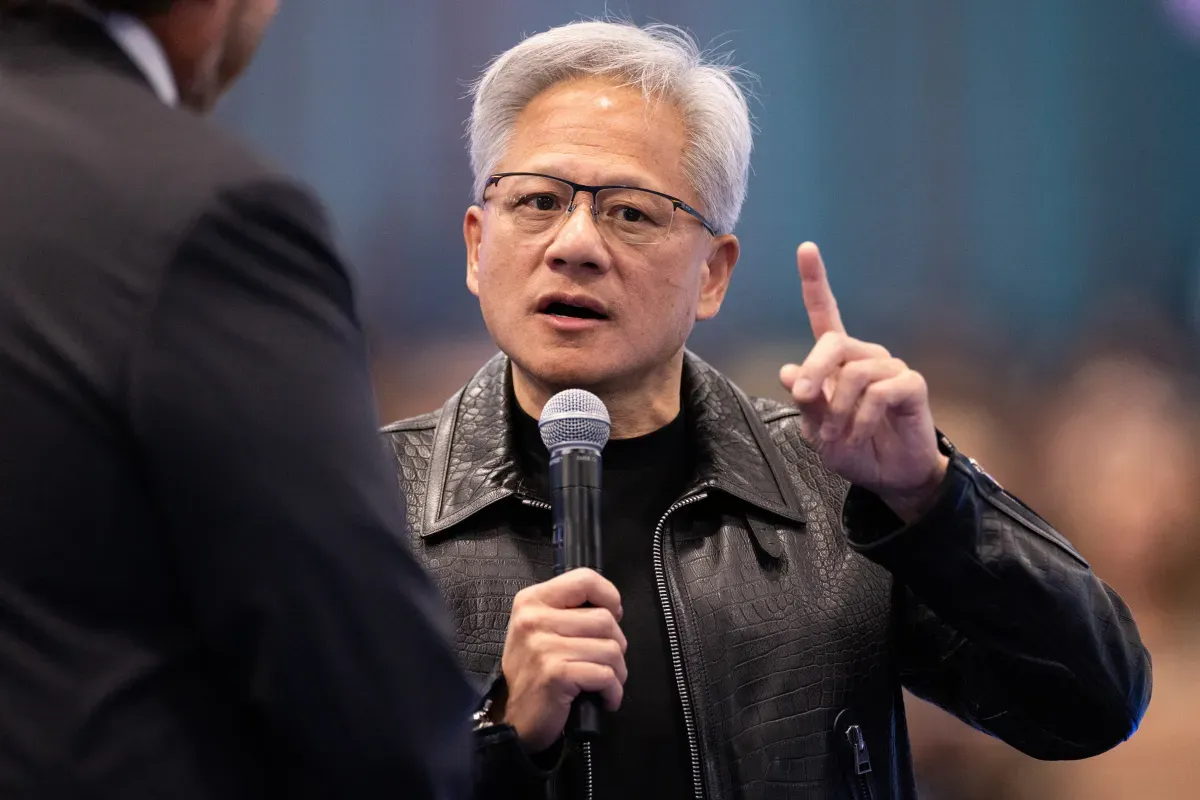
SILICON VALLEY – Issues surrounding potential instability in the leadership of Jensen Huang, CEO of Nvidia, are now under sharp scrutiny. The performance of Huang and the semiconductor giant he leads are considered a primary pillar supporting almost the entire global artificial intelligence (AI) industry ecosystem. A major question looms: does bad news for Huang automatically mean bad news for the future of AI?
Nvidia, under Huangs visionary direction, has solidified its position as the dominant supplier of graphics processing units (GPUs), crucial for training and running complex AI models. This dominance is not only evident in large-scale data centers but also extends to autonomous automotive sectors, scientific research, and consumer applications.
The global economys reliance on Nvidia is undeniable. Various economic sectors, from giant tech companies to innovative startups, heavily depend on the chip infrastructure provided by Nvidia to fuel their innovation and growth.
Every minor fluctuation in Nvidias performance or strategic direction often triggers a significant response in the stock market and among tech investors. Market sentiment towards Nvidia frequently serves as a barometer for the overall health of the AI industry. Should pressure emerge on Huang, investor concerns would spread widely.
Jensen Huang is more than just a CEO; he is the visionary architect behind Nvidias dominance in the AI realm, stated a prominent tech market analyst. Any shake-up in his position could create significant uncertainty, potentially slowing down the pace of investment and development across the entire AI spectrum.
The sustainability of innovation in the AI sector heavily relies on aggressive research and development, where Nvidia is a key player. Disruptions to this company could slow down progress in new technologies, from machine learning algorithms to generative AI applications.
Both internal and external challenges faced by Huang and Nvidia, such as fierce competition from other chip manufacturers or increasing regulatory pressure, could be triggering factors. Indeed, some reports allude to internal turmoil, as highlighted in the article Menguak Tabir: Eks Eksekutif Megaspeed Mundur di Tengah Skandal Chip Nvidia, although no official confirmation has emerged regarding its direct implications for Huang.
The potential impact of this situation is not limited to chipmakers alone. Companies relying on Nvidia GPUs for their operations, including cloud computing service providers and AI software developers, will also feel the repercussions.
The market has already shown high sensitivity to AI-related news. A previous article titled AI Explosion: Hidden Threats and Dual Dangers for Investors 2026 has highlighted the volatility and inherent risks of investing in this sector. Huangs situation could exacerbate these conditions.
The fundamental question remains as to how strongly the AI industrys foundations can withstand a shake-up from one of its key leaders. Leadership stability at Nvidia is now a determinant of direction for trillions of dollars in future innovation and growth.
Editorial Insight: The situation surrounding Jensen Huang and Nvidia highlights the fragility of a technological ecosystem highly dependent on one or a few dominant entities. While the AI industry possesses strong momentum, diversification of supply chains and stable leadership are crucial for mitigating long-term risks and ensuring sustained growth.