 Angela Stefani

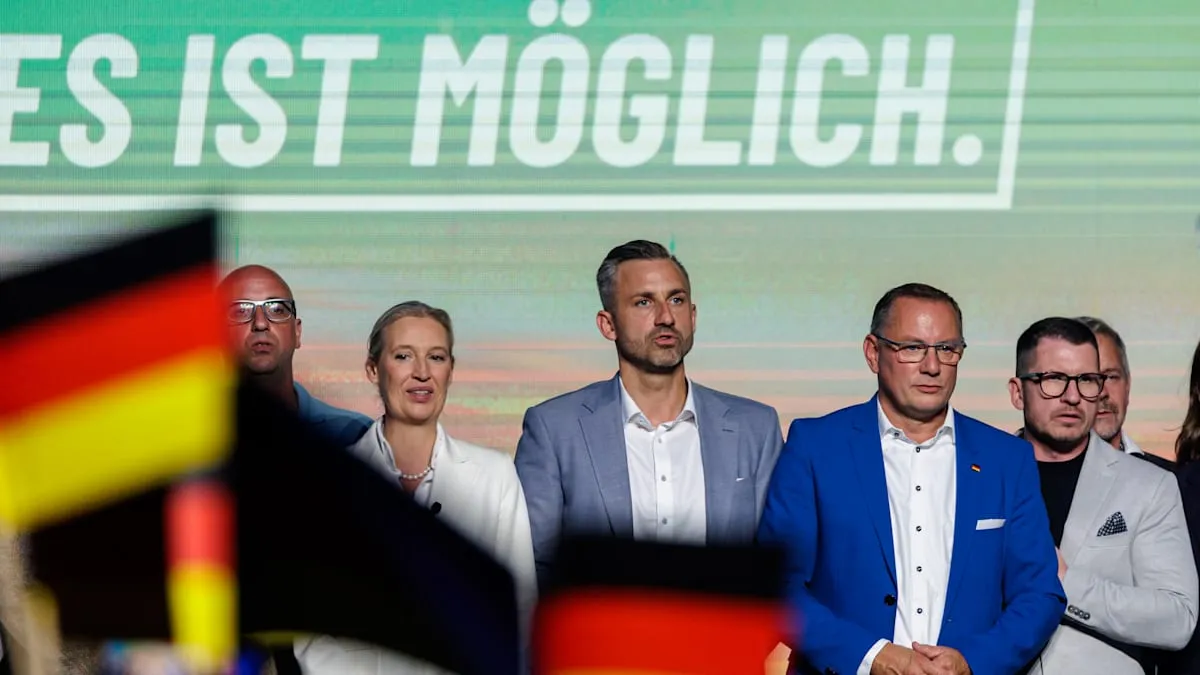
BERLIN – The Alternative for Germany (AfD) party has achieved a new record in public support, reaching its highest value in the latest ZDF Politbarometer survey, just ahead of the regional elections in Saxony-Anhalt. This phenomenon indicates a significant shift in the German political landscape, where the far-right party continues to consolidate its position, while Die Linke (The Left) party experiences a noticeable decline in support. This survey serves as a crucial indicator before the people of Saxony-Anhalt cast their votes in 2026.
The results of the poll released by ZDF Politbarometer confirm AfD as an undeniable political force. Political observers highlight the increasing percentage of support for AfD, which now leads in the survey results. This figure reflects AfD's success in garnering the sympathy of a large portion of voters in the region.
This sharp increase in support for AfD stands in stark contrast to the situation of Die Linke party. The survey shows that the left-leaning party suffered substantial losses, signaling significant challenges in retaining its voter base. This decline raises questions about the effectiveness of their political strategies amidst changing public preferences.
Interestingly, behind AfD's surge and Die Linke's decline, more than a quarter of survey respondents stated they are still undecided. This group of wavering voters will be a key determinant of the election's outcome and could drastically alter the political landscape in the coming months, as they represent crucial swing votes highly sought after by every contender.
Political analysts from various research institutions suggest that AfD's consistently improving performance in various regional and national surveys indicates underlying social and economic anxieties that the party's narrative has successfully exploited. Issues such as immigration, energy policy, and domestic economic conditions are primary drivers of voter preference.
Several other established political parties, such as the CDU/CSU, SPD, and the Greens, are now under pressure to formulate more effective strategies to curb AfD's momentum. Party leaders are competing to attract undecided voters by offering concrete solutions to the problems faced by the people of Saxony-Anhalt.
The impact of these survey results is highly significant for the projections of the Saxony-Anhalt Election 2026. With AfD in the leading position, the possibility of new coalition formations becomes a hot topic. Other parties may need to reconsider their political alliances to form a stable regional government.
The current Saxony-Anhalt regional government, led by a specific coalition, now faces harsh evaluation from the public. A related article, 'Saxony-Anhalt on the Brink of Crisis: Weak Economy, Election Threatens Public Evaluation,' also highlights the pressure faced by the government. The public sentiment reflected in this survey could be a reflection of dissatisfaction with their performance, especially in handling the local economy and other crucial issues.
This situation also sparks broader discussions about the future of democracy in Germany. The persistent strengthening of extreme or populist parties demands deep reflection from across the political spectrum, particularly in how they communicate and meet public expectations. The Saxony-Anhalt election will serve as an important barometer for political trends across Germany.
In the coming period, political campaigns in Saxony-Anhalt are expected to intensify. Each party will strive to win votes from the segment of undecided voters, through various promises and work programs deemed relevant to the needs and aspirations of local residents.
Editorial Insight: The surge in AfD's support in Saxony-Anhalt, as recorded in the ZDF survey, is not merely a local anomaly but a reflection of a broader shift in sentiment across Germany. Global economic uncertainties and immigration issues often trigger political polarization. Traditional parties must conduct deep introspection and offer more adaptive solutions to address these challenges, or risk losing relevance. The key to victory will lie in their ability to convince more than a quarter of the electorate who remain undecided.