 Dodi Irawan
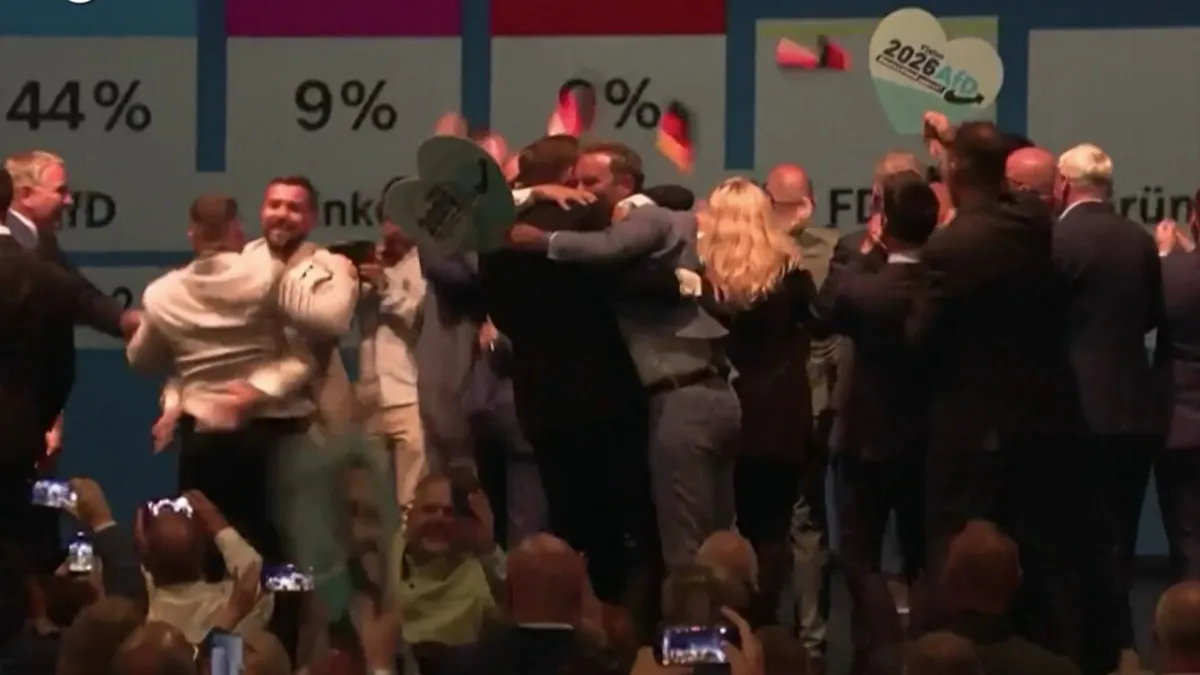
MAGDEBURG – A wave of political shock swept through the German state of Sachsen-Anhalt with the announcement of the 2026 regional election results. The Alternative for Germany (AfD) party, a far-right political force, secured a stunning victory, triggering uncontainable euphoria among its supporters while creating a noticeable 'freeze' within the headquarters of the Christian Democratic Union (CDU), the traditionally dominant centrist party. This outcome solidifies a significant shift in the regional and national political power landscape of Germany.
This AfD victory is not merely a number on paper; it is a tangible manifestation of increasing public support for anti-establishment narratives and policies. During the campaign, the AfD aggressively voiced issues of immigration, national identity, and criticism of European Union policies, which seemingly resonated strongly with segments of voters in Sachsen-Anhalt.
Conversely, the CDU's headquarters, usually filled with optimism, was now shrouded in a gloomy atmosphere. This defeat represents a significant blow to the conservative party, indicating an erosion of voter trust in traditional political agendas. The situation is exacerbated by several internal challenges and unresolved policy direction debates within the CDU.
International political observers immediately highlighted this Sachsen-Anhalt tremor as an indicator of broader political sentiments in Germany. The emergence of a far-right party as a dominant force in a state is a strong signal for established parties to conduct deep introspection regarding their strategies and relevance in the eyes of the electorate.
Previously, several polls and analyses had shown an upward trend in AfD support, yet the scale of this victory still surprised many. This win places the AfD in a much stronger bargaining position for regional government formation, even opening new opportunities within the federal political constellation in the future.
Celebrations within the AfD camp were lively, filled with cheers from supporters who felt their aspirations were finally represented. The party leader in Sachsen-Anhalt, whose identity became a national focal point, delivered an impassioned speech, asserting their commitment to bring about the radical changes promised during the campaign.
In contrast, CDU officials had to confront a bitter reality. Initial statements from party representatives hinted at deep disappointment and a promise to re-evaluate their electoral strategies. This defeat adds to the growing list of challenges faced by the CDU, especially after a series of underwhelming results in previous elections.
The 2026 Sachsen-Anhalt election results directly impact Germany's overall political stability. Other parties, including the Social Democratic Party (SPD) and the Green Party, must now reconsider their approach to the AfD, both in terms of collaboration and opposition.
Some analysts speculate that this result could set a precedent for elections in other German states, potentially even influencing the landscape of the next federal general election. Germany in turmoil: AfD dominates Sachsen-Anhalt, CDU admits devastating defeat, local media reported.
The big question now is how the government coalition in Sachsen-Anhalt will be formed. With the AfD's significant strength, forming a stable government will be a complex task requiring arduous negotiations between parties. This will test the limits of political cooperation in Germany.
This situation also clarifies the debate surrounding the future of the Christian Democratic Union (CDU) after this crushing defeat. Some internal factions call for fundamental reforms and leadership changes to regain public trust. CDU falters, Frei insists on leading Sachsen-Anhalt coalition 2026, indicating internal resistance to maintain their position.
Editorial Insight: The AfD's victory in Sachsen-Anhalt in 2026 is more than just a local election result; it is a precise thermometer measuring the temperature of public dissatisfaction in Germany with mainstream politics. It signifies the increasing appeal of far-right politics, which capitalizes on public anxieties over various issues. Established parties, particularly the CDU, must swiftly formulate adaptive strategies that are not merely reactive but proactive in addressing changing demographics and voter aspirations. Failure to do so could accelerate the fragmentation of the German political landscape, with serious implications for overall European stability.