 Chandra Wijayanto
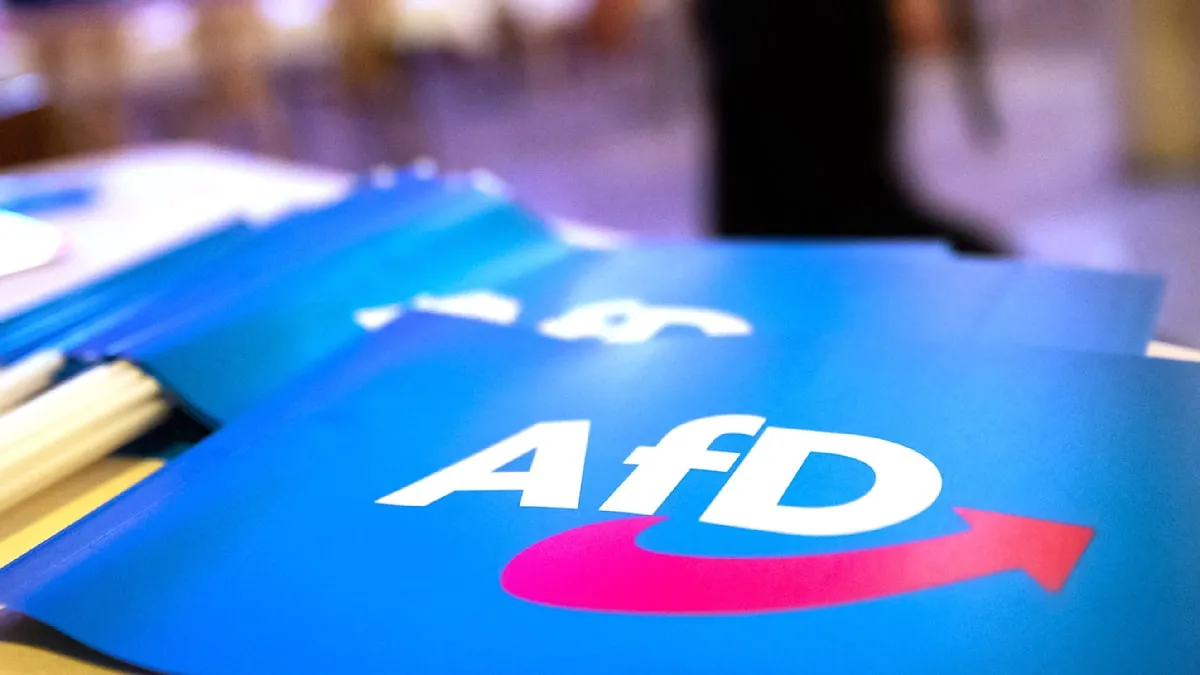
MAGDEBURG – A recent public opinion survey conducted by the prominent daily Bild has shaken the political landscape of Sachsen-Anhalt, Germany, revealing that the Alternative for Germany (AfD) party dominates with 42 percent support. This surprising outcome emerges amidst the failure of the political firewall strategy adopted by established parties to isolate the AfD, an approach political scientist Christian Stecker has explicitly called a 'misguided path'.
The survey, which draws significant attention ahead of upcoming elections, places the Christian Democratic Union (CDU) far behind the AfD, only managing to secure 22 percent of the vote. Meanwhile, the newly emerged Bundnis Sahra Wagenknecht (BSW) party garnered five percent support, indicating complex electoral dynamics within the region.
Christian Stecker, a leading political scientist, unequivocally stated that 'no insight has been gained that this firewall strategy was and is a wrong path'. This statement underscores the mainstream parties' failure to comprehend the root causes of the AfD's increasing support.
The political firewall strategy, or Brandmauer, represents an attempt by democratic parties to collectively refuse cooperation or coalition with far-right parties like the AfD. However, the latest survey data suggests that this tactic has not only failed to curb the AfD's growth but may have indirectly strengthened the party's image as an an alternative for frustrated voters.
This situation raises serious questions about the effectiveness of existing political approaches. Traditional parties appear to be losing touch with the aspirations of a significant portion of voters in eastern Germany, particularly in Sachsen-Anhalt, who face unique economic and social challenges post-reunification.
Sachsen-Anhalt, like other eastern German states, has long been a base of support for populist and extremist parties. This phenomenon is not new, considering that issues of identity polarization in East Germany are often highlighted, as also voiced by the FDP. The dramatic surge in support for the AfD, exceeding 40 percent, is a strong indication of a profound shift in political sentiment that calls for national unity.
If this trend continues until election day, forming a coalition government in Sachsen-Anhalt will become a major challenge. With the AfD as the dominant force, other parties must choose between maintaining the demonstrably ineffective 'firewall' or considering new forms of political interaction previously deemed taboo.
The public sentiment revealed through the Bild survey reflects a high level of disillusionment with existing policies and political elites. Many AfD voters feel their voices are not represented and that issues they deem crucial are ignored by traditional parties.
Stecker also implied that without a thorough evaluation and adjustment of strategies, established parties would remain trapped in a cycle of failure. He emphasized the need for constructive dialogue and a better understanding of public concerns.
The Bild survey results in Sachsen-Anhalt show a significant distribution of votes:
- Alternative for Germany (AfD): 42 percent
- Christian Democratic Union (CDU): 22 percent
- Bundnis Sahra Wagenknecht (BSW): 5 percent
Editorial Insight: The surge of the AfD in Sachsen-Anhalt is not merely an electoral anomaly but a reflection of the strategic failure of centrist parties in Germany. The 'Brandmauer' approach, intended to isolate the AfD, has instead provided a platform for the party to position itself as the only daring alternative. This necessitates a drastic re-evaluation of German political strategy, focusing on addressing issues genuinely felt by the populace, rather than merely ideological rejection. Moving forward, pressure will intensify on the CDU and other parties to formulate a more adaptive and effective response.