 Stefani Rindus
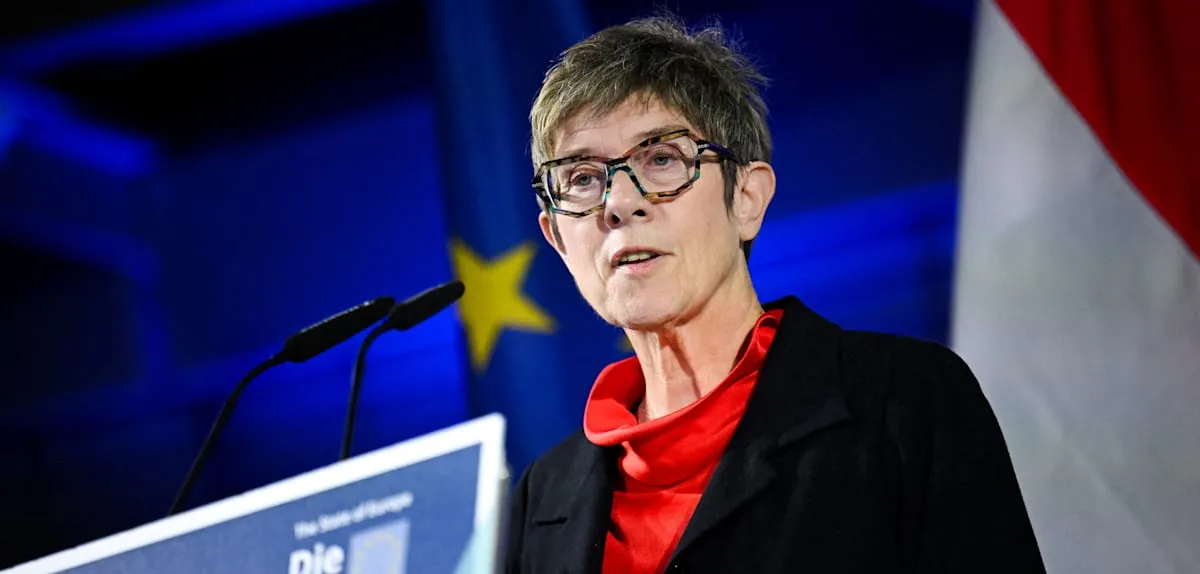
BERLIN – Former Chairwoman of Germany's Christian Democratic Union (CDU) party, Annegret Kramp-Karrenbauer, has called for fundamental reforms within her party. She asserted that the CDU is now confronting existential challenges, as it is perceived to no longer represent the voices and aspirations of many segments of society. This statement emerges as a response to the shifting political and social landscape in Germany, urging the party to once again draw closer to the everyday lives of its citizens.
Kramp-Karrenbauer, who once led the CDU, frankly highlighted that her party has lost touch with various milieus, particularly among groups that were once strong bases of support. This phenomenon, according to her, is not merely a common decline in popularity but a threat to the party's very foundation.
In her view, the main problem lies in the increasingly wide gap between the party's agenda and the reality of people's lives. Many CDU policies and rhetoric are considered no longer relevant or incapable of addressing the concrete problems faced by German citizens daily.
The former CDU Chairwoman urged a significant 'opening up' of the party. This implies that the CDU must be more inclusive, listen to diverse perspectives, and proactively seek ways to rebuild communication bridges with marginalized groups.
The implications of this existential challenge are profound for the CDU, which historically has been one of Germany's dominant political forces. Without strategic changes, the party risks further losing electoral appeal and its relevance on the national stage.
Annegret Kramp-Karrenbauer emphasized the need to reflect on the party's core values and how these values can be translated into modern solutions for contemporary problems. This includes economic and social issues, as well as German industrial policies crucial for global competitiveness.
Some German political observers interpret Kramp-Karrenbauer's statement as a strong signal that moderate factions within the CDU are pushing for a more progressive direction. This pressure arises alongside the growing popularity of other parties that are more adaptive to social changes.
Internal party discussions regarding the CDU's future have indeed intensified recently, especially after the last general election results showed a significant decrease in vote share. These debates encompass communication strategy, leadership, and the party's stance on critical issues such as climate change, migration, and digitalization.
Kramp-Karrenbauer stressed the importance of honest and courageous dialogue among party members and leaders. Only through a process of deep introspection, she stated, can the CDU rediscover its path and rebuild public trust.
Concrete recommendations she conveyed include greater efforts to reach younger voters, empower women's voices and minority groups, and update work programs to be more responsive to the dynamics of both urban and rural communities.
This threat to the CDU's survival is not unique to Germany, but also a reflection of a global phenomenon where established political parties struggle to maintain relevance amidst polarization and social fragmentation. The CDU's case could serve as an interesting study for similar parties worldwide.
The future of German politics may well be determined by the extent to which the CDU is able to transform and meet public expectations. This statement from its former leader clearly marks an important starting point for upcoming debates.
Editorial Insight: Annegret Kramp-Karrenbauer's statement is not merely internal criticism; it is a serious alarm for the CDU. The party must move quickly out of its comfort zone to avoid further erosion of support. The key to success lies in its ability to navigate the complex political landscape and embrace the diversity of modern German society. Failure to adapt could mark the beginning of a permanent decline for one of Europe's political pillars.