 Dorry Archiles
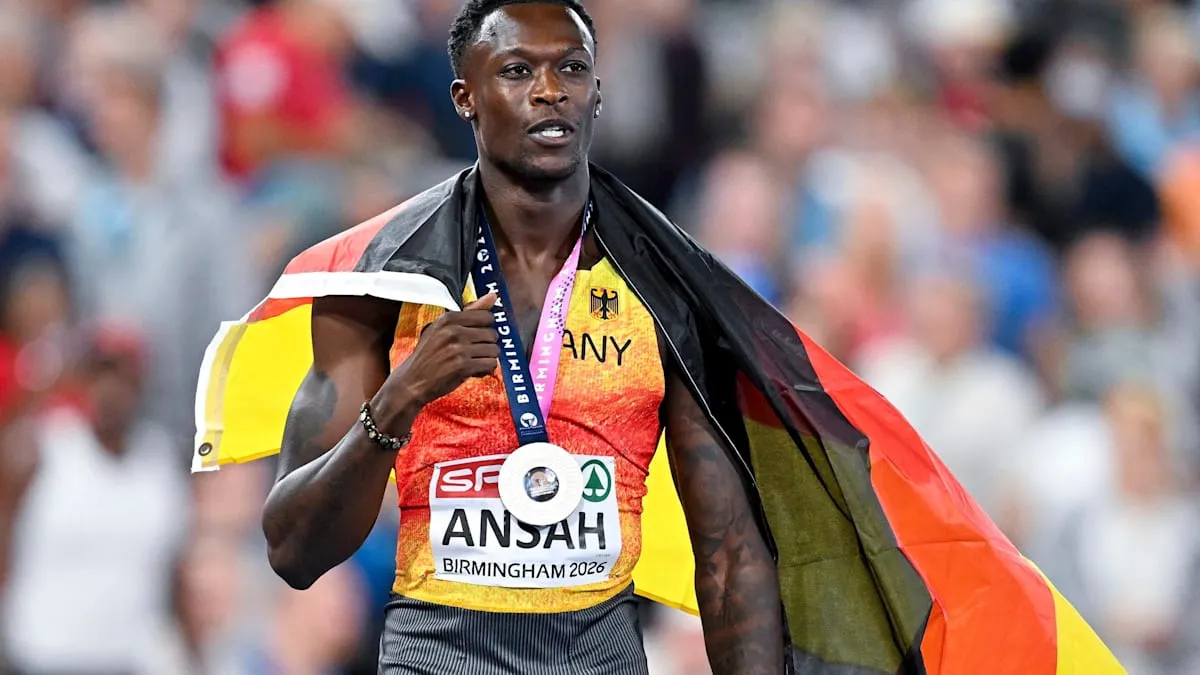
BIRMINGHAM – Owen Ansah, the young German sprinter, surprisingly clinched a bronze medal in the men's 100-meter event at the 2026 European Championships held in Birmingham. This sensational achievement not only marks Germany's first European medal in men's 100-meter sprint in four decades but is also overshadowed by a looming four-year ban threat due to alleged doping. This monumental feat immediately sparked intense debate in the athletics world.
Ansah's victory garnered significant attention given its historical context. The last time a German athlete stood on the podium in the men's 100-meter sprint was 40 years ago, making Ansah's accomplishment a rare and highly anticipated moment. Nevertheless, his career's future remains uncertain due to the potential severe sanctions.
Reports indicate that alleged doping violations involving Ansah emerged long before these European Championships. However, he was permitted to compete while the investigation proceeded. This situation places Ansah in a dilemma: a hero on the track, yet potentially branded a cheater in the eyes of the public and sports federations.
This incident reminds the public of similar cases that have rocked the sports world, where high-achieving athletes faced serious consequences for ethical breaches. The European Athletics Association (EAA) has not yet released an official statement regarding Ansah's status post-medal, awaiting the results of a thorough investigation.
In addition to Ansah, the German delegation also celebrated the success of hammer thrower Merlin Hummel. Hummel secured a silver medal, adding to Germany's medal tally at this prestigious event. His consistent performance establishes him as one of Europe's top hammer throwers.
Both achievements, despite contrasting narratives, underscore the significant potential of German athletics. From an optimistic perspective, Ansah's and Hummel's accomplishments can inspire a new generation to pursue this sport. However, Ansah's case also serves as a serious warning regarding sports integrity and cleanliness.
Regarding the doping sanction threat, the doping scandal surrounding the European sprint bronze medalist could fundamentally jeopardize Ansah's future. If found guilty, the bronze medal he just earned could be revoked, and his name tarnished in athletic history.
The International Olympic Committee (IOC) and the World Anti-Doping Agency (WADA) continue to closely monitor every doping case to uphold fairness and the spirit of sportsmanship. Sports legal experts believe Ansah's case will set an important precedent, particularly in handling athletes who compete amidst ongoing investigations.
We must await the final outcome of the investigation. Every athlete is entitled to a fair process, but the integrity of sport is paramount, stated a spokesperson from the German Athletics Federation, who wished to remain anonymous, commenting on Ansah's situation.
Athletics fans worldwide, especially in Germany, greeted Ansah's medal with a mix of joy and apprehension. They hope for clarity soon so that a heroic story on the track does not end tragically in court.
Editorial Insight:
Owen Ansah's achievement at the 2026 European Championships is a double-edged sword. On one hand, he delivers history and pride for Germany. On the other, the shadow of doping significantly tarnishes the narrative of victory and highlights ongoing challenges in maintaining sports integrity. This case will test the federations' resolve, and its impact may extend beyond Ansah's career, potentially affecting public trust in athletics as a whole.