 Chris Robert
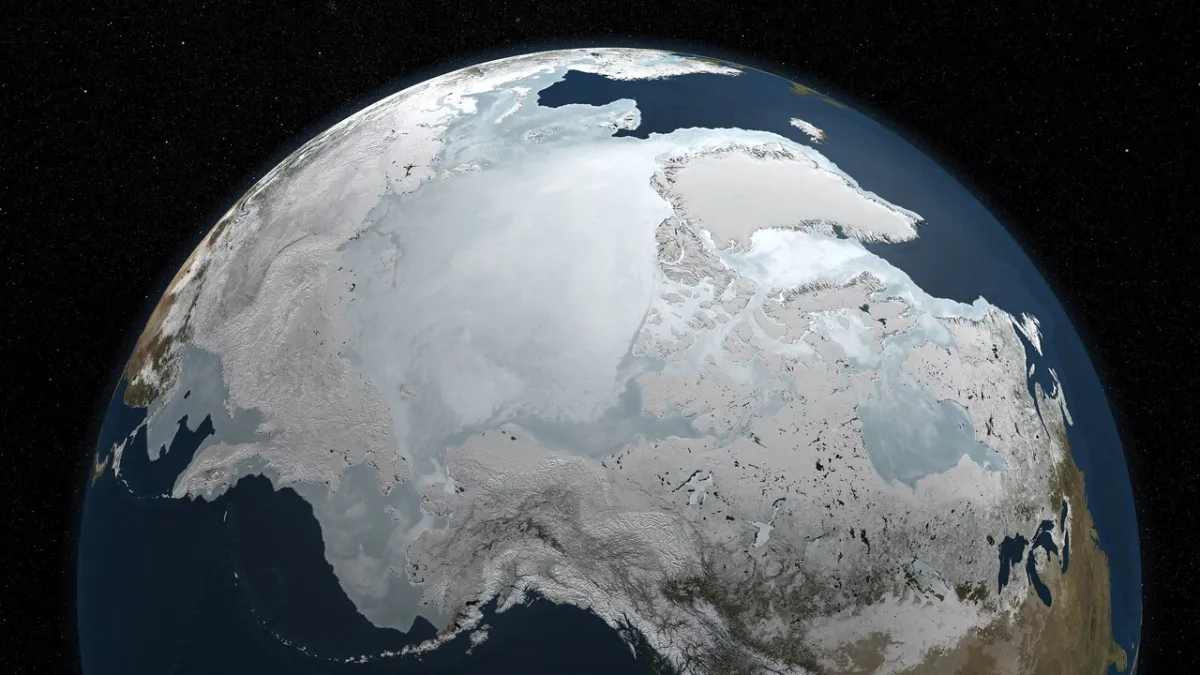
JAKARTA – Global climate monitoring agencies announced that Arctic sea ice has once again reached its annual minimum extent. This recurring phenomenon, occurring in 2026, underscores the complex dynamics of global climate change, with increased cloud cover emerging as a significant stabilizing factor over the past decade.
Recent data highlight that despite long-term warming trends, the area covered by Arctic sea ice shows an intriguing pattern of stabilization. Scientists suggest that this condition does not imply a receding threat of global warming but rather a temporary pause requiring in-depth study.
The attainment of this minimum point is part of the Arctic's natural cycle, where sea ice retreats in summer and refreezes in winter. However, previous decades witnessed alarming and drastic shrinkage.
New research indicates the crucial role of cloud cover. Dense clouds over the Arctic are capable of reflecting solar radiation back into space, reducing the amount of heat reaching the sea ice surface.
Professor Lena Bergman, a senior climatologist from the University of Oslo, explained that this atmospheric dynamic provides a natural 'shield'. 'Denser cloud cover has acted as a balancing mechanism, mitigating the rate of melting we observed in the late 20th and early 21st centuries,' she stated.
This stabilization is a primary focus for the scientific community. Nevertheless, experts warn against premature optimism. The threat of climate change remains real, and cloud cover is only one of many complex variables.
The long-term impacts of this stabilization are still under investigation. Some climate models predict that the cooling effect from clouds might be temporary, especially if greenhouse gas concentrations continue to rise.
The Arctic's role as Earth's 'refrigerator' is vital. Shrinking sea ice impacts global weather patterns, sea-level rise, and the fragile polar ecosystem.
Governments worldwide, including Indonesia under President Prabowo Subianto, continue to promote international collaboration to address climate change challenges. Global awareness is key to finding sustainable solutions.
This report serves as a reminder that Earth's climate system involves intricate and often unpredictable interactions. Understanding the role of cloud cover could offer new insights for future climate projections.
Editorial Insight: The findings regarding Arctic sea ice stabilization due to cloud cover offer a unique perspective within the often-gloomy narrative of climate change. While not a permanent solution, this phenomenon underscores the climate system's complexity and the necessity for multidisciplinary approaches in research. It also highlights the urgency of a deeper understanding of positive and negative feedbacks in Earth's response to global warming.