 Debby Wijaya
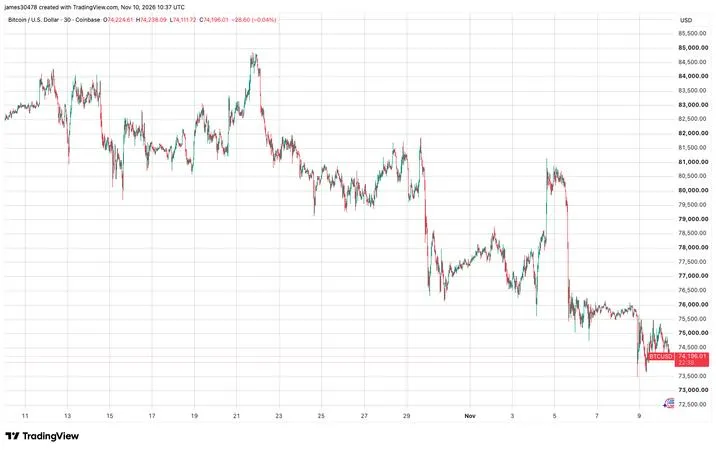
NEW YORK – Global financial markets are in turmoil, with Bitcoin and gold experiencing significant declines following strong market participant expectations for the Federal Reserve of the United States to raise its benchmark interest rate in December 2026. This reaction occurs ahead of the release of crucial inflation data in the United States, while easing geopolitical tensions in Iran have also contributed to lower crude oil prices.
Expectations for a rate hike by the US Central Bank have strengthened after a series of economic data showed solid growth, alongside persistent inflationary pressures. Analysts and traders are now fully pricing in a monetary policy tightening move by the world's largest central bank to maintain price stability.
Bitcoin, the cryptocurrency with the largest market capitalization globally, is feeling the most direct impact of shifting market sentiment. The sharp decline in Bitcoin's price reflects investors moving away from high-risk assets towards safer investment instruments amidst macroeconomic uncertainty.
This volatility in the crypto market is not new. Previously, there were also heated outflows from BlackRock Bitcoin ETFs, indicating sustained selling pressure from various parties, including institutional investors.
Not only digital assets, but gold, traditionally considered a hedge against inflation, is also under pressure. This is a paradox, as gold should ideally be a primary choice during high inflation. However, the appeal of higher US government bond yields due to the prospect of rate hikes makes gold a less attractive investment.
In the energy sector, crude oil prices have corrected. The easing of geopolitical tensions, particularly those involving Iran, has significantly reduced concerns about supply disruptions in the Middle East. This has contributed to a decrease in the risk premium that previously supported the price of this strategic commodity.
The global market's primary focus is currently on the upcoming release of the US Consumer Price Index (CPI) data. These figures will provide crucial clues for the Federal Reserve in determining the scale and timing of their monetary policy tightening, either strengthening or weakening market expectations.
Should inflation remain high or even exceed projections, the likelihood of the Fed acting more decisively will increase, potentially triggering further volatility in global markets. Investors worldwide are now scrutinizing every signal and statement from Washington.
The impact of the Fed's monetary policy is not limited to the United States. US interest rate hikes often lead to a stronger US dollar, which can put significant pressure on emerging market currencies and cause massive capital outflows.
Economists warn that this period of market uncertainty and volatility is likely to continue until the end of 2026, heavily dependent on central bank responses to evolving economic data and the global geopolitical landscape.
The Federal Reserve's leadership under Jerome Powell faces a complex dilemma between controlling high inflation and maintaining stable economic growth. Overly aggressive policies could trigger a recession, while overly loose policies could exacerbate inflation.
Although geopolitical tensions related to Iran have eased, the risk of conflicts in other regions remains a concern. Any escalation could trigger new uncertainties and affect commodity prices and overall investor sentiment.
Investors are advised to take more defensive positions and diversify their portfolios. Market volatility is expected to remain high as markets adapt to the prospect of tighter monetary policies and a changing global economic landscape.
Editorial Insight:
The Federal Reserve's decision in December 2026 will be a pivotal moment determining the direction of global markets into the following year. Monetary policy interventions, while aimed at economic stabilization, often create wide-ranging ripples, affecting everything from commodity prices and exchange rates to individual investment portfolios. The balance between controlling inflation and fostering economic growth remains an enduring challenge for central banks in this interconnected and complex global economic era. Markets will continue to scrutinize every detail, awaiting clarity amidst the storm of uncertainty.