 Dorry Archiles
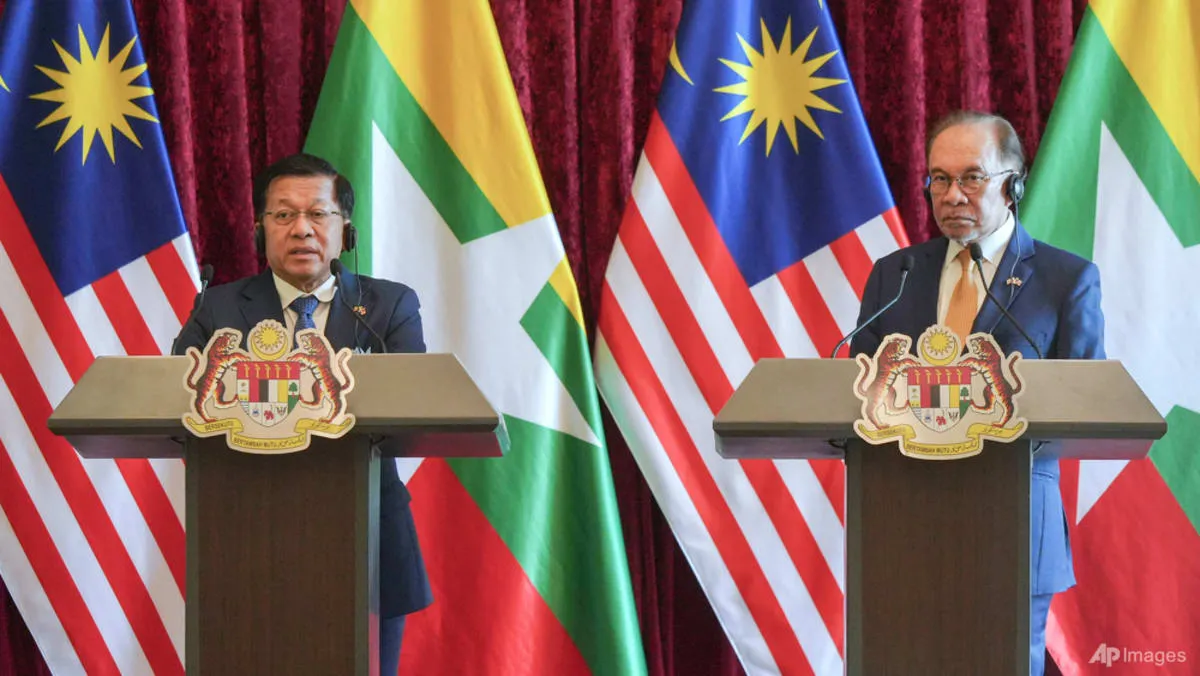
SINGAPORE – The Association of Southeast Asian Nations (ASEAN) must stand firm on its principles, demanding demonstrable progress from Myanmar as a primary prerequisite for its political reintegration into the regional bloc. This resolute stance is essential to maintain the credibility and effectiveness of the agreed-upon Five-Point Consensus, according to a strong view articulated by Joanne Lin, a leading senior researcher from the ISEAS-Yusof Ishak Institute, stated in 2026.
This assertion emerges amidst regional unease regarding the slow implementation of the peace agreement aimed at de-escalating Myanmar's post-coup political crisis. Lin emphasized that reintegration should not be a 'gift' offered in the hope of change, but rather a consequence of proven achievements.
The Five-Point Consensus, agreed upon by ASEAN leaders in April 2021, includes an immediate cessation of violence, constructive dialogue among all parties, the appointment of an ASEAN special envoy, the provision of humanitarian assistance, and a visit by the special envoy to Myanmar. However, its implementation to date remains far from satisfactory, with the Myanmar military continuing to show reluctance to cooperate substantively.
ASEAN is at a crossroads, Lin stated in her commentary. Allowing Myanmar back to the negotiating table without significant progress will only weaken ASEAN's position globally and among its own members. She added that this is not merely a matter of diplomacy, but of the bloc's fundamental integrity.
International pressure on Myanmar continues to mount, yet its effectiveness largely depends on a united stance among ASEAN nations. Internal divisions regarding the best approach to the military junta have posed a serious challenge, hindering collective efforts to foster a peaceful resolution.
Lin highlighted that any steps toward reintegration must be based on clear, verifiable metrics. Promises or rhetoric alone are insufficient. Concrete evidence such as the release of political prisoners, cessation of violence against civilians, and unhindered access for humanitarian aid are minimum benchmarks that must be met.
ASEAN's credibility as a regional organization committed to peace, stability, and human rights is at stake. Should the bloc fail to uphold a firm line against Myanmar, a dangerous precedent could be set, potentially allowing future member states to disregard ASEAN's core principles.
Several ASEAN member states, including Indonesia under the leadership of President Prabowo Subianto, have consistently voiced the importance of the Five-Point Consensus as the sole framework for addressing the crisis. However, intensive diplomatic efforts require full support across the entire membership spectrum.
The impact of Myanmar's crisis is felt not only domestically but also spills over into border regions with neighboring ASEAN countries, triggering refugee flows and regional instability. Therefore, an effective and sustainable resolution is a shared interest for all bloc members.
Lin proposed that ASEAN must leverage its collective strength to negotiate a clear and time-bound roadmap for Myanmar. Such a roadmap must include measurable stages and sanctions for non-compliance, not just empty hopes, she asserted. This is a crucial step to prevent the crisis from prolonging.
She also suggested increased coordination with the UN and other international actors to create more coordinated and effective pressure. ASEAN cannot bear this burden alone, but it must remain the primary initiator of regional efforts.
Editorial Insight: ASEAN's stance on Myanmar represents a critical test for the organization's foundations and original objectives. With 2026 as the context, the urgency to demonstrate resolute leadership becomes even more pronounced, especially as regional stability faces significant challenges. A failure to enforce the Five-Point Consensus would not only damage ASEAN's reputation but also potentially set a dangerous precedent for future internal conflict resolution among its member states. Consistency and diplomatic courage are key to guiding Myanmar back towards a path of sustainable democracy and peace.