 Robert Andrison
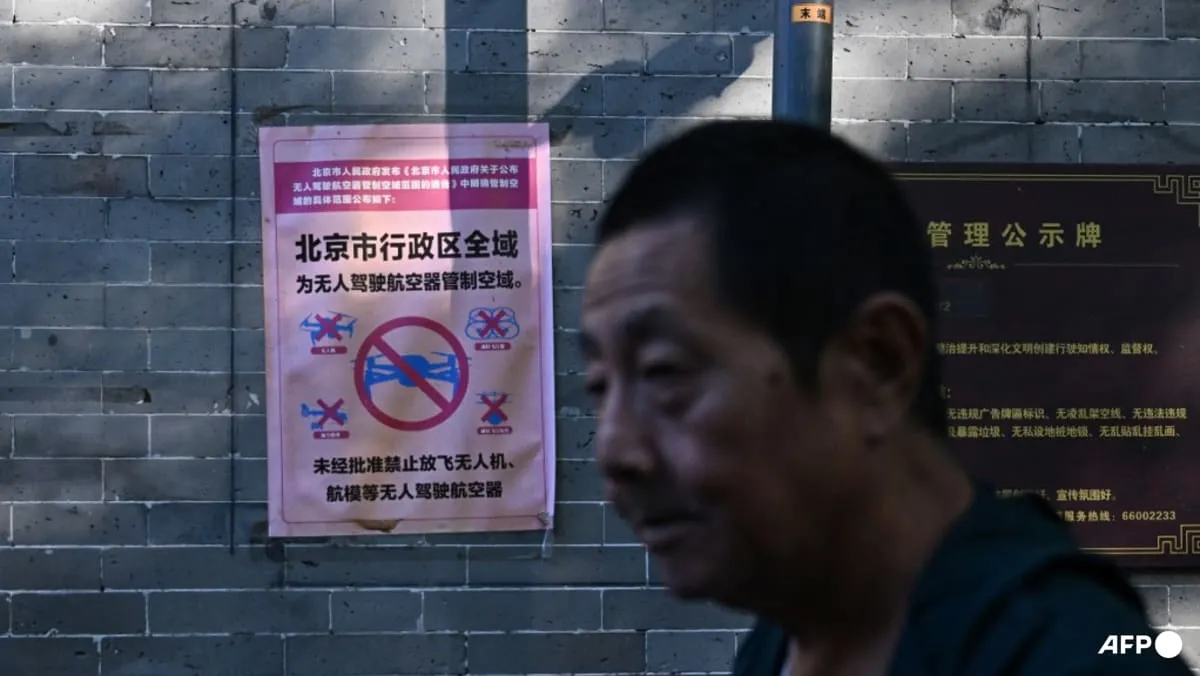
BEIJING – The Chinese government has officially implemented a total ban on drone ownership and flights across the capital city of Beijing starting in early 2026. This drastic policy is a response to escalating national security concerns, amidst the potential misuse of unmanned aerial vehicle (UAV) technology for espionage or even acts of terrorism at the heart of the government.
This strict new regulation targets all types of drones, from recreational to commercial models, with specific exceptions for units operating under direct military or authorized government agency control. The move underscores Beijing's commitment to maintaining the stability and integrity of its airspace, especially in sensitive areas that serve as the nation's political and economic hub.
The decision stems from a series of minor incidents that occurred previously, though not detailed publicly. Authorities identified significant security vulnerabilities that could be exploited by irresponsible parties, given the rapid advancements in drone technology, which is increasingly accessible and operable.
A spokesperson for the Ministry of Public Security, in a brief press conference, stated, 'The security of the capital is our utmost priority. This ban is an essential proactive step to eliminate all potential threats that could disrupt public order and national sovereignty.' The statement emphasized the urgency of this policy.
The immediate impact of this regulation will be significant for thousands of civilians and businesses who previously used drones for hobbies, photography, surveying, or deliveries. They are required to surrender their drones at designated collection points or face severe penalties, including substantial fines and potential detention.
The Chinese government has developed a comprehensive surveillance mechanism, involving advanced drone detection technology and specialized aerial patrols. This system is expected to identify and neutralize any illegal drones operating in restricted zones, ensuring the effective implementation of the regulations.
This announcement has also sparked global discussion regarding the balance between technological innovation and security needs. Some international observers believe this policy could set a precedent for other countries facing similar dilemmas, albeit with potentially more moderate restrictions.
Historically, China has a strict track record in internet regulation and citizen surveillance. The drone ban is a natural extension of the profound state control philosophy, reinforcing the narrative of greater surveillance for enhanced security.
China's drone industry, one of the largest in the world, is likely to experience a severe shake-up in the domestic market, particularly in the consumer segment. Nevertheless, major manufacturers may shift their focus to export markets or develop drones for authorized government purposes.
Furthermore, similar policies have been proposed in several countries, but few have implemented a total ban like the one now in effect in Beijing. This indicates the level of vigilance and determination of the Chinese Government in addressing increasingly complex threats. An article from the previous year, Total Drone Ban in Beijing: Chinese Capital Tightens Security, also highlighted the preparations for this policy.
Several logistics operators and construction companies that relied on drones for operational efficiency must now seek alternative solutions. This opens up opportunities for the development of substitute technologies or more conventional manual work methods, albeit with higher cost and time implications.
Despite concerns about personal freedom and economic impact, the majority of Beijing residents are expected to comply with this regulation, aligning with China's strong culture of adherence to government policies. Intensive socialization through mass media and digital platforms is also continuously being intensified.
Regional security expert, Dr. Li Wei from Tsinghua University, stated, 'This move is a logical response to the dynamics of modern threats. Drones, in the wrong hands, can be highly destabilizing tools. Beijing is taking extreme measures to protect its millions of inhabitants.'
This policy also sends a strong signal to the international community regarding China's seriousness in managing security risks. This may be part of a broader strategy to strengthen control over digital and physical spaces across the country.
Editorial Insight: The total drone ban in Beijing reflects China's increasingly stringent security paradigm, prioritizing absolute control over every potential threat. While effective in preventing incidents, this policy raises questions about the limits of state surveillance over civilian technology and its implications for innovation and individual freedom. This step could serve as a model for other countries with similar security priorities, but with significant consequences for the technological ecosystem and social life.