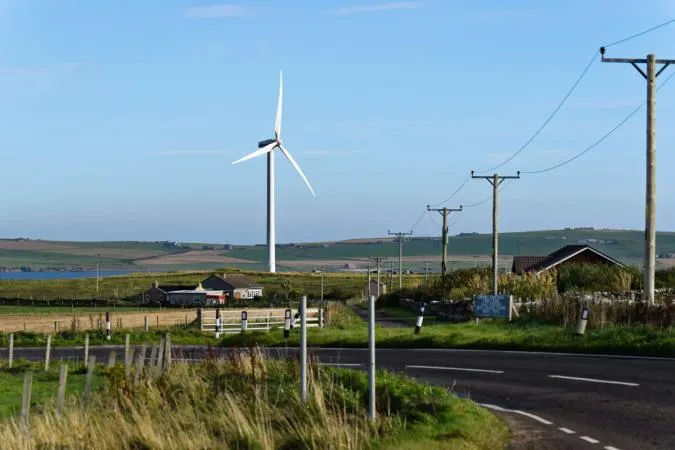
London – The United Kingdom is contemplating an innovative strategy to address the issue of surplus wind energy in Scotland, which has historically burdened the national budget by billions of dollars. A report from the Bitcoin Policy Institute suggests utilizing Bitcoin mining as a revolutionary solution to absorb this wasted energy, potentially slashing the domestic electricity grid bill, which stands at $1.3 billion, equivalent to approximately 20 trillion Rupiah at current exchange rates, in 2026.
The fundamental problem facing Britain's energy system, particularly in Scotland, is an imbalance between renewable energy production and consumption. When winds are strong, turbines generate more electricity than the grid can absorb, forcing operators to pay compensation to wind farms to halt their generation. This practice, known as 'curtailment', results in significant energy waste and substantial operational costs.
The idea of diverting this excess electricity to Bitcoin mining is not new, but it has recently gained serious traction as a viable economic model. Bitcoin mining, which requires immense computational power to validate transactions and create new blocks, can function as a 'dispatchable load'. This means mining operations can be quickly switched on or off according to the availability of surplus energy.
Implementing this scheme offers dual benefits. First, it directly reduces the 'curtailment' payments to wind companies, which are currently a significant burden on taxpayers. Second, it transforms previously wasted energy into a valuable asset through Bitcoin production. This not only enhances the efficiency of the energy system but also creates a new revenue stream.
According to the Bitcoin Policy Institute report, the potential savings from this initiative are substantial. The $1.3 billion annually allocated for compensating halted production could be reallocated for infrastructure investment or even to reduce electricity tariffs for consumers. This represents a strategic step towards economic and energy sustainability.
From a technological perspective, Bitcoin mining is a highly flexible activity. Miners can easily relocate or adjust their operations, making them ideal partners for intermittent energy sources like wind. Large-scale Bitcoin mining data centers can be built close to wind turbine locations, minimizing transmission losses.
Several other countries and regions are already exploring or implementing similar models. For instance, in North America, particularly in Texas and parts of Canada, Bitcoin miners have collaborated with grid operators to stabilize supply and demand, especially by utilizing flared natural gas or surplus renewable energy.
Of course, implementation is not without its challenges. Concerns about Bitcoin price volatility, the overall environmental impact of energy consumption (even if, in this case, it comes from otherwise wasted renewable energy), and evolving cryptocurrency regulations are key points that the UK government will need to consider.
Discussions with various stakeholders, including grid operators, wind energy developers, and the crypto community, are essential to formulate a comprehensive framework. The Bitcoin Policy Institute report serves as an important starting point for this constructive dialogue.
If the United Kingdom successfully integrates Bitcoin mining into its renewable energy management strategy, it could set a significant global precedent. It would demonstrate how a technology often criticized for its energy consumption can, in fact, become an instrument to improve the efficiency and sustainability of green energy.
The context of the digital economy and crypto assets continues to evolve rapidly. Companies like Binance, for instance, constantly adapt to market dynamics and strict regulations. The stability of this sector will largely determine the success of innovative solutions like those proposed in the UK.
Editorial Insight: This idea is not only brilliant in concept but also demonstrates a pragmatic adaptation to economic and technological realities. Rather than viewing Bitcoin solely as an environmental threat, the UK government could potentially position it as a vital tool in renewable energy management. However, long-term success will heavily depend on clear regulations, appropriate incentives, and the ability to manage crypto market fluctuations. This is a bold step that could redefine the relationship between green energy and blockchain technology.