 Chris Robert
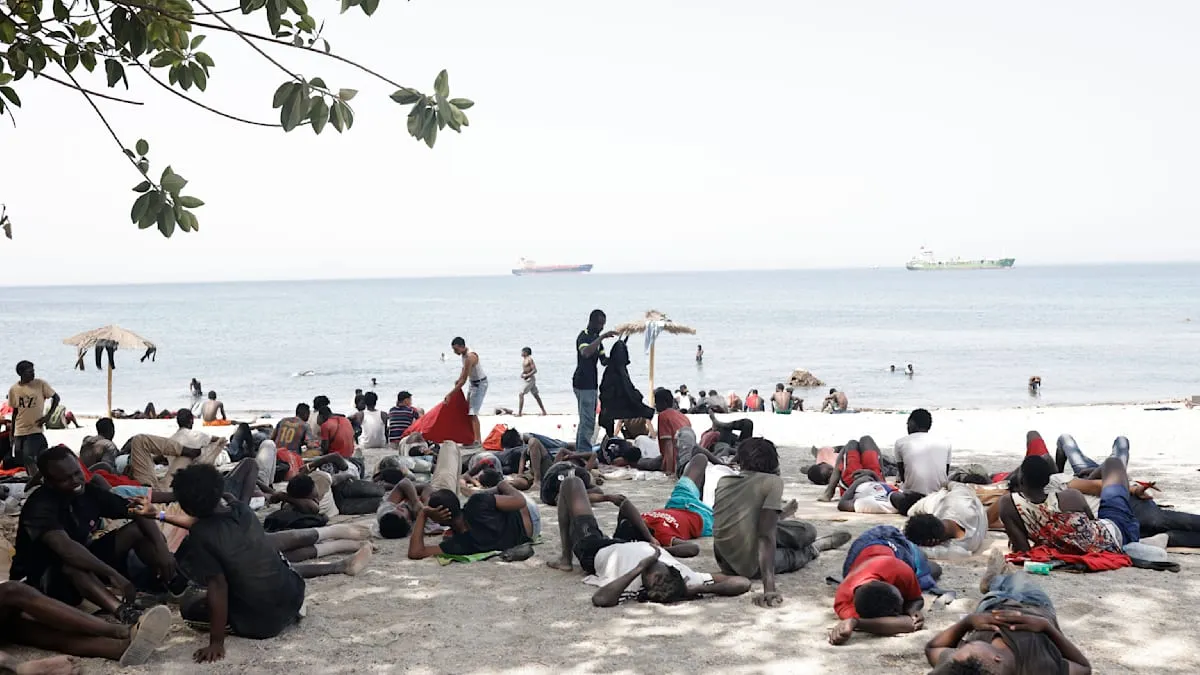
Ceuta — The situation in Ceuta, Spain's exclave in North Africa, has once again drawn sharp attention after thousands of migrants flooded the territory. This massive influx has sparked a serious debate among European Union member states regarding the urgency of strengthening the bloc's external border protection, with EU Interior Ministers scheduled to hold a crucial meeting this coming Tuesday in 2026. This event once again highlights the vulnerability of Europe's southern border and the need for a more cohesive migration strategy.
The crisis in Ceuta is not a new phenomenon. However, the sheer scale of tens of thousands of migrants, many of whom are children and teenagers, arriving in a short period, has shocked the international community. These migrants exploited various loopholes, including swimming around border fences, to reach European soil.
The Spanish government, whose territory directly borders Morocco in Ceuta, faces immense pressure. Spanish border guards and the military worked hard to repatriate most migrants, but the incident has caused diplomatic tension with Morocco, which some parties accuse of loosening border surveillance as a tool for political leverage.
The European Union as a whole expressed deep concern. The events in Ceuta show that the existing border protection mechanisms still have significant gaps. Frontline member states, such as Spain, Italy, and Greece, have repeatedly called for greater support and solidarity from the entire bloc.
The debate on border protection has intensified in Brussels. Some parties are pushing for increased budgets and powers for Frontex, the European Border and Coast Guard Agency, while calling for the implementation of stricter and more coordinated migration policies. They argue that the security of external borders is key to the internal stability of the European Union.
This crisis recalls previous calls made by European leaders. For instance, Weber's demand that Frontex be given full command authority indicates a shared view regarding the need for strengthening, as previously reported in the news "Ceuta Migrant Crisis: Weber Demands Frontex Be Given Full Command Authority".
However, this narrative is not entirely agreed upon. Humanitarian groups and some member states emphasize that the issue of migration cannot be approached solely from a security perspective. They highlight the importance of human rights, fair asylum procedures, and addressing the root causes of migration, such as poverty and conflict.
Spanish Prime Minister Pedro Sánchez is under domestic and international political pressure. His handling of this crisis, including his call for Europe not to ignore the migrant tragedy, is under evaluation, as stated in "Schengen Threatened! Sanchez Accuses Europe of Ignoring Migrant Tragedy in Ceuta". Previously, he was even criticized for releasing a 'summer soundtrack' amidst a similar crisis.
The meeting of EU Interior Ministers this coming Tuesday is expected to be an important forum for discussing concrete measures. The main agenda will likely include increased financial support for frontline countries, strengthening Frontex's mandate, and more coordinated diplomatic efforts with migrant origin and transit countries.
The future of the European Union's migration policy will heavily depend on the outcome of these discussions. Whether the bloc will adopt a harsher approach to securing its borders, or find a balance between control and humanitarian commitments, remains to be seen. The Ceuta crisis serves as a bitter reminder of the complexity of this global challenge.