 Gabriella

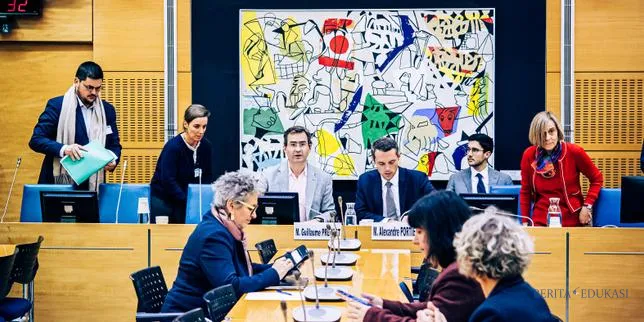
PARIS – The French Constitutional Court recently made a monumental decision that has sent ripples across the digital regulatory landscape throughout Europe. The high court officially overturned a law banning children under 15 from accessing social media platforms. This ruling was issued in 2026, on the grounds that the regulation constituted a 'disproportionate violation of minors' freedom of expression'.
President Emmanuel Macron, upon learning of the decision, immediately instructed the Prime Minister to redraft the new law. He urged that a comprehensive solution regarding digital regulation for children be found by spring 2027.
This annulment marks a significant turning point in the debate over child protection in the digital age versus fundamental individual rights. The Court explicitly stated that protection efforts must not sacrifice fundamental freedoms guaranteed by the constitution.
The Constitutional Court's decision reaffirms the principle that any restriction on fundamental rights must be proportionate, based on strong legal grounds, and not applied excessively.
The previously overturned law aimed to protect children under 15 from the negative impacts of social media, including exposure to inappropriate content, cyberbullying, and the risk of digital addiction. This initiative was part of the government's efforts to create a safer online environment.
However, civil liberties advocates argued that a complete ban was an extreme measure. They asserted that children also have the right to seek, receive, and impart information, as well as participate in public discourse, much of which now occurs on digital platforms.
This decision highlights the complexity of the challenges governments face in balancing the protection of vulnerable groups with safeguarding individual freedoms in an ever-evolving digital sphere. This is a global dilemma confronting many nations.
With instructions from President Macron, the French government now faces the arduous task of designing a new, more balanced legal framework. The forthcoming law is expected to provide effective protection without infringing upon minors' fundamental rights.
This ruling will likely resonate in other European countries that are considering or have implemented similar policies. France, as a legal powerhouse in the European Union, often serves as a barometer for policy formulation in the region.
Beyond government regulation, the role of parents and digital literacy education becomes increasingly crucial. Equipping children with critical thinking skills and awareness of online risks is key to navigating the challenges of the digital age.
Editorial Insight: The French Constitutional Court's decision is not just about social media regulation; it is a reflection of a larger struggle between state authority, individual rights, and technological advancement. It underscores the importance of a nuanced approach in responding to digital threats without sacrificing fundamental democratic principles. The solution formulated by the French government by 2027 will serve as an important model for the world.