 Edward DP Situmorang
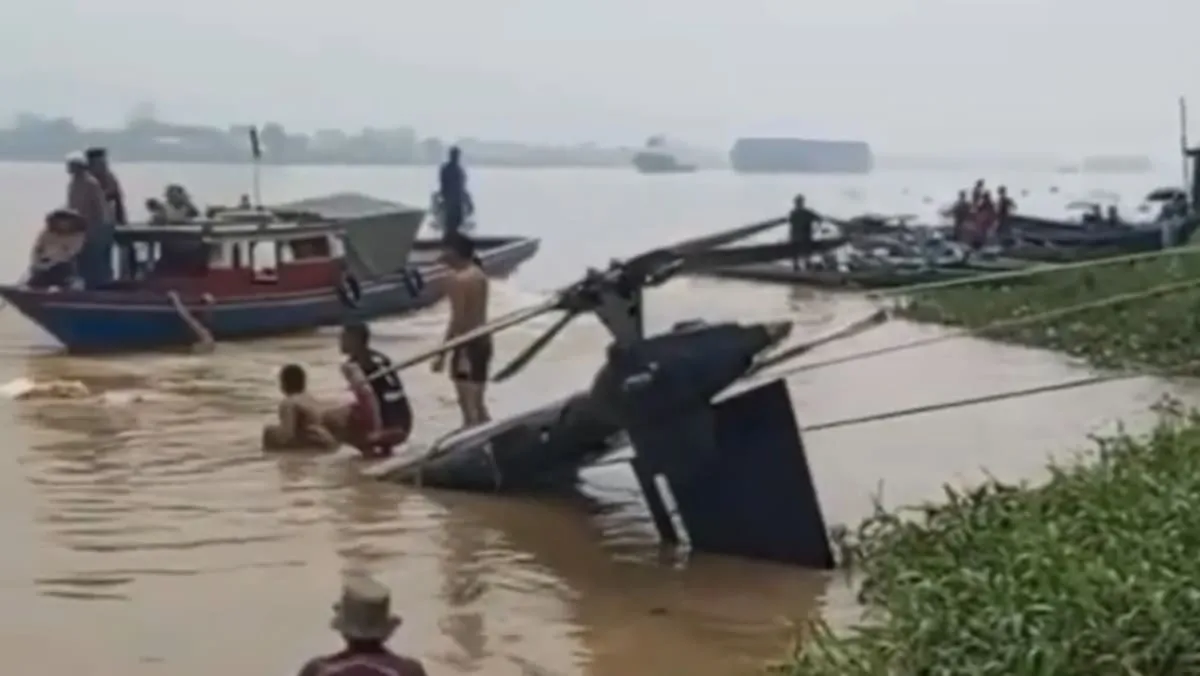
JAKARTA – A water-bombing helicopter reportedly crashed in Indonesia today, triggering a large-scale search and rescue operation. This tragic incident occurred while the helicopter was on a vital firefighting mission, leaving one Indonesian crew member missing, while two Australian nationals successfully survived.
The relevant authorities immediately launched intensive search efforts once news of the helicopter crash was received. The primary focus of the SAR team is currently to locate the Indonesian crew member whose fate remains unknown following the incident in challenging geographical conditions.
The two Australian nationals, who were part of the helicopter crew, have been evacuated and confirmed to be in safe condition. They reportedly suffered from shock but sustained no serious life-threatening injuries, a fortunate outcome amidst the tragedy.
The type of helicopter involved in this accident is a specialized unit designated for forest and land fire (Karhutla) suppression operations, an annual threat in various regions of Indonesia. These aircraft have the capacity to carry thousands of liters of water to combat fires from the air.
Aerial firefighting missions often involve high risks, including flying through thick smoke, extreme weather conditions, and difficult terrain. The crew members, both pilots and technicians, must possess exceptional skills and experience.
A thorough investigation into the cause of the helicopter crash will be immediately carried out by the National Transportation Safety Committee (KNKT). Black box data, if recovered, will be key to uncovering the chronology and contributing factors to this incident.
This incident highlights once again the sacrifices of officers who struggle to extinguish fires, especially during long dry seasons often exacerbated by climatic phenomena. The Indonesian Government, under the leadership of President Prabowo Subianto, remains committed to strengthening disaster management capacity.
Karhutla suppression efforts in Indonesia often involve international cooperation, given the cross-border impact of the smoke produced. The presence of foreign crews, such as Australian citizens in this operation, demonstrates global solidarity.
The family of the missing crew member has been informed and provided full support by the authorities. Hopes remain high for finding the victim alive, despite the significant challenges on the ground.
Similar incidents, though not identical, often serve as a reminder of the dangers lurking behind rescue and disaster management operations. This has also occurred in other disaster incidents involving rescue teams in various parts of the world.
Such tragedies, while not acts of terror, remind us of the fragility of life and the heroic efforts of responders, similar to the tensions that arose during Saudi Attack Kills 33, Houthis Retaliate with Missile Barrage on Riyadh even though the context is different, the element of high risk and loss of life forms a common thread.
Local governments at the scene have mobilized all resources to assist the SAR operation. Logistics support and additional personnel continue to flow to expedite the search process in a vast and remote area.
Communication and coordination among agencies, including BNPB, TNI, Polri, and Basarnas, are vital in emergency situations like this. Every new piece of information is immediately disseminated to optimize search strategies.
Local communities also show solidarity, with some offering logistical assistance and others praying for the safety of the missing crew. The spirit of mutual cooperation remains strong amidst the calamity.
This tragedy is not only a sorrow for the victims' families but also for the entire nation that values the dedication of unsung heroes in preserving environmental sustainability and public safety.
Editorial Insight: The incident of the water-bombing helicopter crash is a stark warning about the inherent dangers in every rescue and disaster management mission. It re-emphasizes the importance of strict oversight of operational safety standards, equipment maintenance, and continuous crew training. The loss of one Indonesian crew member demands deep reflection on psychological and financial support for the families of heroes who risk their lives. Going forward, investment in risk mitigation technology and emergency procedures must be a top priority.